
Advanced Oxidation Equipment
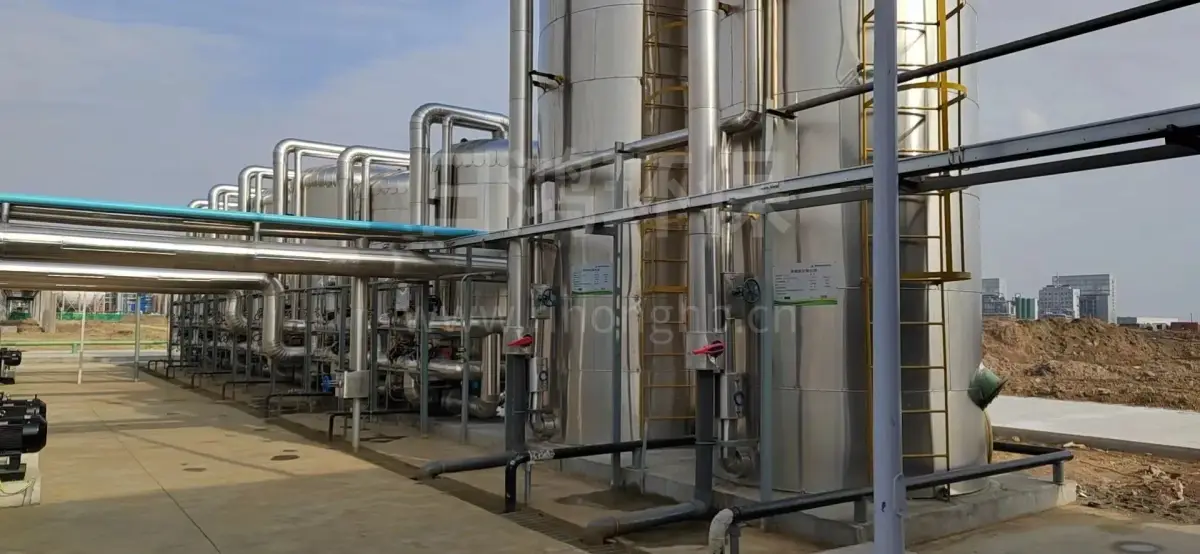
Heterogeneous Catalytic Oxidation Tower
Wastewater from chemical, pharmaceutical, printing and dyeing, coking, landfill leachate and other industries often contains refractory, biotoxic, highly colored organic matter. Biological treatment alone often falls into the dilemma of "difficult to meet standards and unstable operation"; ozone oxidation alone also has the shortcomings of strong selectivity and low utilization. This product uses a solid catalyst bed to activate ozone in situ into highly active hydroxyl radicals (·OH), efficiently breaking chains and mineralizing organic matter at room temperature and pressure. The catalyst does not dissolve out and hardly produces iron sludge, making it a mainstream solution for advanced upgrading of biological tailwater and RO concentrate.
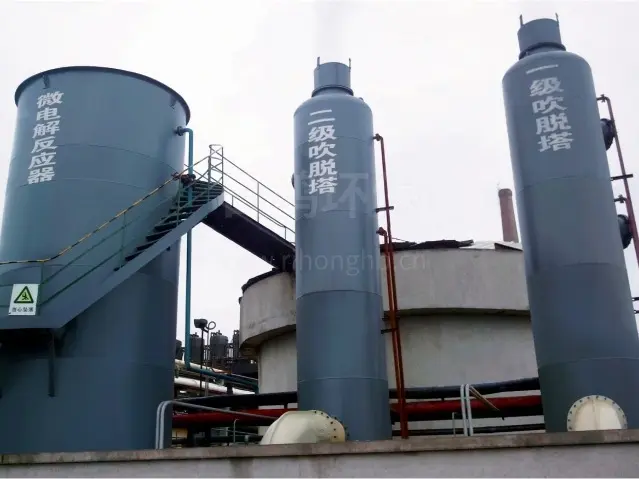
Iron-Carbon Micro-Electrolysis
Faced with complex wastewater from industries such as printing and dyeing, pharmaceuticals, chemicals, and electroplating—characterized by "high color, high toxicity, and poor biodegradability (B/C often below 0.2)"—traditional biological treatment often falls into the dilemma of "can accept it, but cannot degrade it," while direct advanced oxidation is costly. Iron-carbon micro-electrolysis (internal electrolysis) uses iron scraps and carbon packing to form countless microscopic galvanic cells, enabling in-situ chain scission, decolorization, and biodegradability improvement without external current, "reducing the load and opening the way" for downstream biological or Fenton treatment.
Electro-Fenton
Pharmaceutical, printing and dyeing, chemical, landfill leachate and other refractory wastewater often contains highly toxic, highly colored, and poorly biodegradable organics. Traditional Fenton requires purchasing and storing large amounts of hydrogen peroxide and ferrous salts, involves high chemical dosing, produces large amounts of iron sludge, and demands strict pH control. This product electrochemically generates Fe²⁺ and H₂O₂ in situ within the reactor and uses current to drive the Fe³⁺/Fe²⁺ cycle. It features low chemical dosing, greatly reduced iron sludge, and a controllable operation process, making it an efficient choice for pretreatment and advanced oxidation of refractory wastewater.
Fenton Reactor
Refractory wastewater from pharmaceutical, printing and dyeing, chemical, and landfill leachate sources often contains highly toxic, highly colored, and poorly biodegradable organic matter. As the most mature homogeneous advanced oxidation process in application, Fenton oxidation involves dosing ferrous salts and hydrogen peroxide into acidic wastewater to generate highly active hydroxyl radicals (·OH) in situ, which break molecular chains and mineralize organic matter—the process is mature, fast to start, low in investment, and easily integrated with existing facilities. It remains one of the most commonly used and most reliable means for advanced treatment and pretreatment of refractory wastewater.