
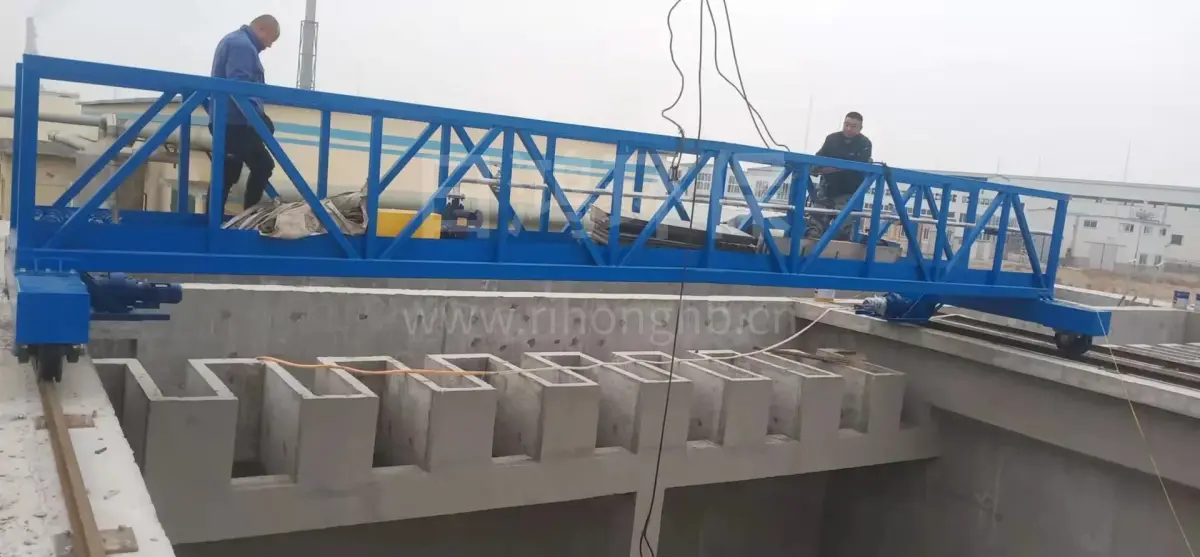
Traveling Bridge Scraper and Suction Sludge Collector
Horizontal-flow, rectangular large-span sedimentation tanks have wide bottoms and accumulate a large amount of sludge. Manual sludge removal is time-consuming and labor-intensive, and uneven sludge discharge can easily form "dead sludge" that decays and floats up. The traveling bridge scraper and suction sludge collector uses a bridge truss spanning the tank to travel back and forth, scraping and collecting sludge from the tank bottom and suctioning it out of the tank, with simultaneous scum skimming. It enables mechanized and automated sludge discharge from sedimentation tanks and is standard equipment for horizontal-flow sedimentation tanks in water treatment plants and wastewater treatment plants.
I. Product Positioning
The traveling bridge scraper and suction sludge collector (also known as bridge-type or traveling-type scraper and suction sludge collector) is sludge discharge equipment dedicated to the tank bottom of horizontal-flow / rectangular sedimentation tanks. It consists of a truss (bridge frame) spanning the tank, traveling mechanism, sludge scraping/suction device, drive and electrical control system, and travels back and forth along the tank length on rails at the tank sides. Bottom scraper blades gradually scrape settled sludge to a sludge collection channel or pit at the tank end, and then the sludge is pumped or siphoned out of the tank. A scum skimming device can also be integrated to clean floating scum on the water surface. It is widely used in horizontal-flow sedimentation tanks in water treatment plants, and primary and secondary clarifiers in wastewater treatment plants.
II. Working Principle (Brief)
Truss traveling: The motor drives the bridge to travel smoothly back and forth along rails on both sides of the sedimentation tank, covering the entire tank length.
Sludge scraping and collection: The accompanying bottom scraper blades gradually scrape settled sludge toward the sludge collection channel / pit at the tank end, preventing dead sludge accumulation.
Sludge suction and discharge: At the sludge collection pit or along the path, sludge is pumped or siphoned out through the external sludge discharge pipe into the sludge treatment system.
Scum skimming (optional): A scum scraper at the front end of the truss scrapes floating scum on the water surface to a scum hopper or discharge port, completing surface cleaning.
Reciprocating cycle: The bridge travels back and forth to ensure no sludge discharge dead zones in any section of the tank, achieving uniform and thorough sludge removal.
Automatic control operation: Automatic start/stop and reciprocation in timed or continuous mode, which can be linked with liquid level / sludge level for unattended operation.
Process schematic: Bridge reciprocating travel → scraper blades collect bottom sludge → (pump suction/siphon) discharge out of tank ⇄ front-end scum skimming → no dead-zone sludge removal across the entire tank
The core lies in "traveling is sludge discharge"—replacing manual work with a mechanical truss, scraping while moving and suctioning while scraping, efficiently and continuously conveying accumulated sludge from the bottom of large-span rectangular tanks, ensuring uniform sludge discharge while avoiding anaerobic floating of dead sludge that affects effluent quality.
III. Core Advantages
① Large-span adaptability Suitable for horizontal-flow / rectangular sedimentation tanks up to tens of meters wide, and is a standard sludge discharge solution customized to tank width.
② Thorough scraping-suction combination Scraping and suction discharge work together with no sludge discharge dead zones and no dead sludge accumulation, avoiding sludge decay and floating.
③ Integrated scum skimming Optional scum scraping device enables one machine to complete both bottom sludge scraping and water surface scum cleaning.
④ Automated operation Reciprocating travel can automatically start/stop in timed / continuous mode and can be linked with sludge level for unattended operation.
⑤ Robust and durable structure The truss has high rigidity; the main body is anti-corrosion carbon steel or stainless steel, offering corrosion resistance and long service life.
⑥ Easy maintenance Traveling and suction/discharge mechanisms are highly standardized, convenient for inspection and replacement, with common spare parts.
IV. Main Technical Parameters (Reference Range)
Item | Parameter Range / Description | Remarks |
|---|---|---|
Applicable tank type | Horizontal-flow / rectangular sedimentation tank | Not for circular tanks |
Tank width (span) | 4–40 m (larger customizable) | Customized according to tank body |
Traveling speed | 0.6–3 m/min | Lower value for sludge suction conditions |
Sludge suction method | Pump suction / siphon | Choose one or a combination |
Drive type | Double-side drive / center drive | Determined by span and load |
Auxiliary devices | Scum skimming, effluent weir cleaning (optional) | Configured as needed |
Main material | Anti-corrosion carbon steel / stainless steel | Selected according to water quality and service life |
Control mode | Local / remote, timed / continuous | Can be integrated into automatic control system |
Motor power | Determined by span and type | Includes traveling and suction/discharge motors |
* The above are typical reference ranges. Actual span, traveling speed, and sludge suction method shall be based on tank design and process requirements.
V. Typical Application Scenarios
Scenario / Industry | Adaptation Description / Main Function |
|---|---|
Horizontal-flow sedimentation tank in water treatment plant | Bottom sludge discharge in large-span rectangular tanks, ensuring stable effluent quality. |
Primary clarifier in wastewater treatment plant | Removes settled sludge and reduces subsequent biological treatment load. |
Secondary clarifier in wastewater treatment plant | Discharges excess / return sludge and maintains activated sludge system balance. |
Industrial wastewater sedimentation tank | Sedimentation and sludge discharge for various industrial wastewater treatment facilities. |
Rectangular high-efficiency / high-density sedimentation tank | Serves as auxiliary sludge discharge equipment for high-efficiency clarification units. |
Reclaimed water reuse sedimentation unit | Mechanical sludge discharge in the sedimentation stage of reuse processes. |
Large equalization tank / sludge thickening (variant) | Can be modified as needed into sludge scraping or thickening collection equipment. |
VI. Applicable Boundaries and Selection Recommendations
The traveling bridge scraper and suction sludge collector is only applicable to horizontal-flow / rectangular sedimentation tanks; circular tanks should use center-drive or peripheral-drive sludge scrapers. During selection, determine truss rigidity and drive type according to tank width and span (double-side drive is preferable for large spans), and reasonably design the tank bottom slope and sludge collection pit position to ensure smooth sludge suction. Installation has high requirements for rail flatness and parallelism, which must be strictly controlled during construction; in severe cold regions, anti-freezing measures for rails and mechanisms and outdoor electrical protection should be considered; if there is a large amount of floating scum on the tank surface, it is recommended to equip a scum skimming device simultaneously. The sludge suction concentration and discharge volume should match the capacity of the downstream sludge treatment system.
FAQ
How much does this equipment cost?
The price varies by treatment capacity, water quality, materials and configuration, so a custom quote is provided based on your actual conditions. We offer free water testing and solution design, with a detailed quote within 1 working day after requirements are confirmed.
What treatment capacity is available? Can it be customized?
Capacity is fully customizable, ranging from tens to thousands of tons per day (e.g. 0.5–30 m³/h), with non-standard design support matched precisely to your inlet/outlet requirements.
How long does delivery take?
Standard equipment typically takes about 2–4 weeks to produce; custom projects depend on scale and process. The delivery date is confirmed at contract signing, with design, manufacturing and shipping progressing on schedule.
Is installation and commissioning included?
Yes. We provide installation, system commissioning, operator training and environmental acceptance assistance, as well as long-term managed operation services on request.
What about after-sales and warranty?
We provide a warranty period and a 24/7 technical hotline, with free repair for non-human faults during the warranty period, plus spare parts supply and regular inspection services.
Leave No Bottom Sludge "Anywhere to Hide"
We can provide selection and complete supply solutions for traveling bridge scraper and suction sludge collectors based on tank dimensions, sludge characteristics, and automatic control requirements. Please call or leave a message.
Contact Us Now →Related Products
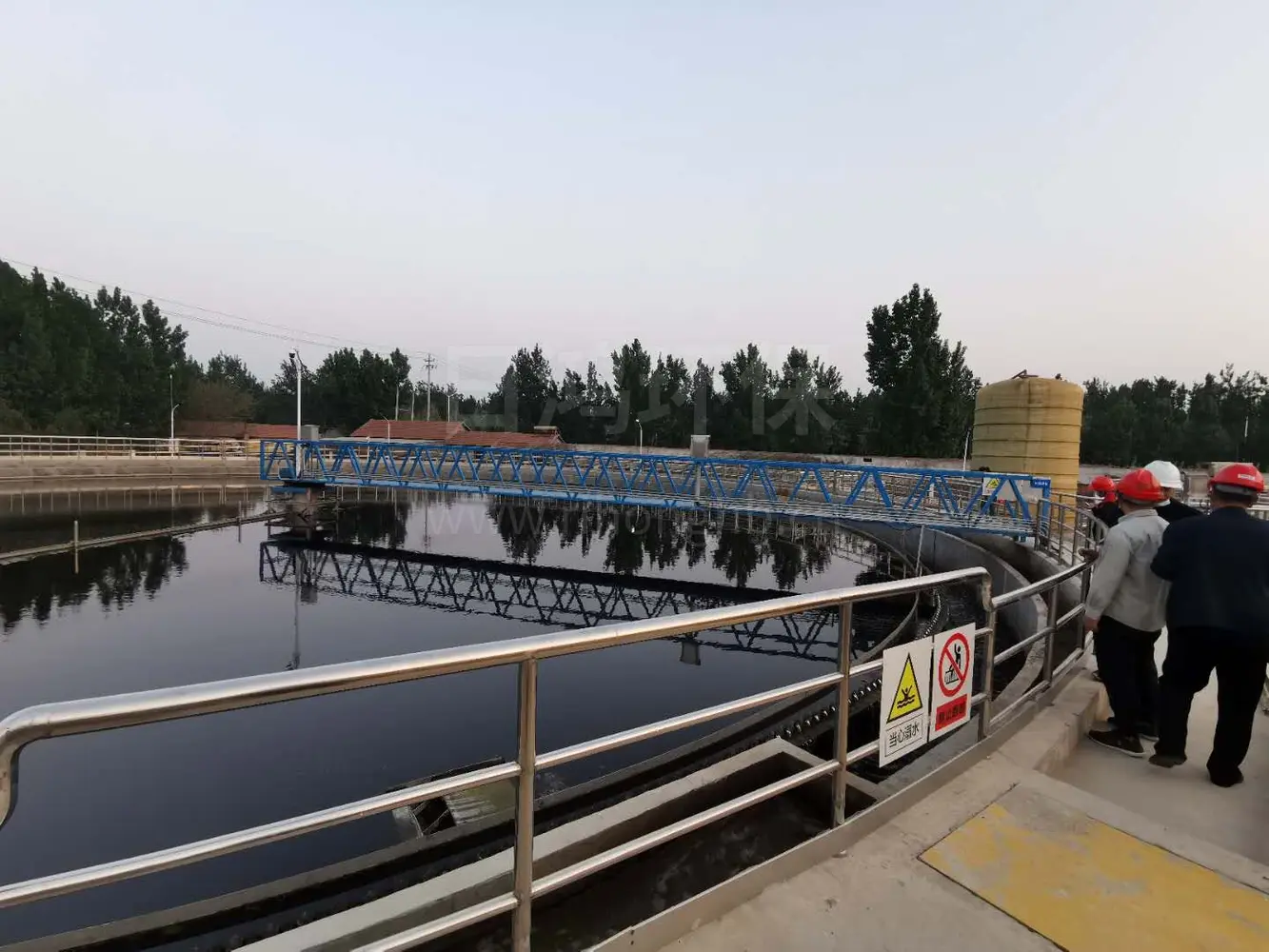
Center Drive Sludge Scraper and Suction Machine
In circular / radial-flow sedimentation tanks, the tank bottom is sloped and sludge converges toward the center. If the sludge discharge device is not properly matched, problems such as "sludge accumulation around the periphery and incomplete discharge at the center" may occur, and sludge may even float due to anaerobic conditions. The center drive sludge scraper and suction machine uses center-of-tank drive and rotating scraper arms to continuously scrape and collect bottom sludge toward the central sludge collection pit for discharge, with simultaneous scum skimming and flow stabilization. It is the standard sludge discharge equipment for circular sedimentation tanks (including sludge thickening tanks) in water supply plants and wastewater treatment plants.
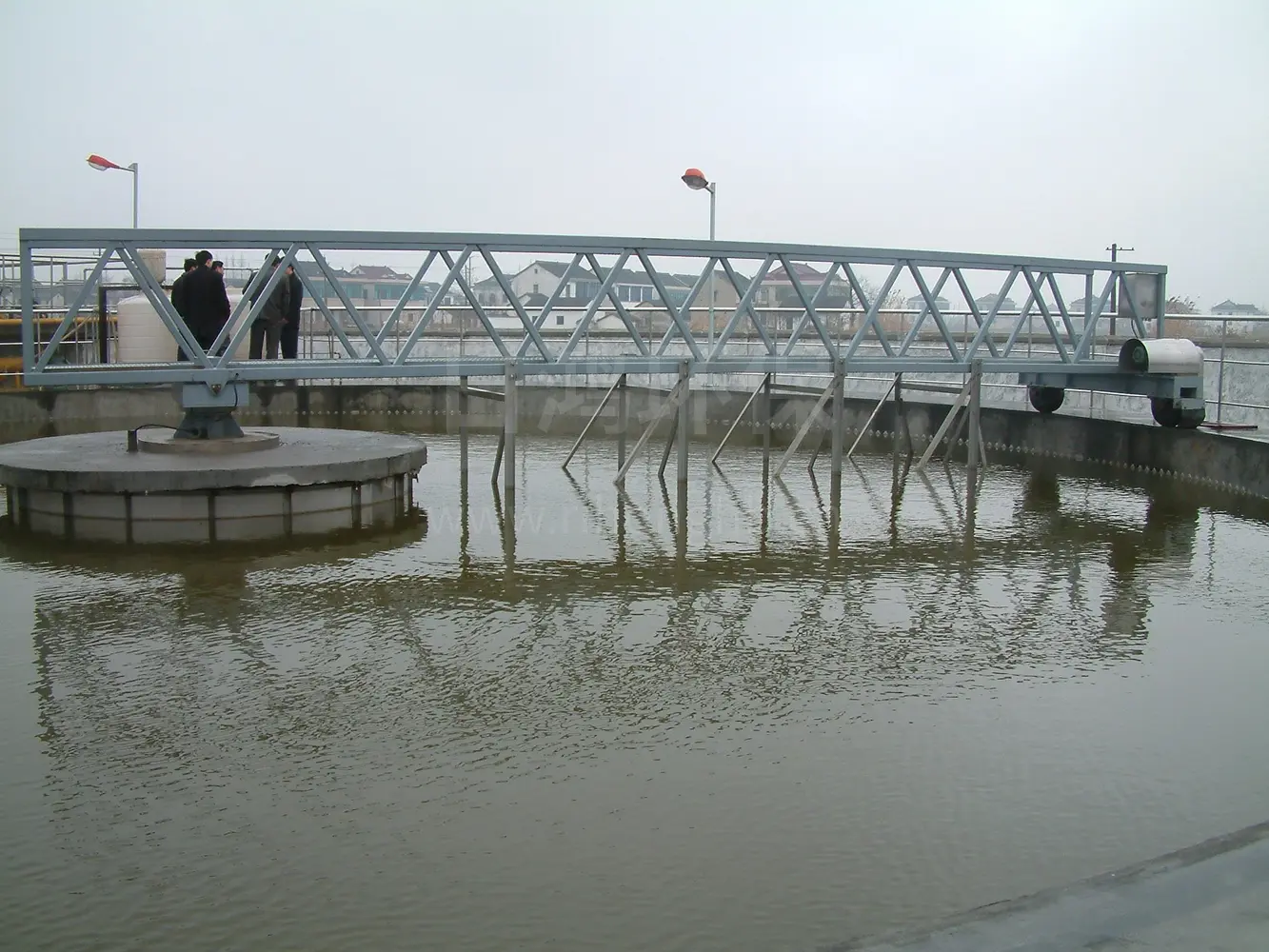
Peripheral Drive Scraper and Suction Sludge Collector
For large circular / radial-flow sedimentation tanks with diameters of tens of meters, center drive results in excessive rotational load, long scraping distance, and uneven sludge discharge, making it easy for sludge to accumulate at the far end. The peripheral drive scraper and suction sludge collector moves the drive unit to the tank-side track, where the peripheral traveling wheels drive the entire bridge to rotate around the center. The load is distributed, making it suitable for large spans. It steadily scrapes sludge from the bottom of the entire large-diameter tank toward the center for discharge, making it the main sludge removal equipment for circular tanks in large water supply plants and wastewater treatment plants.