Fried Food Production Wastewater Treatment Project: Achieving Stable Compliance Discharge with "Pretreatment + Biochemical" Process
Project Overview
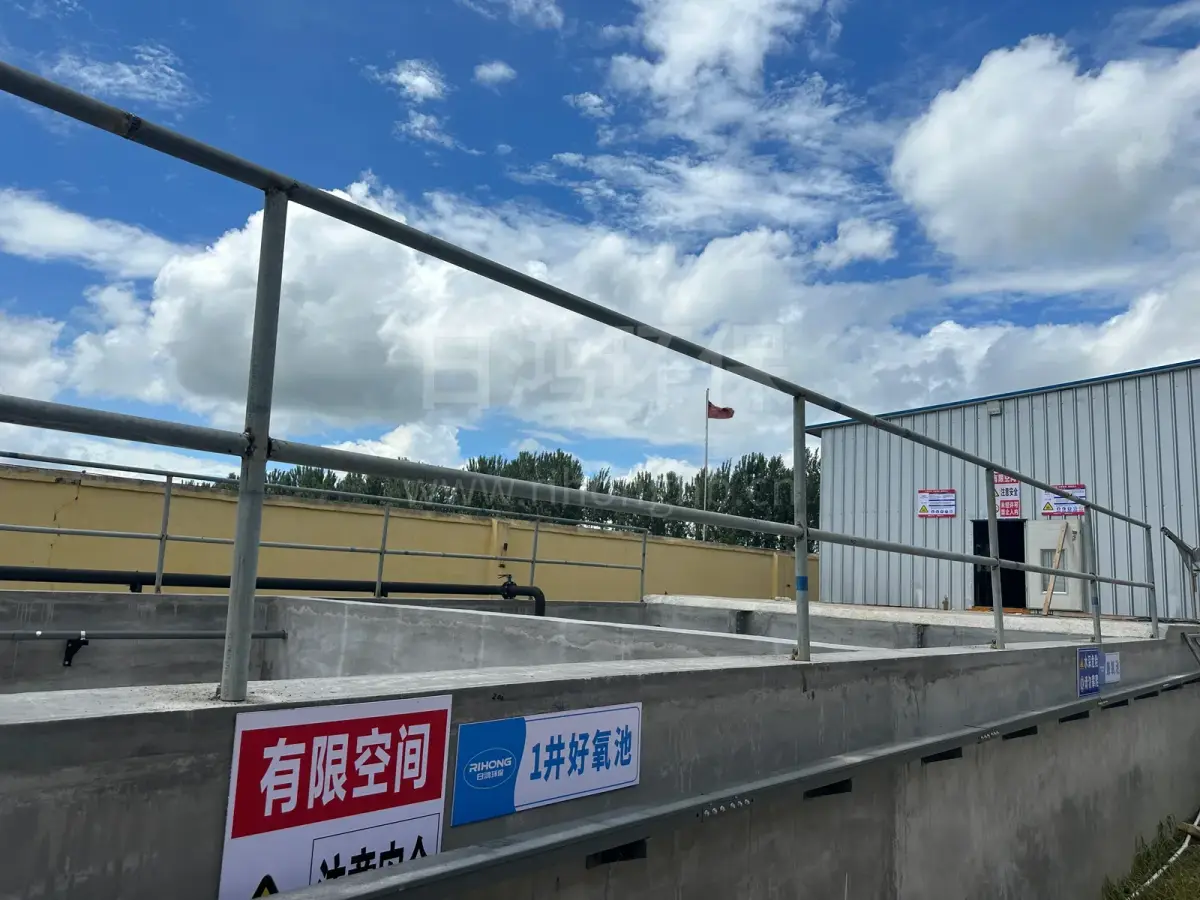
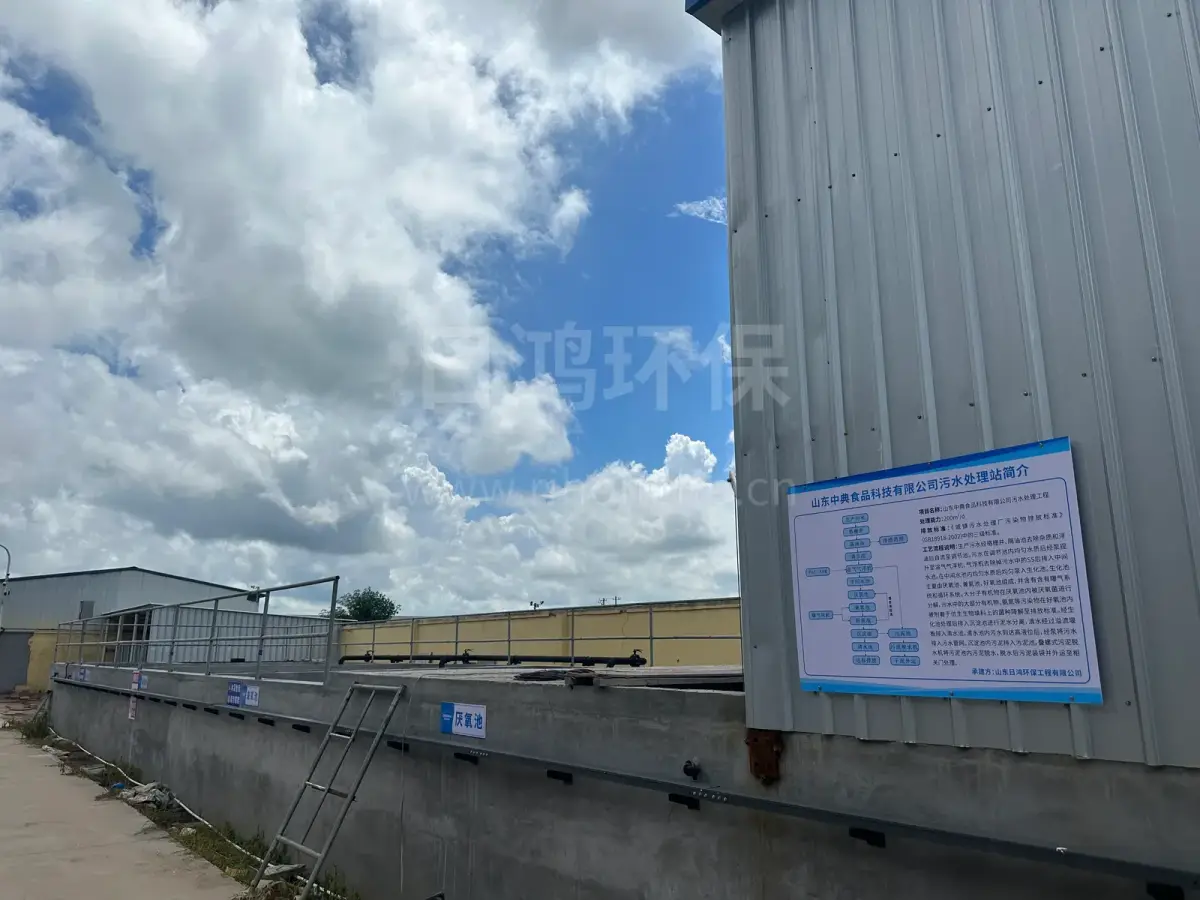
A food factory in Anqiu specializes in fried foods (fried eggplant boxes, small crispy pork, etc.). Its production wastewater contains pollutants such as broken leaves, minced meat, starch, protein, and fat, and has the characteristics of good biodegradability and few toxic and harmful substances. Considering the working conditions of large water quality fluctuations and oil- and residue-containing wastewater, this scheme adopts the main process of "pretreatment + biochemical + sedimentation": first, grease and suspended solids are removed by screens, oil separation, and air flotation; then organic matter is biochemically degraded by anaerobic + contact oxidation; finally, the effluent meets the Grade III standard of the Integrated Wastewater Discharge Standard (GB 8978-1996), with COD reduced from about 3000 mg/L to below 432 mg/L.
Project Images
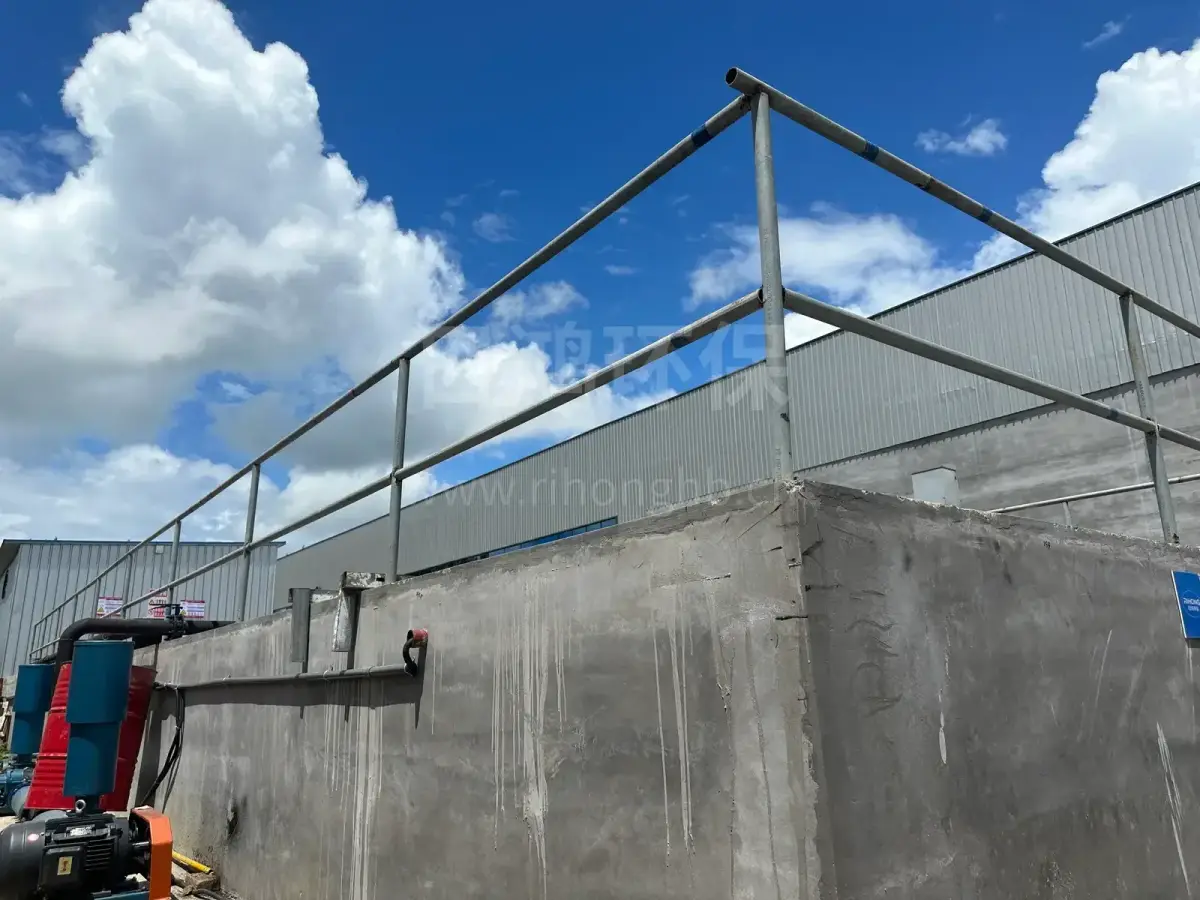
Project Details
I. Project Background
A food factory in Anqiu is a fried food processing enterprise. The wastewater mainly comes from cleaning and thawing of food raw materials, cleaning of processing equipment, cleaning of workshop floors, and domestic sewage. This type of wastewater has a relatively high organic matter concentration and carries suspended impurities such as animal and vegetable oils, minced meat, and chopped vegetables; however, its components are mainly natural organic matter such as starch, protein, and fat, and it basically contains no refractory or toxic substances, so it is suitable for biochemical treatment. At the same time, production discharge has obvious non-uniformity, so an equalization unit needs to be installed at the front end of the process to balance water quality and quantity.
II. Water Quality, Water Quantity, and Discharge Standards
Item | Value / Description | Remarks |
|---|---|---|
Design flow | About 200 m³/d (designed and operated at 10 m³/h) | Adapts to influent water quality fluctuations |
Influent CODCr | ≤ 3000 mg/L | Mixed food processing wastewater |
Main pollutants | COD, suspended solids (SS), animal and vegetable oils, starch/protein/fat organic matter | Good biodegradability |
Applicable standard | Grade III standard of the Integrated Wastewater Discharge Standard GB 8978-1996 | — |
Effluent CODCr | ≤ 500 mg/L | Compliance discharge limit |
* This scheme uses COD as the core assessment indicator; the design basis also includes GB 18918-2002, CJ 343-2010, and relevant specifications such as outdoor drainage and building water supply and drainage.
III. Treatment Process Route
The main process line is pretreatment (residue removal / oil separation / conditioning / air flotation) → biochemical treatment (anaerobic + contact oxidation) → sedimentation → compliance discharge, supported by an independent sludge collection and dewatering line. Each unit is connected in sequence and complementary in function:
Screen interception: The mechanical screen removes larger particulate impurities to prevent blockage of subsequent equipment and pipelines.
Oil separation tank: Removes residual animal and vegetable oils in the water to reduce the oil load on the biochemical system.
Equalization tank: Stores and homogenizes water with air agitation to ensure uniform and stable influent to subsequent equipment.
Dissolved air flotation: After dosing PAC / PAM, efficiently removes most suspended solids and colloids.
Intermediate water tank: Buffers the flow difference between air flotation and the biochemical system to stabilize biochemical influent.
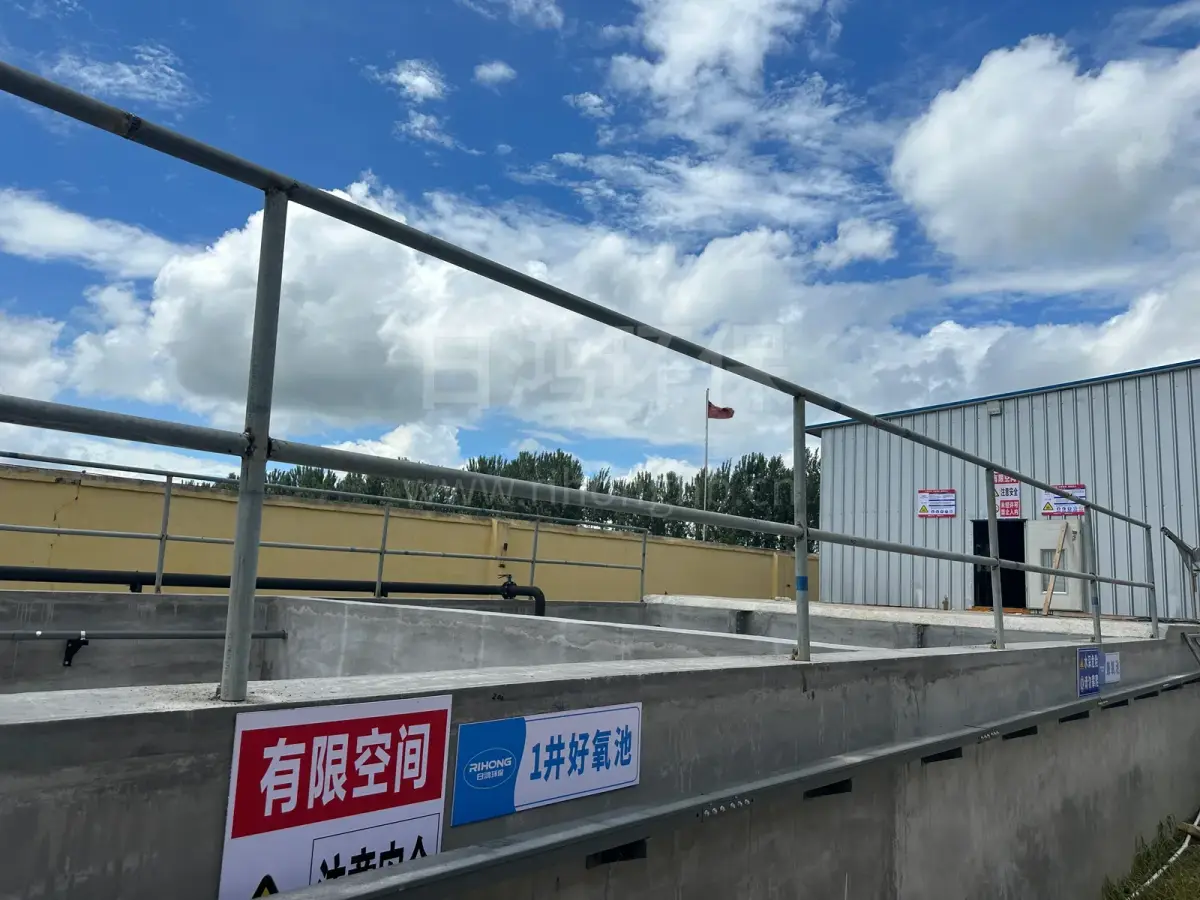
Biochemical reaction tank: Anaerobic hydrolysis + contact oxidation degrade organic matter, and terminal vertical-flow sedimentation achieves sludge-water separation.
Sludge treatment: Sedimented sludge enters the sludge tank, is reduced by a screw press dehydrator, and then transported off-site for disposal.
Process flow diagram: raw water → screen → oil separation → equalization → dissolved air flotation → intermediate water → biochemical treatment (anaerobic + contact oxidation + sedimentation) → compliance discharge (sludge: sludge tank → screw press dewatering → off-site transport)
IV. Main Structures and Equipment
Unit | Main Function | Key Parameters (Reference) |
|---|---|---|
Screen channel | Intercepts large particulate impurities and protects subsequent equipment | 2.3×0.8×3.0 m, reinforced concrete, equipped with mechanical screen |
Oil separation tank | Removes residual animal and vegetable oils | 4.3×1.4×5.0 m, reinforced concrete |
Equalization tank | Balances water quality and quantity and buffers shocks | 6.8×5.2×5.0 m, equipped with level gauge / air agitation / lift pump |
Dissolved air flotation machine | Removes most suspended solids and colloids | Treatment capacity 30 m³/h, anti-corrosion carbon steel, equipped with dissolved air / dosing system |
Intermediate water tank | Buffers the flow difference between air flotation and biochemical treatment | 6.0×5.2×5.0 m, reinforced concrete |
Biochemical reaction tank | Anaerobic + contact oxidation degrade organic matter and sedimentation separation | 17.5×4.0×3.0 m, anti-corrosion carbon steel, equipped with biological filler / aeration / reflux |
Sludge tank | Temporarily stores and thickens biochemical sludge | 2.0×5.2×5.0 m, reinforced concrete |
Sludge dehydrator | Reduces sludge volume for easy off-site transport | Screw press RDL-201, 304 stainless steel |
* The above dimensions are values from the original design scheme; actual values shall be subject to on-site land occupation and construction drawing review.
V. Treatment Effect (COD Removal Along the Process)
Process Unit | Effluent COD (mg/L) | Unit Removal Rate |
|---|---|---|
Raw water | 3000 | — |
Screen | 2850 | 5% |
Oil separation tank | 2708 | 5% |
Dissolved air flotation | 2166 | 20% |
Anaerobic tank (A tank) | 1300 | 40% |
Contact oxidation tank (O tank) | 455 | 65% |
Sedimentation tank | 432 | 5% |
Effluent COD ≈ 432 mg/L < 500 mg/L (Grade III limit of GB 8978-1996), with compliance margin. Among this, the combined anaerobic + contact oxidation contributes about 80% of the system's COD removal and is the main guarantee for stable compliance.
VI. Process Features and Advantages
① Enhanced pretreatment Multi-stage residue and oil removal by screen + oil separation + air flotation significantly reduces the subsequent biochemical load and lowers the initial project investment.
② Mature anaerobic process Anaerobic hydrolysis improves the system's shock load resistance and biodegradability, reducing the burden on the subsequent aerobic stage.
③ Efficient contact oxidation High-load contact oxidation + biological filler provides high organic matter degradation efficiency and stable effluent.
④ Synergy of physicochemical and biochemical treatment Air flotation removes suspended solids, oil separation removes grease, and biochemical degradation complements them, specifically solving the characteristic pollution of food wastewater.
⑤ Sludge reduction The screw press dehydrator operates continuously in a closed manner, resulting in low sludge moisture content and easy off-site transport and disposal.
⑥ PLC automatic control operation Equipped with level, flow, and electrical automatic control, enabling remote monitoring, stable operation, and simple operation and maintenance.
VII. Brief Introduction of the Contractor
This project is contracted by Shandong Rihong Environmental Protection Engineering Co., Ltd. The company is located in Zhucheng City, Shandong Province, and is a high-tech enterprise integrating environmental protection engineering general contracting and environmental protection equipment research, development, and manufacturing. It has strong technical strength and relatively strong non-standard design and manufacturing capabilities, and has established a laboratory and testing room. It can issue targeted wastewater treatment solutions based on raw water testing and bench-scale test results. The company's business covers wastewater treatment projects in metallurgy, electric power, light industry, chemical industry, food, slaughtering, domestic sewage, and other industries. Its products cover more than a dozen major series and hundreds of varieties, including mechanical screens, air flotation, sludge scraping and suction, filtration, anaerobic tanks, reclaimed water reuse, desulfurization and dust removal, and waste gas treatment.