
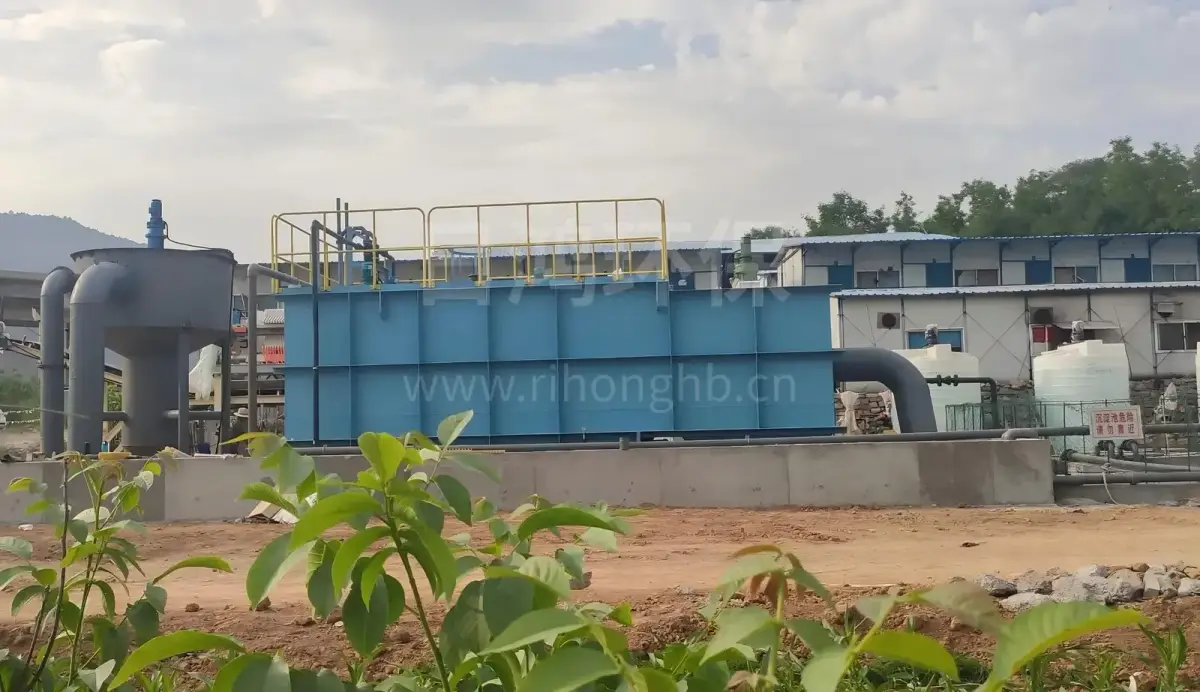
Microsand Sedimentation Tank
Traditional sedimentation tanks often fall into the dilemma of "large footprint, low loading rate, and unstable effluent under low-temperature low-turbidity and high-turbidity shock conditions." Rihong Environmental's Microsand Sedimentation Tank doses microsand as high-density floc "seed crystals," enabling flocs to rapidly densify and settle extremely fast, achieving efficient solid-liquid separation within a very short retention time—at the same effluent standard, the footprint is only a fraction of that of traditional sedimentation tanks, making it an ideal choice for upgrading and capacity expansion as well as high-turbidity water source purification.
I. Product Positioning
The Microsand Sedimentation Tank is a type of microsand-loaded high-efficiency sedimentation equipment: microsand (100–150 μm quartz sand), coagulant, and flocculant aid are dosed in the coagulation reaction zone. Microsand serves as "seed crystals" that are encapsulated into flocs, forming composite heavy particles with high density and fast settling. The mixed liquor enters the inclined tube separation zone for high-rate clarification; clarified water overflows and is discharged, while a portion of the concentrated sludge at the bottom is cleaned by a hydrocyclone and recycled back as microsand, with the remainder discharged externally. The entire process is compact in structure, quick to start, and shock-resistant. It can be arranged as ground-level steel skid-mounted units or concrete tanks, in single or multiple parallel groups.
II. Working Principle (Brief)
Chemical and Microsand Dosing and Mixing: Raw water enters the rapid mixing chamber, where coagulant, flocculant aid, and recycled microsand are simultaneously dosed and instantly uniformly mixed, with microsand becoming the core of floc growth.
Flocculation and Granulation: In the slow flocculation zone, microsand is encapsulated into flocs, forming high-density heavy particles ("microsand-floc" composites), with significantly improved particle size and settling performance.
Inclined Tube High-Rate Separation: The mixed liquor enters the inclined tube separation zone. By virtue of the shallow pool principle, dense particles settle rapidly while clarified water flows upward, with surface loading rates reaching 5–10 times that of conventional sedimentation tanks.
Microsand Hydrocyclone Recovery: The concentrated sludge at the bottom is fed into a hydrocyclone, where microsand and sludge are separated by density. The washed microsand returns to the front end for recycling, with extremely low loss.
Excess Sludge Discharge: The hydrocyclone underflow containing a small amount of microsand and phosphorus-rich sludge is discharged for disposal, maintaining microsand balance and pollutant removal in the system.
Clarified Water Effluent: Clarified water from the upper part of the inclined tubes is collected and discharged, and can be connected to subsequent filtration or disinfection units for compliant reuse or discharge.
Process flow: Raw water + chemicals + microsand → Rapid mixing → Flocculation and granulation → Inclined tube high-rate separation → Microsand hydrocyclone recovery / Excess sludge discharge → Clarified water effluent
The core mechanism lies in "microsand loading": microsand, as an inert heavy seed crystal, greatly increases floc density and settling velocity, freeing the sedimentation process from sensitivity to low temperature and low turbidity. Moreover, during the startup period, only microsand dosing is needed to rapidly form a dense sludge layer without long-term cultivation.
III. Core Advantages
① High Surface Loading Rate, Small FootprintSurface loading rate of 30–60 m³/(m²·h), approximately 5–10 times that of traditional sedimentation tanks. At the same treatment capacity, the footprint is only a fraction, enabling capacity expansion without additional land.
② Microsand Recycling, Dense FlocsMicrosand serves as seed crystals and is repeatedly recycled (hydrocyclone washing and reuse). Flocs have high density, fast settling, and resistance to breakage, ensuring stable compliance of effluent suspended solids.
③ Superior Effluent, Synergistic Phosphorus RemovalCombined with phosphorus removal chemicals, SS removal rate ≥95% and total phosphorus removal of 80–95%, often serving as a key unit for wastewater upgrading to Grade 1A standards.
④ Shock Resistance, Quick StartupStrong adaptability to high turbidity, low-temperature low-turbidity, and fluctuations in water quantity and quality. Dosing microsand rapidly establishes a sludge layer without long cultivation periods.
⑤ Modular, Easy to RetrofitAvailable in steel skid-mounted or concrete configurations, with flexible single or parallel groups. Suitable for both new construction and upgrading/expansion retrofits of old sedimentation tanks.
⑥ Economical Operation, Low Chemical ConsumptionMicrosand recycling reduces dosing costs, and hydrocyclone washing results in low loss, keeping the overall cost per ton of water controllable.
IV. Main Technical Parameters (Reference Range)
Item | Parameter Range / Description |
|---|---|
Surface loading rate | 30–60 m³/(m²·h) (approximately 5–10 times that of conventional sedimentation tanks) |
Total retention time | 15–30 min (rapid mixing + flocculation + separation) |
Microsand particle size | 100–150 μm refined quartz sand, recycled and periodically replenished |
Inclined tube parameters | Inclination angle 60°, tube diameter 35–50 mm, shallow pool high-rate clarification |
Suspended solids removal | SS removal rate ≥95% (influent SS at hundreds of mg/L level) |
Total phosphorus removal | 80–95% with phosphorus removal chemicals (depending on influent and dosage) |
Microsand circulation / loss | Hydrocyclone washing and reuse; replenishment based on operational loss |
Material and layout | Anti-corrosion steel / concrete; ground-level skid-mounted or tank body, PLC automatic control |
* The above are typical reference ranges. Actual surface loading rate, chemical dosage, and microsand circulation ratio should be determined through water quality testing and on-site commissioning.
V. Typical Application Scenarios
Scenario / Industry | Adaptability Description / Main Removal Targets |
|---|---|
High-turbidity raw water in water supply plants | Rapid clarification of high-turbidity raw water during rainy seasons and flash floods; replaces large sludge hopper sedimentation when land is limited |
Advanced upgrading of wastewater treatment plants | Advanced phosphorus and suspended solids removal from secondary effluent, stably meeting Grade 1A and stricter standards |
Enhanced phosphorus removal | Combined with chemical phosphorus removal, TP stably meets standards, reducing downstream filter load |
CSO and stormwater treatment | Rapid sedimentation of combined sewer overflows and initial stormwater, peak shaving and volume reduction |
Industrial wastewater pretreatment | High-performance suspended solids removal for mining, coal washing, stone processing, steel, etc. |
Circulating water side-stream filtration | Side-stream purification of circulating cooling systems in power plants and steel mills, water saving and emission reduction |
Water plant expansion and retrofit | In-situ upgrading of old sedimentation tanks, doubling capacity without additional land acquisition |
VI. Selection Recommendations
The Microsand Sedimentation Tank excels at high-efficiency turbidity removal and chemical phosphorus removal, suitable for clarification scenarios with high turbidity, low-temperature low-turbidity, and large water quantity fluctuations. Its core dosing is microsand + flocculation/phosphorus removal chemicals, belonging to physical-chemical loading sedimentation. Note: ① Distinguish from the microsand plus carbon sedimentation tank—this equipment is pure microsand loading without powdered activated carbon, and does not have odor, color, or micropollutant removal capabilities; if the water source has odor, color, or refractory organic matter, the microsand plus carbon type should be selected. ② Distinguish from the high-density sedimentation tank—both are high-efficiency clarification, but the high-density sedimentation tank mainly uses "dense floc seed crystals formed by external sludge circulation," while the microsand sedimentation tank mainly uses "external microsand loading." The mechanisms and dosing logic differ; selection should be determined based on raw water characteristics and removal targets. ③ Microsand is a consumable medium and requires supporting hydrocyclone washing and periodic replenishment; high-sand wastewater must have pre-desanding to slow microsand wear.
FAQ
How much does this equipment cost?
The price varies by treatment capacity, water quality, materials and configuration, so a custom quote is provided based on your actual conditions. We offer free water testing and solution design, with a detailed quote within 1 working day after requirements are confirmed.
What treatment capacity is available? Can it be customized?
Capacity is fully customizable, ranging from tens to thousands of tons per day (e.g. 0.5–30 m³/h), with non-standard design support matched precisely to your inlet/outlet requirements.
How long does delivery take?
Standard equipment typically takes about 2–4 weeks to produce; custom projects depend on scale and process. The delivery date is confirmed at contract signing, with design, manufacturing and shipping progressing on schedule.
Is installation and commissioning included?
Yes. We provide installation, system commissioning, operator training and environmental acceptance assistance, as well as long-term managed operation services on request.
What about after-sales and warranty?
We provide a warranty period and a 24/7 technical hotline, with free repair for non-human faults during the warranty period, plus spare parts supply and regular inspection services.
Make Clarification Fast and Land-Efficient
Rihong Environmental can provide process selection, microsand circulation system design, and upgrading retrofit solutions for Microsand Sedimentation Tanks. Welcome to call or leave a message for a customized configuration.
Contact Us Now →Related Products
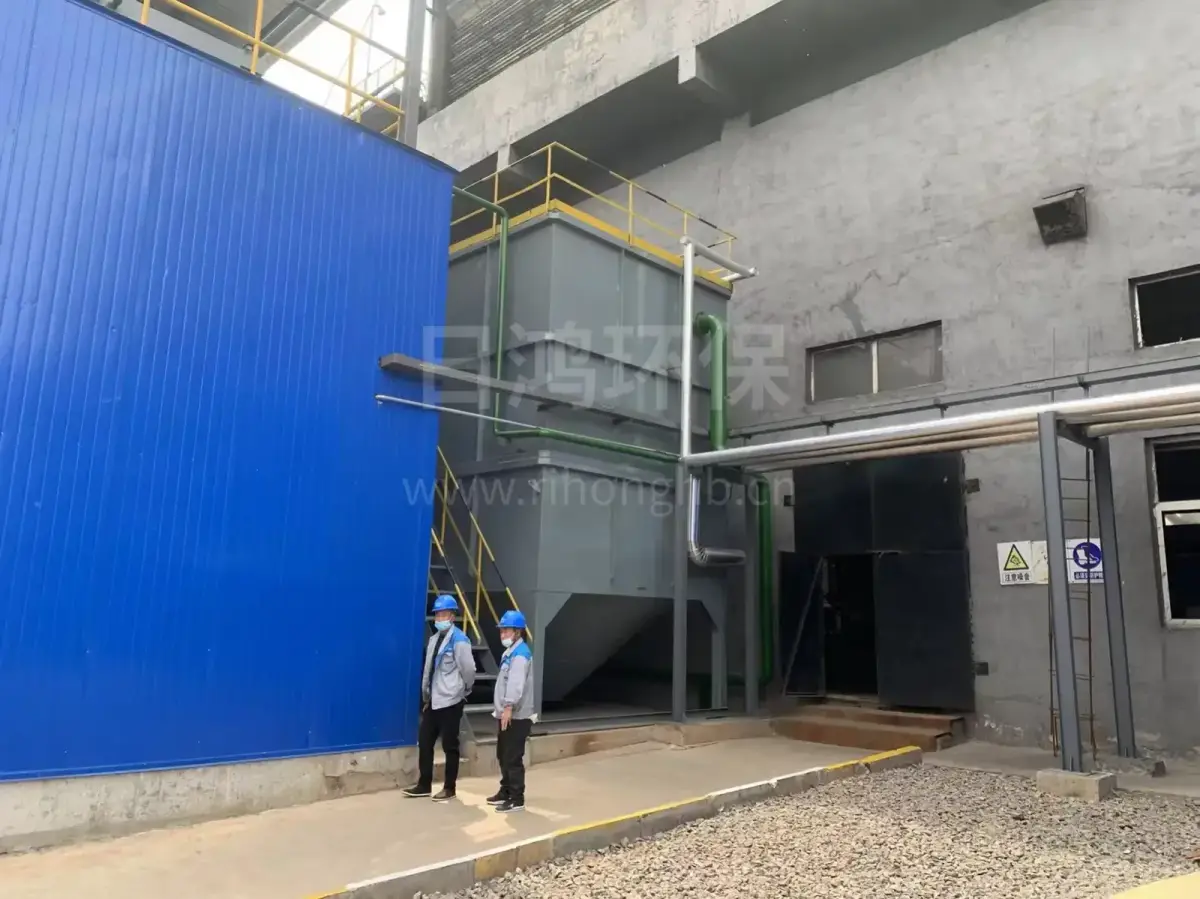
High-Density Sedimentation Tank
In scenarios such as water supply purification, advanced wastewater treatment, and hardness and fluoride removal from industrial wastewater, traditional sedimentation tanks often fall into the dilemma of "large footprint, low surface loading rate, poor effluent quality under low-temperature and low-turbidity conditions, and high moisture content in discharged sludge." The high-density sedimentation tank launched by Rihong Environmental integrates rapid mixing, mechanical flocculation, inclined tube (plate) separation, and external sludge circulation and thickening into a single tank. With the "dense floc core" formed by high-concentration sludge return, it operates stably at a surface loading rate far higher than that of conventional sedimentation, producing clear effluent with minimal sludge discharge. It is an ideal choice for upgrading and new construction projects.
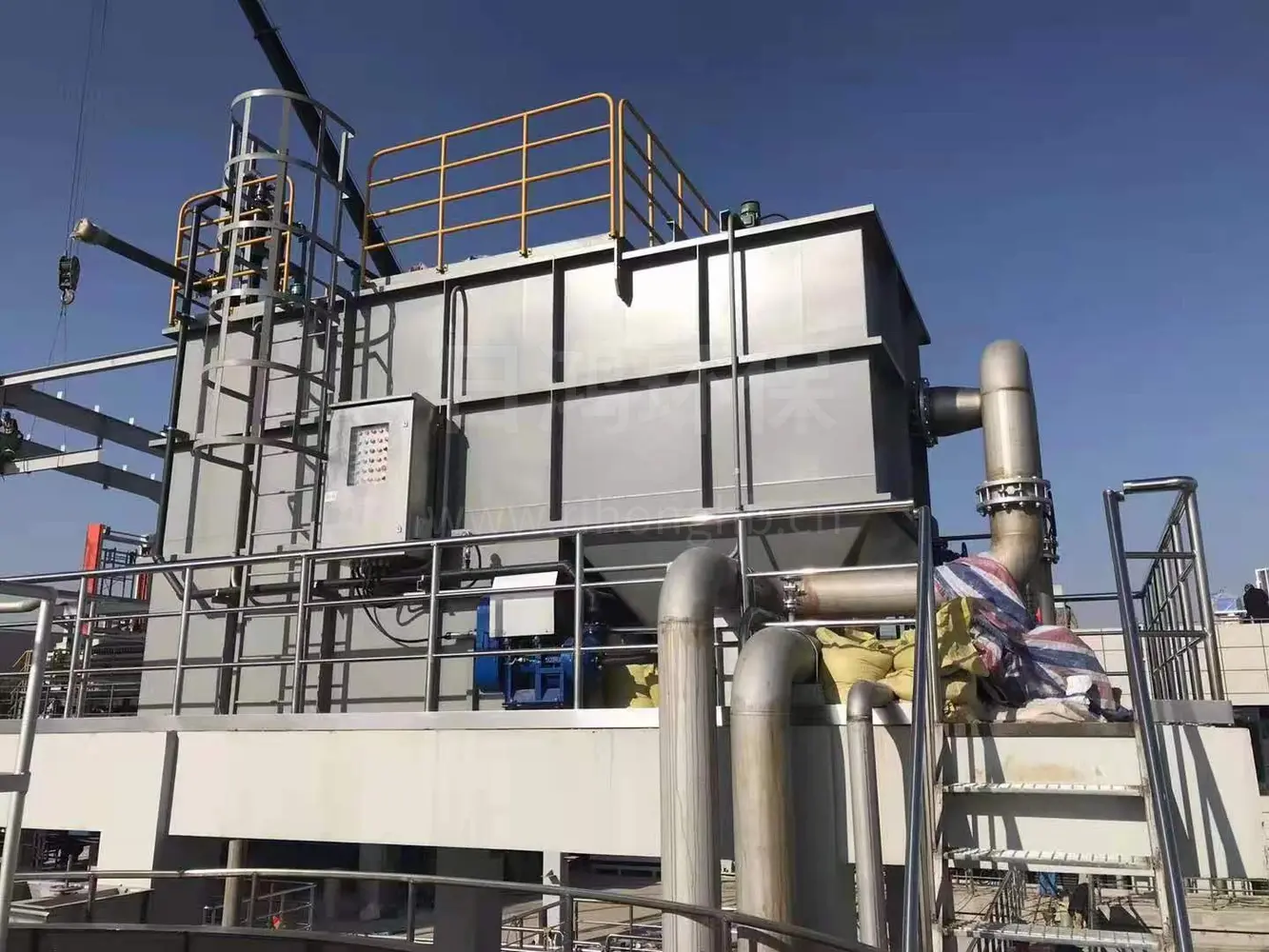
High-Density Rapid Sedimentation Water Treatment Equipment
When facing water treatment scenarios with high turbidity, high suspended solids, low temperature and low turbidity, or limited land availability, the traditional problems of conventional coagulation and sedimentation—"low surface loading rate, bulky tank volume, slow start-up"—are always unavoidable. Rihong Environmental's High-Density Rapid Sedimentation Water Treatment Equipment (also known as micro-sand sedimentation tank, Actiflo-type ballasted sedimentation) uses fine quartz sand as the "weighting skeleton" of flocs, combined with high-speed inclined tube separation and micro-sand cyclone recovery and circulation. The surface loading rate can reach several times that of traditional sedimentation, allowing the sedimentation tank to "slim down by half while producing more stable effluent," providing a compact and efficient technical route for wastewater treatment plant upgrading and capacity expansion, stormwater overflow treatment, and industrial high-turbidity wastewater.
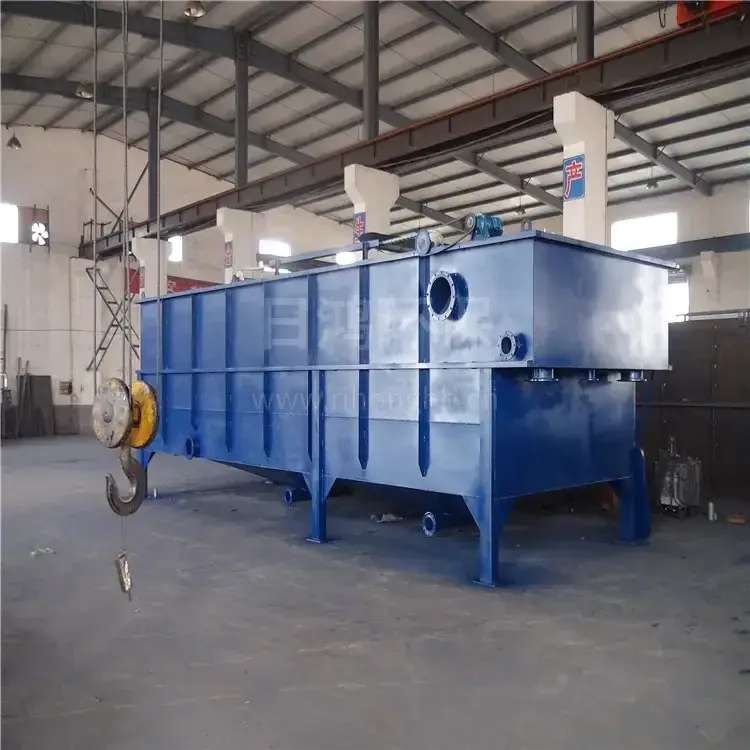
Inclined Tube Settler
Traditional horizontal sedimentation tanks often fall into the dilemma of "large footprint, low loading rate, and unstable effluent under low-temperature and low-turbidity conditions." The inclined tube settler directly applies "shallow pool theory"—by installing honeycomb inclined tube media at a 60° inclination in the sedimentation zone, the settling path of particles is shortened from several meters to less than one meter. The surface loading rate is increased by 2–3 times compared to ordinary sedimentation tanks, and the footprint is reduced by more than half, while retaining the advantages of simple structure, low investment, and easy operation and maintenance. It is the most widely applied mature equipment in the field of water supply and wastewater clarification.