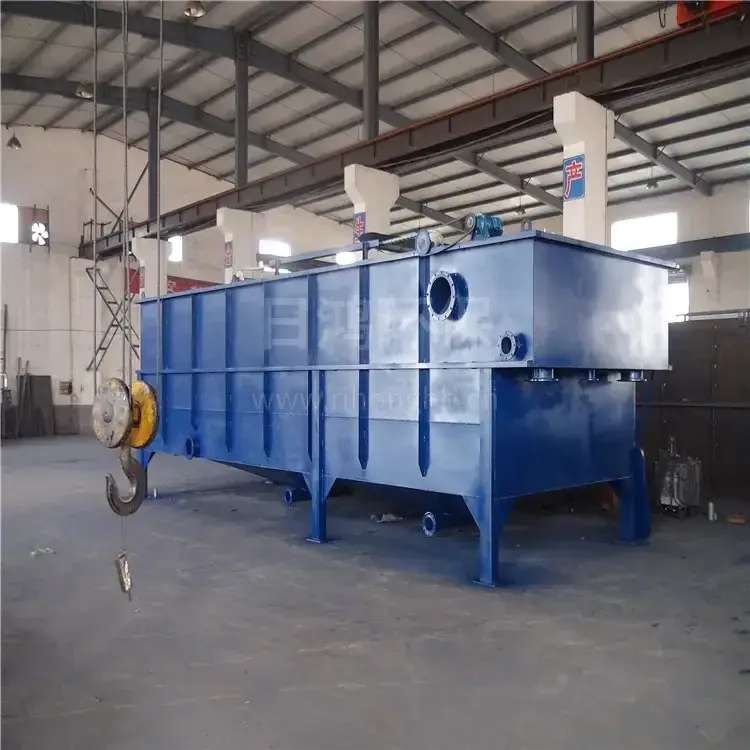
Inclined Tube Settler
Traditional horizontal sedimentation tanks often fall into the dilemma of "large footprint, low loading rate, and unstable effluent under low-temperature and low-turbidity conditions." The inclined tube settler directly applies "shallow pool theory"—by installing honeycomb inclined tube media at a 60° inclination in the sedimentation zone, the settling path of particles is shortened from several meters to less than one meter. The surface loading rate is increased by 2–3 times compared to ordinary sedimentation tanks, and the footprint is reduced by more than half, while retaining the advantages of simple structure, low investment, and easy operation and maintenance. It is the most widely applied mature equipment in the field of water supply and wastewater clarification.
I. Product Positioning
The inclined tube settler is a high-efficiency clarification device that installs inclined tube (inclined plate) media on the basis of an ordinary sedimentation tank. Its core is "shallow pool theory": when the cross-sectional area of the tank remains unchanged, the deep tank is divided into several shallow channels (honeycomb inclined tubes), and particles only need to slide a very short distance to settle to the bottom, so the separation efficiency and surface loading rate are increased multiple times. The equipment usually consists of coagulation reaction zone + water distribution zone + inclined tube sedimentation zone + clear water collection zone + bottom sludge hopper for sludge discharge. It adopts ordinary chemical coagulation (no external sludge circulation, no additional microsand), and the material is anti-corrosion steel or reinforced concrete. It can be arranged above ground or semi-buried, and can also serve as the core unit for upgrading and capacity expansion of old tanks.
II. Working Principle (Brief)
Coagulation reaction: Dosing coagulant/flocculant chemicals (PAC, PAM, etc.), rapid mixing with raw water to form fine floc particles.
Uniform water distribution: After rectification and distribution, water enters the inclined tube sedimentation zone, avoiding short-circuiting and ensuring uniform inflow to each tube.
Inclined tube sedimentation: Based on shallow pool theory, flocs slide down along the tube wall inside the 60° inclined tubes while clear water rises synchronously, completing rapid solid-liquid separation (core step).
Clear water collection: The rising clear water is uniformly collected by the top collection weir and enters subsequent filtration or compliant discharge.
Sludge sliding and thickening: Sludge settled on the inclined tubes slides down along the tube surface to the bottom sludge hopper and is thickened by gravity in the hopper.
Sludge discharge and effluent: The bottom sludge hopper discharges sludge periodically (or continuously) for external transport, while clear water exits from the top. The entire process has no rotating parts.
Process schematic: Raw water + chemicals → coagulation reaction → water distribution → inclined tube sedimentation separation → clear water collection and effluent / bottom sludge discharge
Its core mechanism lies in the "shallow pool effect": the settling distance is shortened from tank depth (several meters) to inclined tube spacing (tens of millimeters), and particles "settle upon touching the wall." This not only improves the treatment capacity per unit area, but also greatly improves effluent uniformity due to stable laminar flow conditions, especially with strong adaptability to difficult sedimentation conditions such as low temperature, low turbidity, and high turbidity.
III. Core Advantages
① High efficiency from shallow pool Surface loading rate is increased by 2–3 times compared to ordinary sedimentation tanks; for the same treatment capacity, the footprint is reduced by 1/2–2/3, with significantly improved clarification efficiency.
② Simple structure and low investment No complex systems such as stirring, external circulation, or microsand loading; both initial investment and operating energy consumption are among the lowest for clarification equipment.
③ Stable effluent Good laminar flow conditions provide strong adaptability to low temperature, low turbidity, high turbidity, and water quality fluctuations, with uniform and reliable effluent.
④ Flexible retrofit Existing horizontal or vertical flow sedimentation tanks can be upgraded and expanded simply by installing inclined tubes, making it a common means for tapping the potential of old plants.
⑤ Reliable operation No rotating parts and no easily clogged circulation pumps; few failure points, and daily management only requires regular sludge discharge.
⑥ Wide applicability Suitable for water supply, wastewater, industrial wastewater, and rainwater reuse, and connects smoothly with sand filtration/carbon filtration/membrane processes.
IV. Main Technical Parameters (Reference Range)
Item | Parameter Range / Description | Remarks |
|---|---|---|
Surface loading rate | 6–12 m³/(m²·h) | Lower values for water supply, higher values for wastewater; typical reference range |
Rising velocity | 2–3.5 mm/s | Corresponds to design surface loading rate |
Inclined tube aperture | 25–80 mm (commonly 50 mm honeycomb tube) | PP/PVC material, hexagonal honeycomb structure |
Inclined tube inclination | 60° | Balances sedimentation and sludge sliding |
Inclined tube length | 800–1000 mm | Tube length affects separation efficiency |
Total retention time | 20–40 min | Including reaction stage, depends on water quality |
Suspended solids removal rate | SS removal 70–90% | Higher turbidity removal for water supply, up to 90%+ |
Main material | Anti-corrosion steel / reinforced concrete + PP/PVC inclined tubes | Underground type optional |
* The above are typical reference values. Actual surface loading rate, load, and effluent indicators should be determined by design calculation and on-site commissioning.
V. Typical Application Scenarios
Scenario / Industry | Adaptation Description / Main Removal Targets |
|---|---|
Water treatment plant clarification | Pretreatment of high-turbidity/low-temperature low-turbidity raw water, removing turbidity and algae, followed by filtration |
Wastewater plant secondary settling / advanced treatment | Replacing or enhancing secondary clarifiers, advanced phosphorus and suspended solids removal, tail water upgrading |
Industrial wastewater | Settling of suspended solids and some pollutants after coagulation in printing and dyeing, papermaking, electroplating, etc. |
Stormwater / CSO | Rapid settling of high suspended solids in initial rainfall, reducing non-point source pollution |
Circulating water side-stream filtration | Suspended solids control in open circulating water systems, mitigating scaling and corrosion |
Reclaimed water reuse | Clarification in pretreatment stage, reducing load on subsequent filtration/membrane |
Old tank upgrading | Installing inclined tubes in existing sedimentation tanks to increase capacity and upgrade standards without expansion or land acquisition |
VI. Applicable Boundaries and Selection Recommendations
The inclined tube settler is the most basic and most economical tier among clarification equipment: it relies on shallow pool media to increase loading rate, with no external sludge circulation and no microsand loading, and is suitable for stable removal of conventional turbidity/suspended solids. Its distinction from other clarification equipment in the same series is as follows—high-density clarifiers rely on external sludge circulation to form dense crystal seeds, have higher loading rates, and can enhance phosphorus removal; microsand clarifiers rely on external microsand loading, with surface loading rates up to 30–60 m³/(m²·h) and stronger shock resistance; the three have increasing investment, loading rate, and applicable precision. Lightweight pollutants with specific gravity less than water (oil, algae, microbubble flocs) should still preferentially consider dissolved air flotation rather than sedimentation.
For selection: influent should first undergo coagulation reaction with uniform water distribution controlled; inclined tubes must be periodically flushed to prevent floc accumulation and clogging, and thermal insulation and freeze protection should be provided in northern regions; sludge discharge cycles should be set according to sludge volume to avoid sludge accumulation, compaction, and floating. Specific scale and loading rate should be determined by design calculation in combination with water quality and effluent standards.
FAQ
How much does this equipment cost?
The price varies by treatment capacity, water quality, materials and configuration, so a custom quote is provided based on your actual conditions. We offer free water testing and solution design, with a detailed quote within 1 working day after requirements are confirmed.
What treatment capacity is available? Can it be customized?
Capacity is fully customizable, ranging from tens to thousands of tons per day (e.g. 0.5–30 m³/h), with non-standard design support matched precisely to your inlet/outlet requirements.
How long does delivery take?
Standard equipment typically takes about 2–4 weeks to produce; custom projects depend on scale and process. The delivery date is confirmed at contract signing, with design, manufacturing and shipping progressing on schedule.
Is installation and commissioning included?
Yes. We provide installation, system commissioning, operator training and environmental acceptance assistance, as well as long-term managed operation services on request.
What about after-sales and warranty?
We provide a warranty period and a 24/7 technical hotline, with free repair for non-human faults during the warranty period, plus spare parts supply and regular inspection services.
Make Clarification More Space-Saving and Reliable
Rihong Environmental can provide selection, layout, and upgrading solutions for inclined tube settlers. Welcome to call or leave a message for exclusive technical advice.
Contact Us Now →Related Products
High-Density Sedimentation Tank
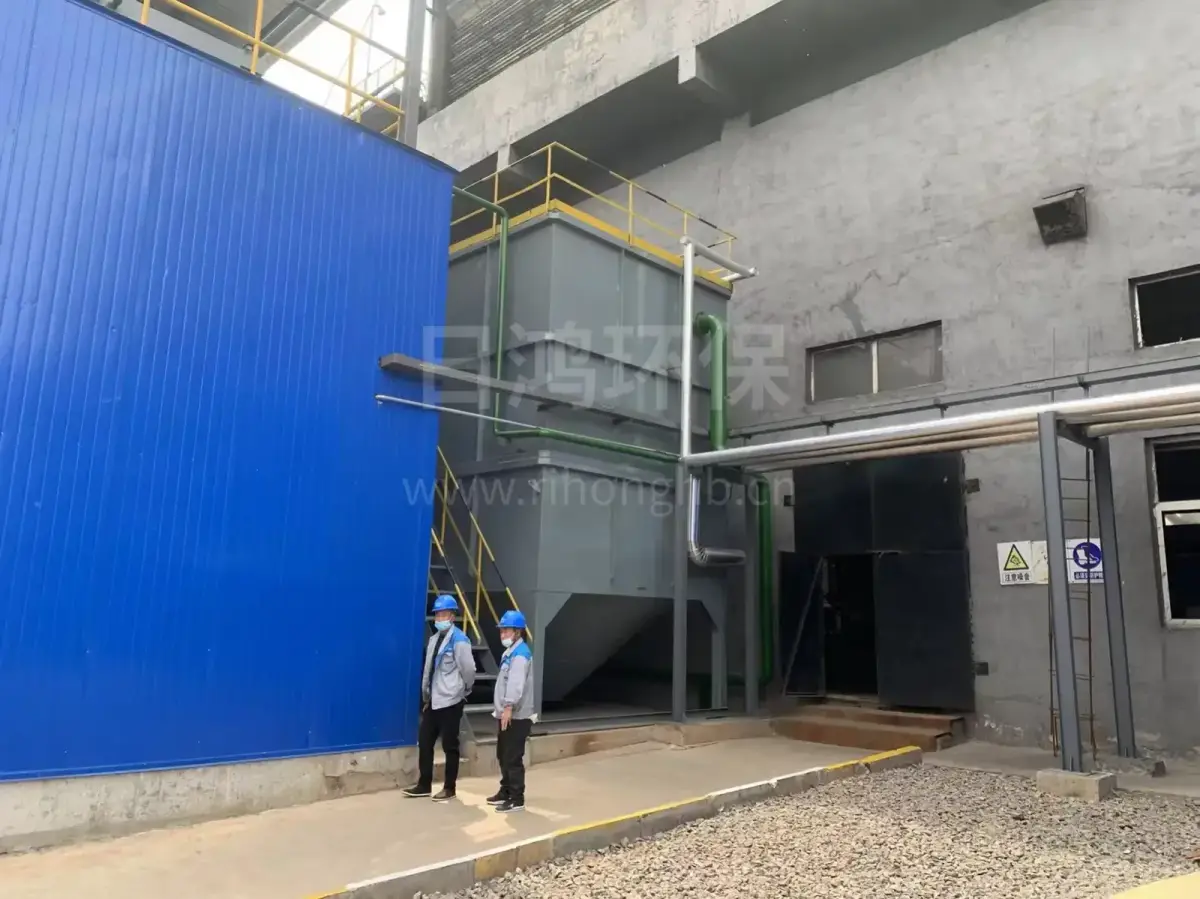
In scenarios such as water supply purification, advanced wastewater treatment, and hardness and fluoride removal from industrial wastewater, traditional sedimentation tanks often fall into the dilemma of "large footprint, low surface loading rate, poor effluent quality under low-temperature and low-turbidity conditions, and high moisture content in discharged sludge." The high-density sedimentation tank launched by Rihong Environmental integrates rapid mixing, mechanical flocculation, inclined tube (plate) separation, and external sludge circulation and thickening into a single tank. With the "dense floc core" formed by high-concentration sludge return, it operates stably at a surface loading rate far higher than that of conventional sedimentation, producing clear effluent with minimal sludge discharge. It is an ideal choice for upgrading and new construction projects.
Microsand Sedimentation Tank
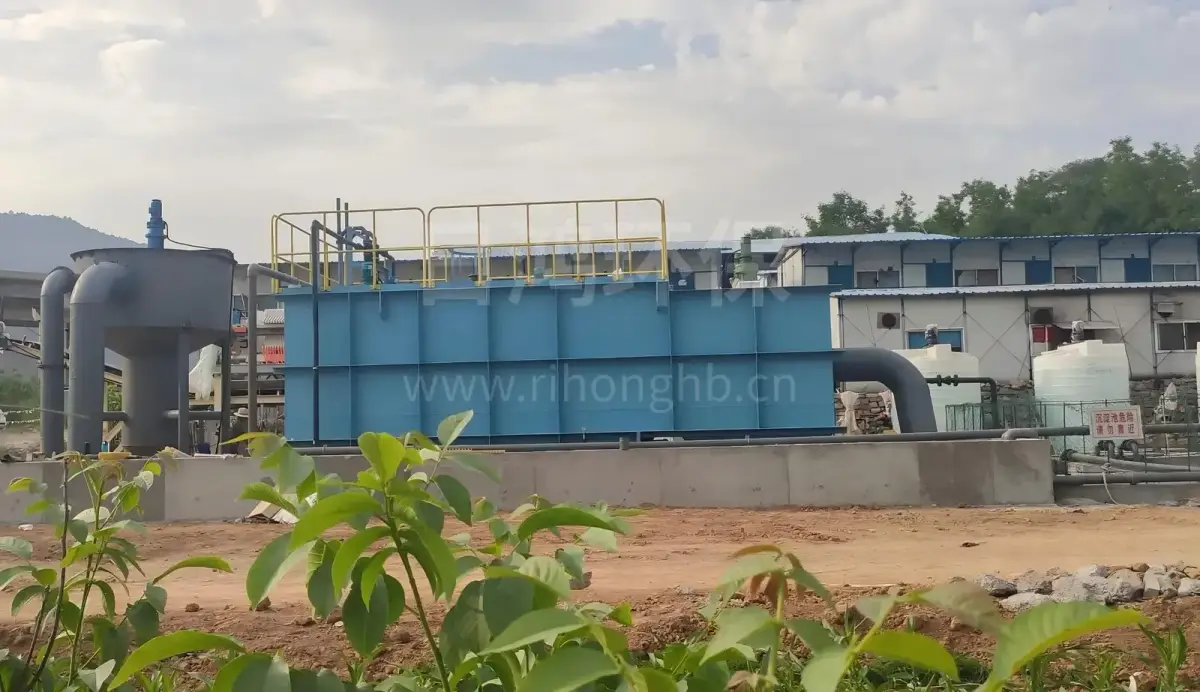
Traditional sedimentation tanks often fall into the dilemma of "large footprint, low loading rate, and unstable effluent under low-temperature low-turbidity and high-turbidity shock conditions." Rihong Environmental's Microsand Sedimentation Tank doses microsand as high-density floc "seed crystals," enabling flocs to rapidly densify and settle extremely fast, achieving efficient solid-liquid separation within a very short retention time—at the same effluent standard, the footprint is only a fraction of that of traditional sedimentation tanks, making it an ideal choice for upgrading and capacity expansion as well as high-turbidity water source purification.
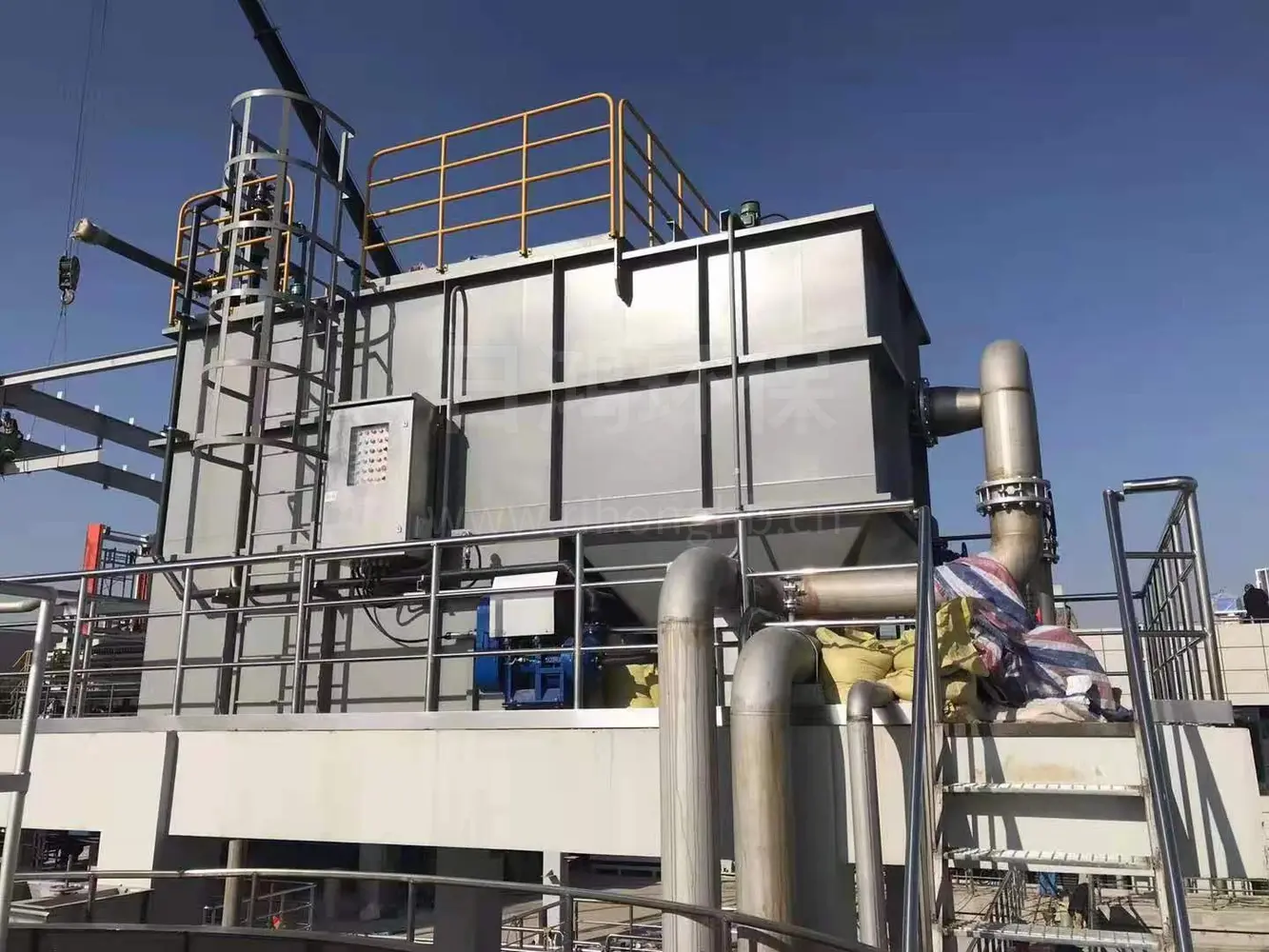
High-Density Rapid Sedimentation Water Treatment Equipment
When facing water treatment scenarios with high turbidity, high suspended solids, low temperature and low turbidity, or limited land availability, the traditional problems of conventional coagulation and sedimentation—"low surface loading rate, bulky tank volume, slow start-up"—are always unavoidable. Rihong Environmental's High-Density Rapid Sedimentation Water Treatment Equipment (also known as micro-sand sedimentation tank, Actiflo-type ballasted sedimentation) uses fine quartz sand as the "weighting skeleton" of flocs, combined with high-speed inclined tube separation and micro-sand cyclone recovery and circulation. The surface loading rate can reach several times that of traditional sedimentation, allowing the sedimentation tank to "slim down by half while producing more stable effluent," providing a compact and efficient technical route for wastewater treatment plant upgrading and capacity expansion, stormwater overflow treatment, and industrial high-turbidity wastewater.