High-Efficiency Electrocatalysis Equipment
Wastewater containing refractory organics, high salinity, toxic substances, and poor biodegradability often cannot be handled by conventional biological treatment. Rihong Environmental launches the ECO electrocatalytic oxidation equipment, which directly mineralizes pollutants via electrocatalytic anodes, replacing chemicals with electricity and producing no Fenton iron sludge or secondary hazardous waste. It is an ideal choice for advanced compliance and upgrading of wastewater from chemical, pharmaceutical, and electroplating industrial parks; it can also serve as a pretreatment stage to break toxicity and enhance biodegradability, feeding the "hard bones" back into the biological system.
I. Product Positioning
ECO electrocatalytic oxidation equipment is an electrochemical advanced oxidation device centered on catalytic electrodes: driven by a direct current electric field, pollutants undergo direct electron transfer at the anode surface and are decomposed, or are indirectly mineralized by strong oxidants such as hydroxyl radicals (·OH) generated in situ at the anode, ultimately converting into CO₂ and H₂O. Rihong adopts a non-precious metal catalytic electrode approach, balancing oxidation activity and operational lifespan, avoiding precious metal dissolution and high costs, and turning "replacing chemicals with electricity" from a concept into engineering equipment capable of long-term stable operation.
II. Working Principle (Brief)
Influent distribution: After homogenization and equalization, the wastewater enters the electrolytic reaction zone, where pH and conductivity are adjusted as needed to ensure stable reaction.
Anodic direct oxidation: Pollutants undergo direct electron transfer at the catalytic anode surface and are progressively decomposed and mineralized.
Indirect oxidation (·OH): Strong oxidants such as hydroxyl radicals are generated in situ at the anode, non-selectively mineralizing refractory organics.
Synergistic oxidation (high salinity): In the presence of chloride ions, active chlorine (HClO) is generated for synergistic oxidation; chlorate/perchlorate by-products need to be controlled.
Effluent and downstream: The ECO stage effluent enters downstream sedimentation or biological treatment; this stage does not dose Fenton reagents or produce chemical iron sludge.
Electrode cleaning: Pulse/periodic polarity reversal power supply inhibits plate scaling, combined with regular online cleaning to maintain long-term efficiency.
Process flow: Influent → Distribution/conditioning → Electrocatalytic oxidation (direct + indirect) → Downstream biological treatment/sedimentation → Compliant effluent (ECO stage: no Fenton, no iron sludge)
The proportion of direct oxidation to indirect oxidation depends on the anode material: non-precious metal catalytic coatings achieve a balance between oxidation activity and lifespan, enabling ECO to deeply mineralize organics without introducing external chemical sludge, which is the essential advantage distinguishing it from chemicals such as Fenton.
III. Core Advantages
① Replacing chemicals with electricity, no Fenton iron sludgeNo ferrous iron/hydrogen peroxide dosing, no iron-containing hazardous waste sludge, low disposal cost and low environmental compliance risk.
② Non-precious metal electrodes, long lifespanNon-precious metal catalytic coatings, no precious metal dissolution, stable operation and simple maintenance.
③ Thorough mineralization, clean effluent·OH strong oxidation deeply mineralizes organics, reducing COD while decolorizing, detoxifying, and breaking complexation.
④ Small footprint, modularCompact skid-mounted/modular design, parallel expansion possible, adaptable to different water volumes and retrofit spaces.
⑤ Intelligent control, minimal staffingPLC + remote monitoring, automatically adjusts current and operation based on water quality, reducing O&M dependence.
⑥ Flexible combination, seamless integrationCan serve as advanced treatment stage or pretreatment to enhance biodegradability, flexibly coupled with anaerobic/aerobic/MBR.
IV. Main Technical Parameters (Reference Range)
Item | Parameter Range / Description | Remarks |
|---|---|---|
Treatment capacity | Modular, configured by water volume and COD load (parallel expansion possible) | Project-specific |
Electrode type | Non-precious metal catalytic electrode (titanium-based catalytic coating) | No precious metal dissolution |
Power supply type | DC stabilized / pulse / periodic polarity reversal | Inhibits scaling, extends lifespan |
Applicable pH | Generally wide range adaptability (specific to electrode and design) | Determined by design |
COD removal (advanced treatment stage) | Typically 30% – 70% (depending on water quality and target) | Mainly refractory organics |
Energy consumption per ton of water | Strongly correlated with pollutant load, calculated as kWh/kg COD | More economical as advanced/pretreatment stage |
By-products | No external iron sludge; chlorate/perchlorate control needed in high-salinity scenarios | Boundary reminder |
Layout | Skid-mounted / modular, indoor or under shelter | Convenient footprint |
* The above are typical reference ranges. Actual removal performance and power consumption are affected by raw water quality, concentration, target removal rate, electrode and power supply selection, and operational management. Specific values shall be determined by design calculations and on-site commissioning.
V. Typical Application Scenarios
Scenario | Adaptability Description |
|---|---|
Chemical industrial park wastewater | Advanced treatment of refractory organics, upgrading and water reuse |
Pharmaceutical / API wastewater | High toxicity, high salinity, poor biodegradability; ECO breaks toxicity and enhances biodegradability |
Electroplating / PCB wastewater | Breakdown of complexed heavy metals, advanced purification |
Printing and dyeing / dye wastewater | Efficient decolorization and COD mineralization |
Landfill leachate | Advanced reduction of refractory COD in mature leachate |
Petrochemical / fine chemicals | Detoxification and compliance of toxic and hazardous organics |
VI. Applicable Boundaries and Selection Recommendations
ECO is suitable for wastewater that is refractory, high-salinity, toxic, and poorly biodegradable (B/C < 0.3), serving as an advanced treatment stage or pretreatment detoxification stage; forcing it on low-concentration, huge-volume scenarios is uneconomical, and recirculation to biological treatment is preferable. High-salinity wastewater requires assessment and control of active chlorine by-products (chlorate/perchlorate). Selection should be based on water quality testing and bench-scale tests to determine current density, retention time, and electrode configuration; cyanide-containing wastewater must first undergo cyanide destruction, and when heavy metals exist in complexed form, ECO can assist in breaking complexation but requires subsequent precipitation.
FAQ
How much does this equipment cost?
The price varies by treatment capacity, water quality, materials and configuration, so a custom quote is provided based on your actual conditions. We offer free water testing and solution design, with a detailed quote within 1 working day after requirements are confirmed.
What treatment capacity is available? Can it be customized?
Capacity is fully customizable, ranging from tens to thousands of tons per day (e.g. 0.5–30 m³/h), with non-standard design support matched precisely to your inlet/outlet requirements.
How long does delivery take?
Standard equipment typically takes about 2–4 weeks to produce; custom projects depend on scale and process. The delivery date is confirmed at contract signing, with design, manufacturing and shipping progressing on schedule.
Is installation and commissioning included?
Yes. We provide installation, system commissioning, operator training and environmental acceptance assistance, as well as long-term managed operation services on request.
What about after-sales and warranty?
We provide a warranty period and a 24/7 technical hotline, with free repair for non-human faults during the warranty period, plus spare parts supply and regular inspection services.
Replace Chemicals with Electricity, Make Refractory Wastewater Clean and Compliant
We provide water quality assessment, bench-scale validation, electrode and power supply selection, and skid-mounted layout solutions. Welcome to call or leave a message to obtain ECO configuration recommendations tailored to your wastewater quality and discharge standards.
Contact Us Now →Related Products
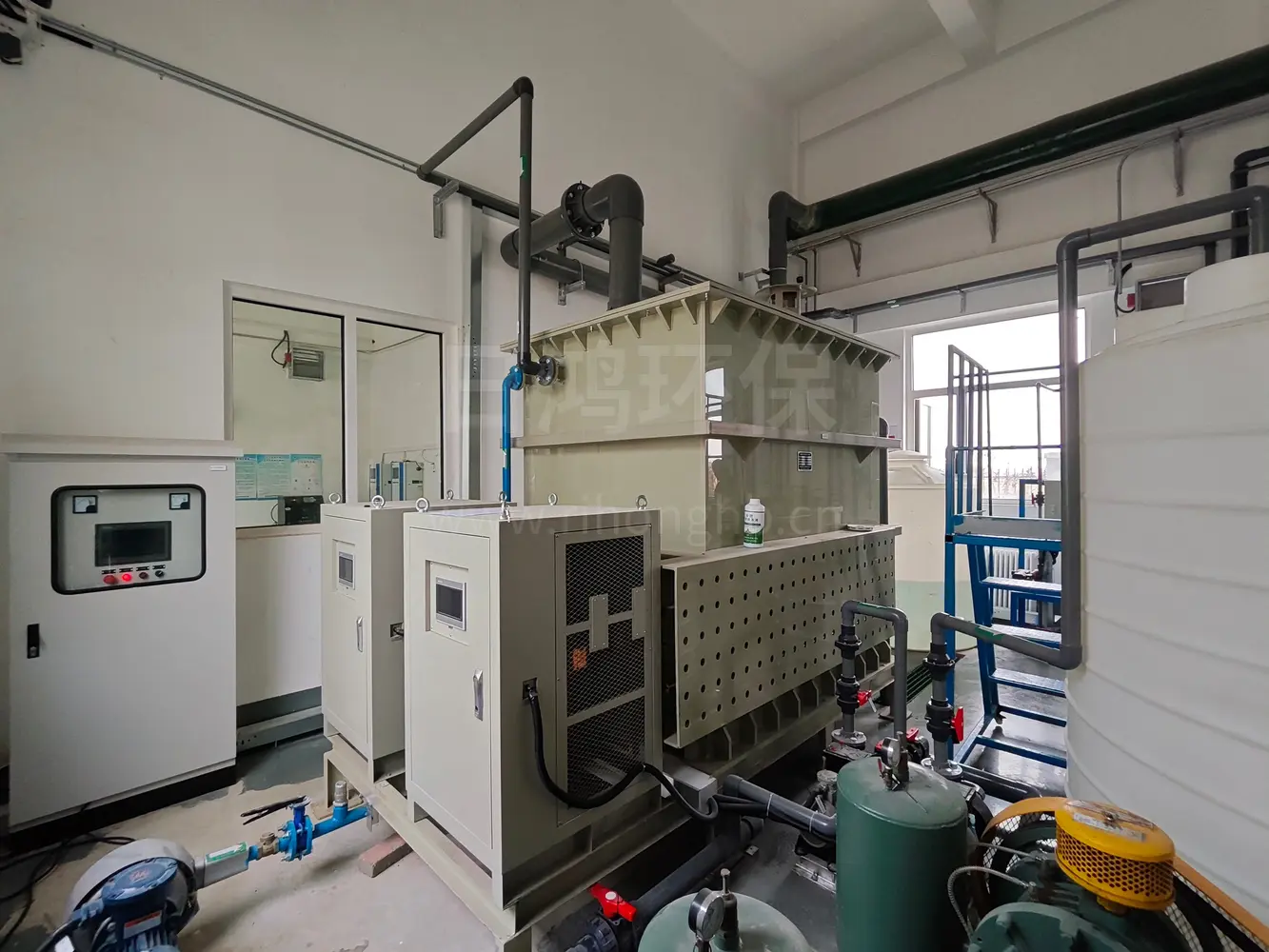
Electrocoagulation DAF Unit
Faced with complex wastewater from electroplating, printing and dyeing, petrochemical, landfill leachate and other industries—characterized by high salinity, high turbidity, oil content and poor biodegradability—traditional chemical coagulation often falls into the dilemma of high chemical consumption, large sludge volume and unstable compliance. Wushi Environmental officially launches the Electrocoagulation-Dissolved Air Flotation Integrated Unit (EC-DAF), which integrates electrolytic coagulation, electroflotation and free radical oxidation into a single unit. With no or only a small amount of chemical dosing, it simultaneously achieves coagulation, flotation separation and partial oxidative degradation, providing a cleaner and more compact technical route for the pretreatment and advanced treatment of difficult wastewater.
Boron-Doped Diamond (BDD) Electrode
Facing complex wastewater from pharmaceuticals, pesticides, dyes, and landfill leachate—characterized by "high toxicity, high salinity, and poor biodegradability"—traditional biological treatment and conventional Fenton often struggle with slow degradation, secondary sludge production, and high costs. Boron-Doped Diamond (BDD) electrodes, with their extremely wide electrochemical potential window and ultra-high oxygen evolution overpotential, in-situ enrich strong oxidizing species such as hydroxyl radicals, active chlorine, persulfate, and even ozone on the anode surface, directly "mineralizing" organic matter into carbon dioxide and water—making them the core electrode consumable for electrocatalytic oxidation (ECO) equipment to achieve deep purification.
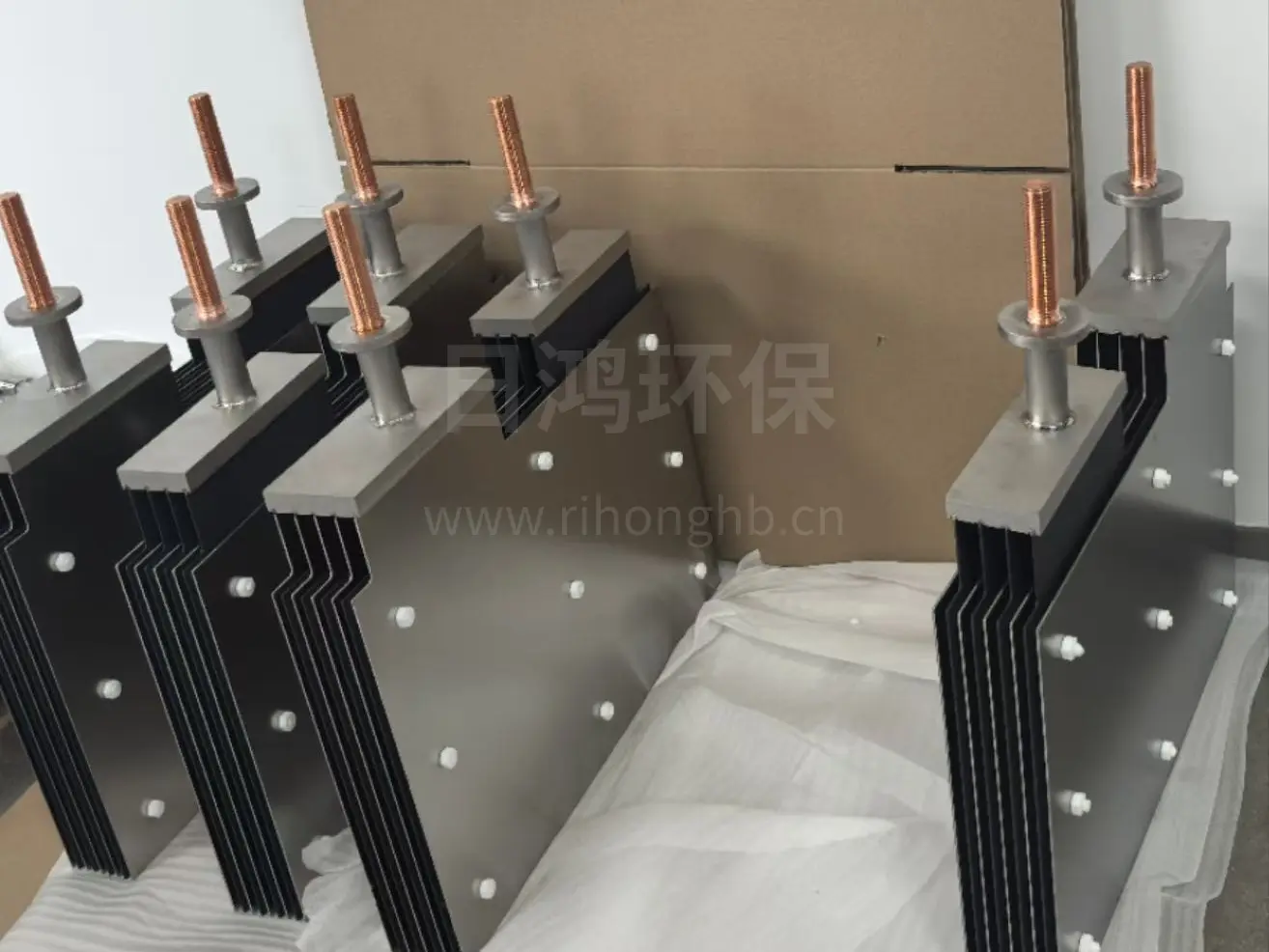
Titanium Anodes for Wastewater Treatment
The performance of electrochemical water treatment processes such as electrocatalytic oxidation, electrolytic chlorine disinfection, and electro-Fenton fundamentally depends on the electrode. Traditional soluble anodes (such as aluminum and iron) are consumed quickly, require frequent electrode replacement, and introduce additional metal ions into the water. This product is a Dimensionally Stable Anode (DSA) made with industrial pure titanium as the substrate and a noble metal oxide active layer coated on the surface. It is insoluble, long-lasting, and has tunable catalytic properties, making it the "heart" component for long-term stable operation of electrochemical wastewater treatment equipment.