Biological Deodorization
Large volumes of odorous gases (hydrogen sulfide, ammonia, mercaptans, VOCs, etc.) generated by wastewater treatment plants, sludge treatment, waste transfer, and livestock farming are both a nuisance to residents and an environmental compliance concern. Chemical scrubbing consumes reagents, activated carbon requires replacement, and incineration burns fuel—whereas biological deodorization uses microorganisms attached to packing media to directly degrade odorous pollutants into carbon dioxide, water, and inorganic salts, with no secondary pollution and low operating costs. It is the mainstream green solution for low-concentration, high-air-volume odor control.
I. Product Positioning
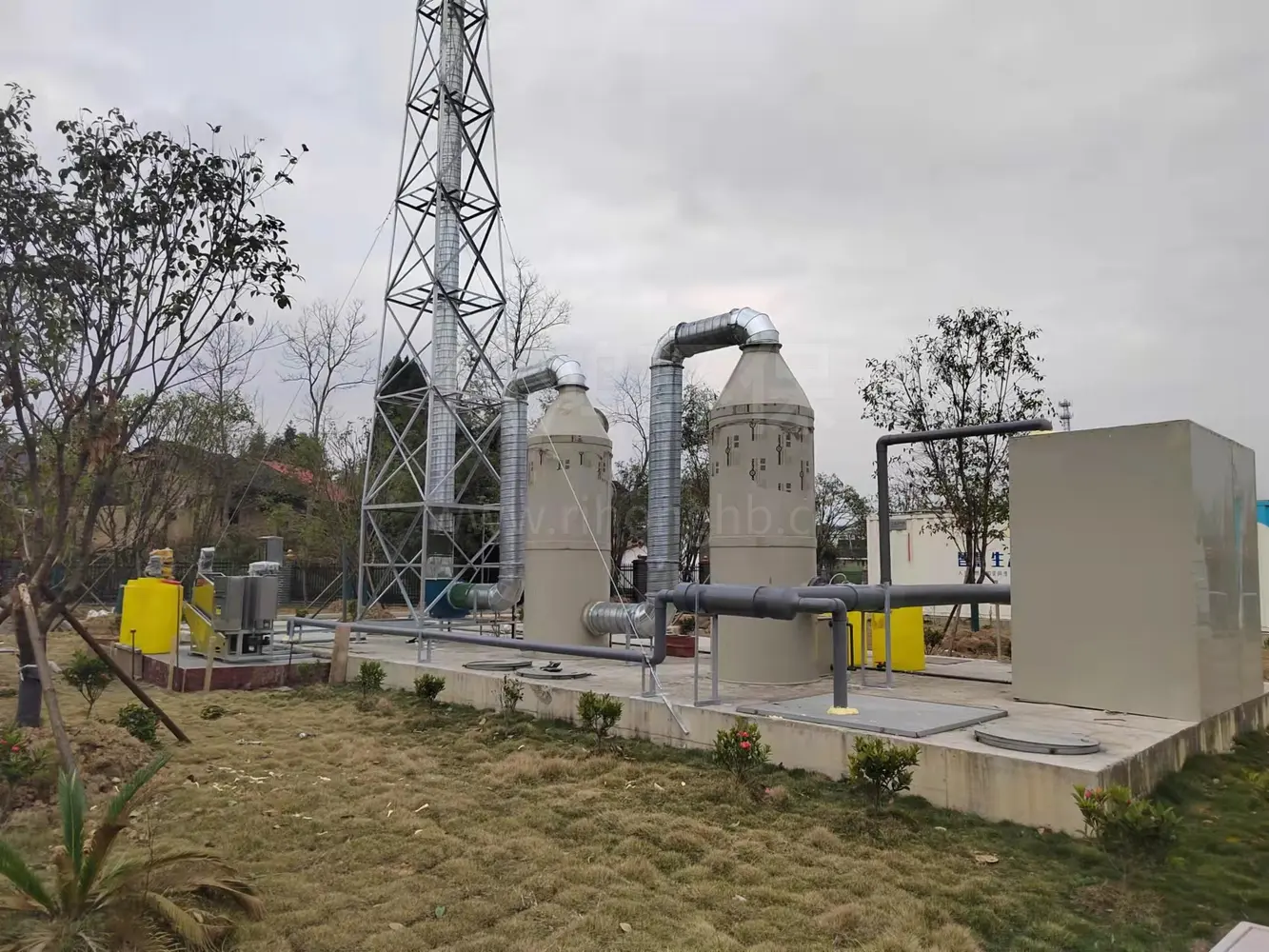
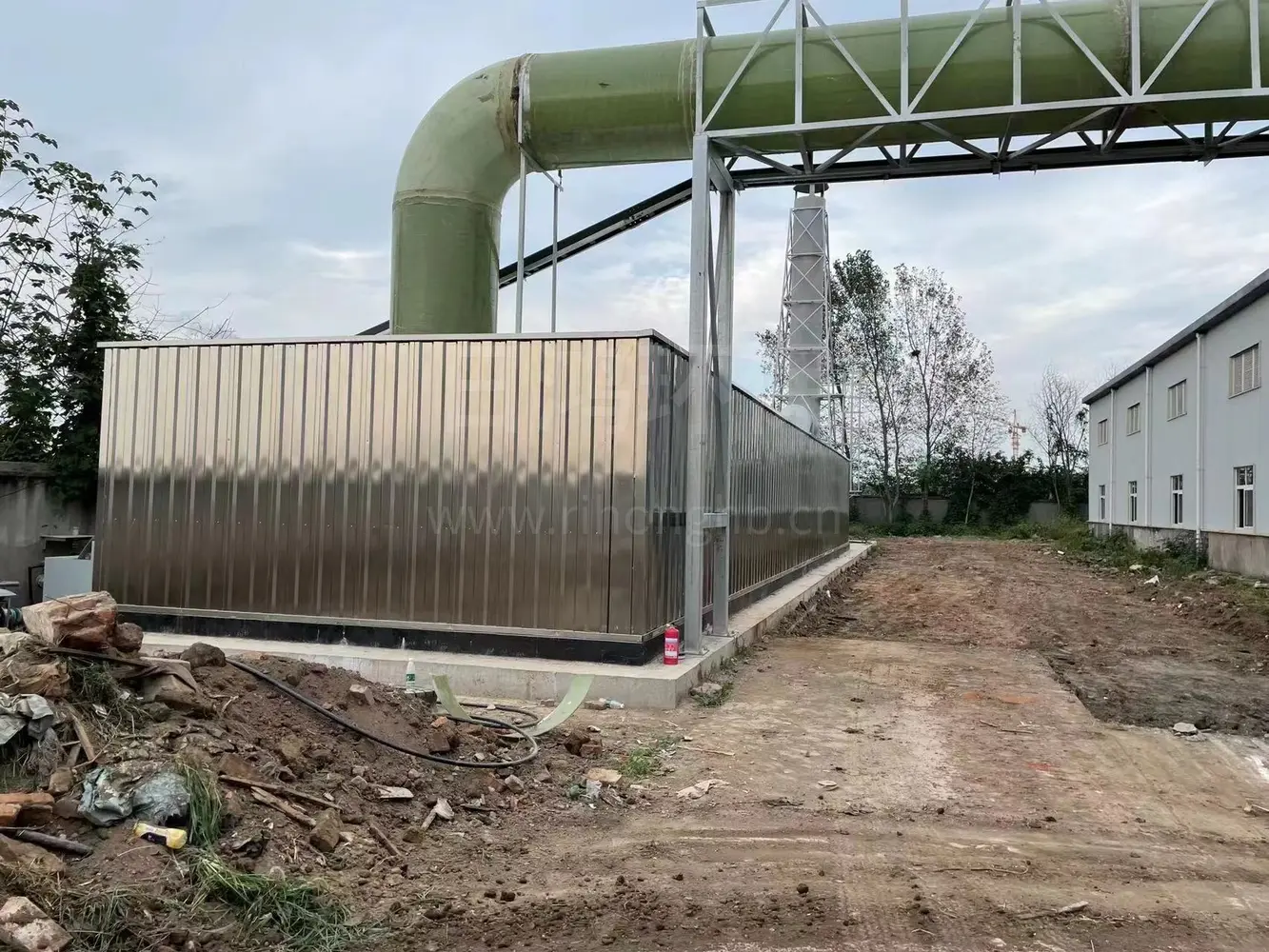
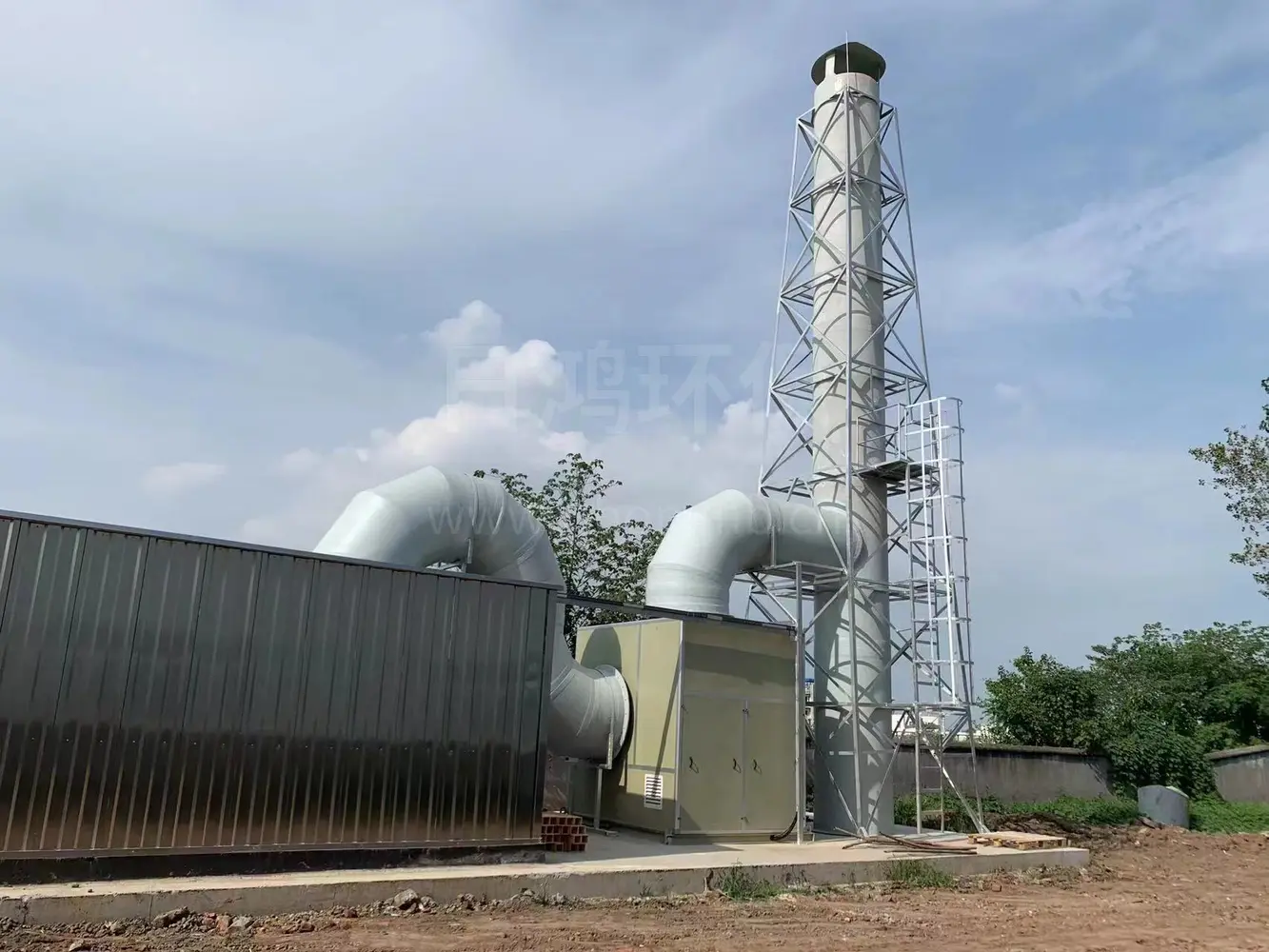
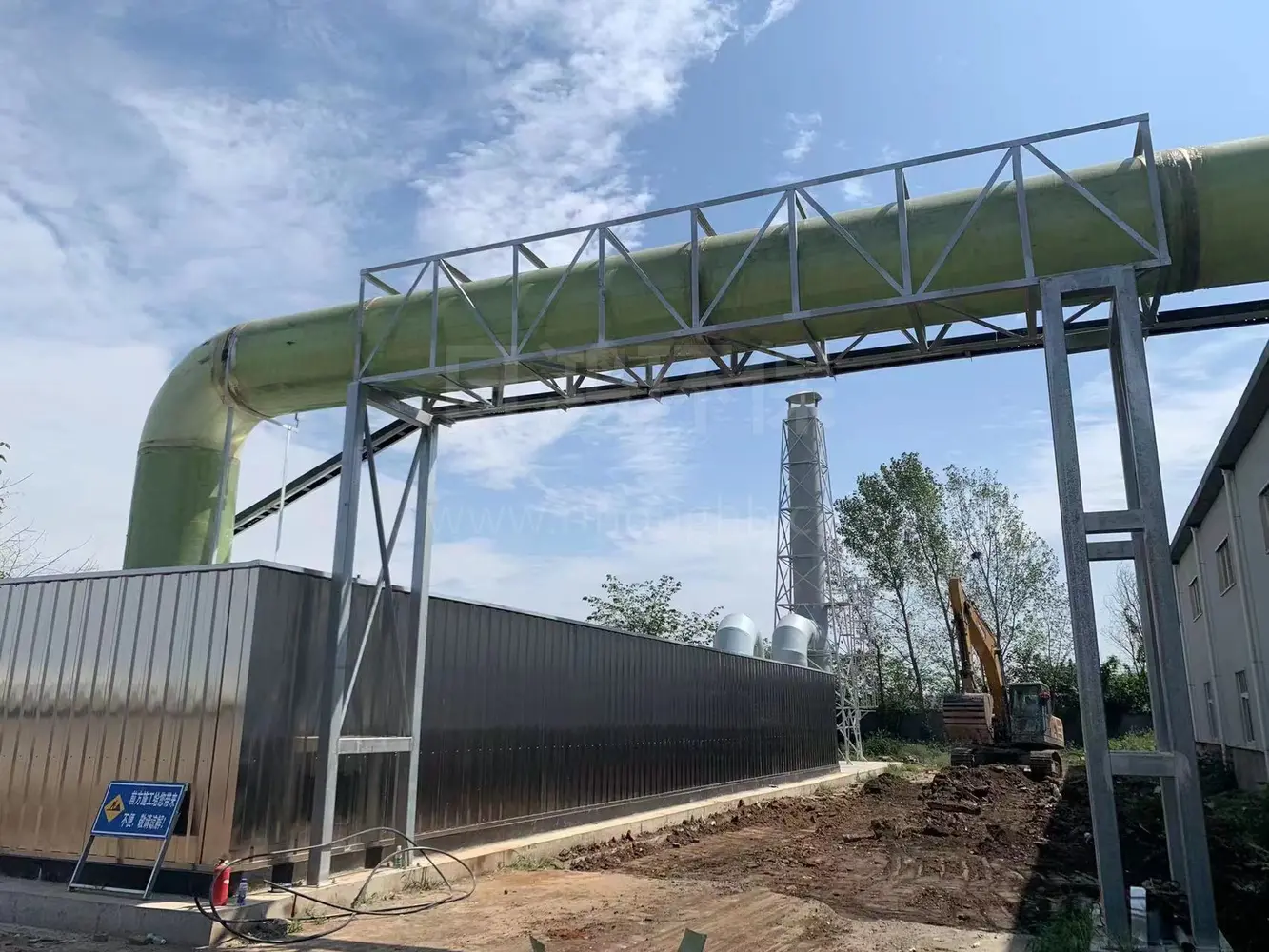
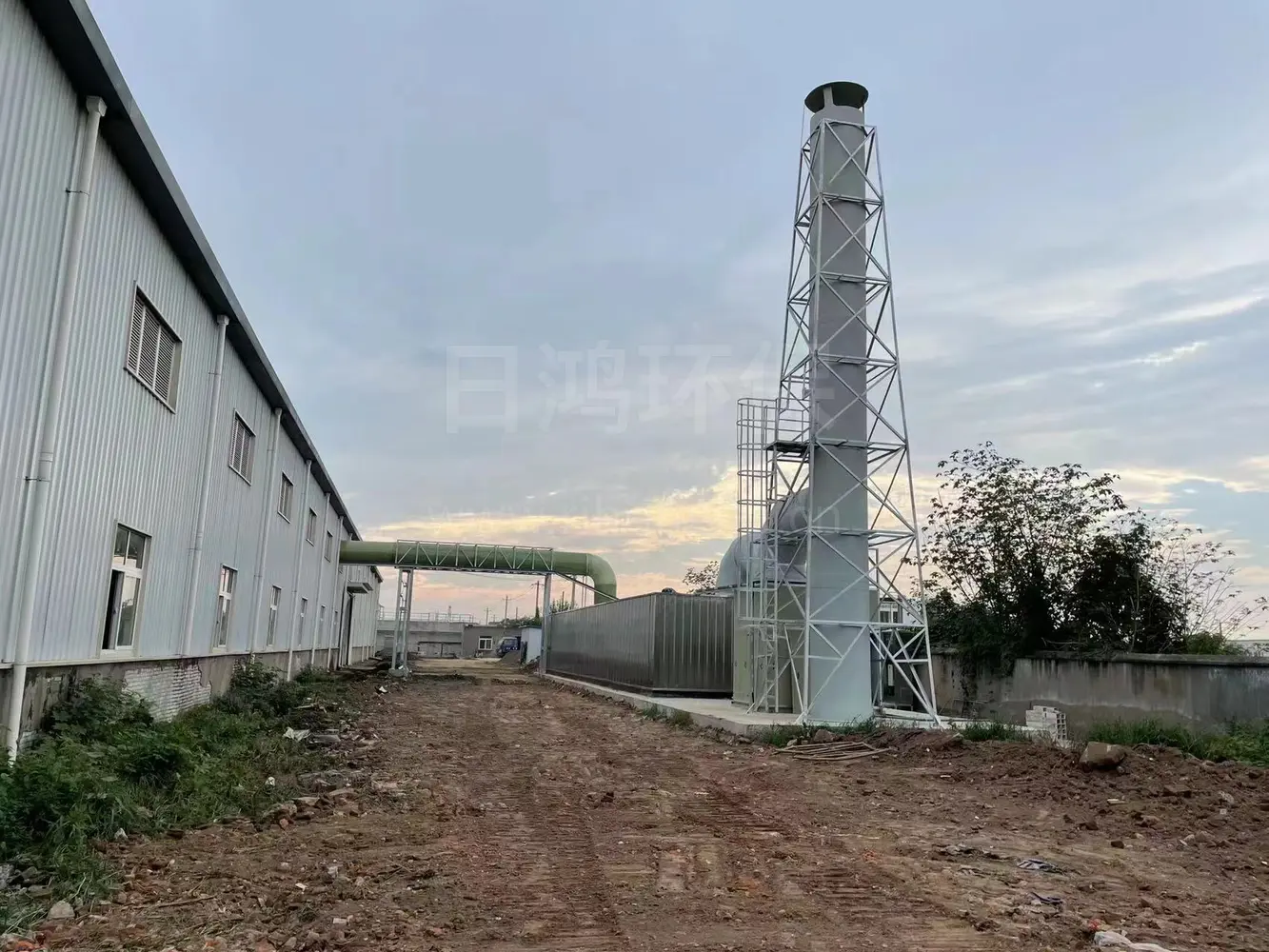
Biological deodorization equipment is an exhaust gas purification device that uses microbial metabolism to degrade odorous pollutants. It commonly takes two forms: biological filters and biotrickling filters. Odorous gas is first collected and humidified, then passes through a moist microbial packing layer, where pollutants are adsorbed by biofilms and degraded into harmless products such as CO₂, H₂O, sulfates, and nitrates. Biological filters typically use organic media (bark, compost, peat, etc.), while biotrickling filters use inert media (plastics, volcanic rock, etc.) with circulating nutrient solution spray. The main body is made of FRP / PP / anti-corrosion carbon steel, suitable for centralized odor treatment in wastewater treatment plants, sludge treatment, waste transfer, and livestock farming. It is a core piece of equipment in the exhaust gas treatment sector.
II. Working Principle (Text Steps)
Odor collection: Odor-generating units such as bar screens, sludge dewatering, and thickening tanks are collected under negative pressure and conveyed to the deodorization equipment via ducts.
Pretreatment humidification: The gas is humidified and temperature-conditioned to reach suitable humidity and temperature for microorganisms, preventing the packing from drying out.
Biodegradation: The gas passes through the moist packing layer, where H₂S, NH₃, VOCs, etc. are adsorbed by biofilms and oxidized/decomposed by microorganisms.
Product conversion: Pollutants are ultimately converted into harmless substances such as CO₂, H₂O, sulfates, and nitrates, with no secondary pollution.
Nutrient circulation (trickling type): Circulating liquid is continuously sprayed to supplement nutrients, carry away metabolic products, and maintain microbial activity and pH balance.
Clean emission: The purified gas is demisted and discharged compliantly through an exhaust stack, with automatic continuous operation throughout the process.
Process description: The core is "biofilm degradation," which differs from chemical scrubbing (reagent neutralization), activated carbon (physical adsorption), and incineration (high-temperature decomposition). It is a green biological method for low-concentration odors.
III. Core Advantages
No secondary pollution Products are CO₂ / H₂O / salts, unlike chemical methods that produce waste liquid or activated carbon that produces spent carbon.
Low operating cost No continuous dosing of reagents or fuel; main energy consumption is only fans and circulating water pumps.
Suitable for high air volume Economical for low-concentration, high-air-volume odors (typical conditions in wastewater plants/waste sites).
Comprehensive removal Removes H₂S, NH₃, mercaptans, and some VOCs, not just a single indicator.
Automated operation Humidification, circulation, and exhaust are linked and automatically controlled; daily routine only requires inspection and maintenance.
Mature structure, easy layout Modular cabinets can be installed on the ground or above tanks, friendly to both retrofits and new builds.
IV. Main Technical Parameters (Typical Range Reference)
Item | Typical Range (depends on odor and model) |
|---|---|
Equipment type | Biological filter / biotrickling filter (selected based on water quality and load) |
Treatment air volume | Hundreds to tens of thousands of m³/h (multiple towers can be connected in parallel) |
Empty bed residence time | Approx. 15–60 s (commonly used for biological filters) |
Applicable concentration | Low-concentration odors (e.g., H₂S typically tens to over a hundred mg/m³) |
Removal rate | H₂S 90%+, NH₃ 80%+, VOCs vary greatly depending on composition |
Packing media | Organic media (bark/compost/peat) or inert media (plastics/volcanic rock) |
Suitable temperature | Approx. 10–40°C (microbial activity range) |
Start-up biofilm formation period | Approx. 1–4 weeks (microbial acclimation and biofilm formation, requires maintenance) |
Main material | FRP / PP / anti-corrosion carbon steel |
Auxiliary equipment | Collection fan, humidification, circulation pump, demister, PLC automatic control |
Note: The above are typical range references. Actual air volume, residence time, and removal rate must be determined based on odor source strength, composition, and emission requirements.
V. Typical Application Scenarios
Scenario | Description |
|---|---|
Municipal wastewater treatment plants | Centralized odor treatment for units such as screens, grit chambers, hydrolysis, sludge thickening, and dewatering. |
Sludge treatment and disposal | Odor control in sludge dewatering, drying, and storage. |
Waste transfer / landfill | Odor purification at waste transfer stations and landfill working areas. |
Livestock and poultry farming | Removal of ammonia and hydrogen sulfide from manure treatment and livestock house exhaust. |
Food / fermentation | Organic odors from food processing and brewing/fermentation. |
Pharmaceutical / chemical | Low-concentration, biodegradable process odorous exhaust. |
Sewage pumping / pump stations | Odor control for combined system pump stations and sewage lifting wells. |
VI. Applicable Boundaries and Selection Recommendations
Applicable boundaries: Biological deodorization excels at low-concentration, biodegradable odors (H₂S, NH₃, some VOCs); it has limited effectiveness on high-concentration, recalcitrant, or bacteriostatic substances (e.g., highly halogenated, high heavy metals), and there is a 1–4 week biofilm start-up period, with sensitivity to ambient temperature and humidity.
Selection recommendations: ① For low-concentration, high-air-volume, and operating cost-sensitive applications, choose a biological filter; ② For conditions requiring pH control, large load fluctuations, and acid-prone operation (e.g., high H₂S), choose a biotrickling filter; ③ For high-concentration or recalcitrant exhaust, consider pre-treatment with chemical scrubbing / incineration as alternatives; ④ The collection system (enclosure + ducts + air volume balance) often determines success and must be designed simultaneously; ⑤ In northern low-temperature regions, insulation/heating is needed to maintain microbial activity; ⑥ Distinguish from activated carbon (adsorption saturation requires carbon replacement) and ion methods (non-degradative); biological methods have the advantage of "complete degradation."
Product Images
FAQ
How much does this equipment cost?
The price varies by treatment capacity, water quality, materials and configuration, so a custom quote is provided based on your actual conditions. We offer free water testing and solution design, with a detailed quote within 1 working day after requirements are confirmed.
What treatment capacity is available? Can it be customized?
Capacity is fully customizable, ranging from tens to thousands of tons per day (e.g. 0.5–30 m³/h), with non-standard design support matched precisely to your inlet/outlet requirements.
How long does delivery take?
Standard equipment typically takes about 2–4 weeks to produce; custom projects depend on scale and process. The delivery date is confirmed at contract signing, with design, manufacturing and shipping progressing on schedule.
Is installation and commissioning included?
Yes. We provide installation, system commissioning, operator training and environmental acceptance assistance, as well as long-term managed operation services on request.
What about after-sales and warranty?
We provide a warranty period and a 24/7 technical hotline, with free repair for non-human faults during the warranty period, plus spare parts supply and regular inspection services.
Leave odors to microorganisms for more worry-free operation
Rihong Environmental provides source strength calculation, process comparison and selection, and complete odor collection–purification layout solutions for biological deodorization equipment. Tell us your odor source, air volume, and original composition, and we will match you with the appropriate configuration of biological filter or biotrickling filter.
Contact Us Now →