Spray Tower
In industries such as electroplating, chemical engineering, coating and spraying, boiler flue gas, and metal processing, acidic gases (HCl, sulfuric acid mist, NOx), alkaline gases, and process dust not only cause nuisance but are also directly related to environmental compliance and occupational health. Traditional dry dust removal is inadequate for acidic gases, while simple activated carbon adsorption is prone to saturation and has high operating costs. Rihong Environmental's spray tower, with its core of "multi-stage spraying + chemical neutralization + high-efficiency demisting," allows acidic waste gas and dust to be fully captured, neutralized, and scrubbed by the absorption liquid within the tower, achieving stable compliance emissions in a single treatment. It is the most cost-effective first choice for front-end industrial waste gas treatment.
I. Product Positioning
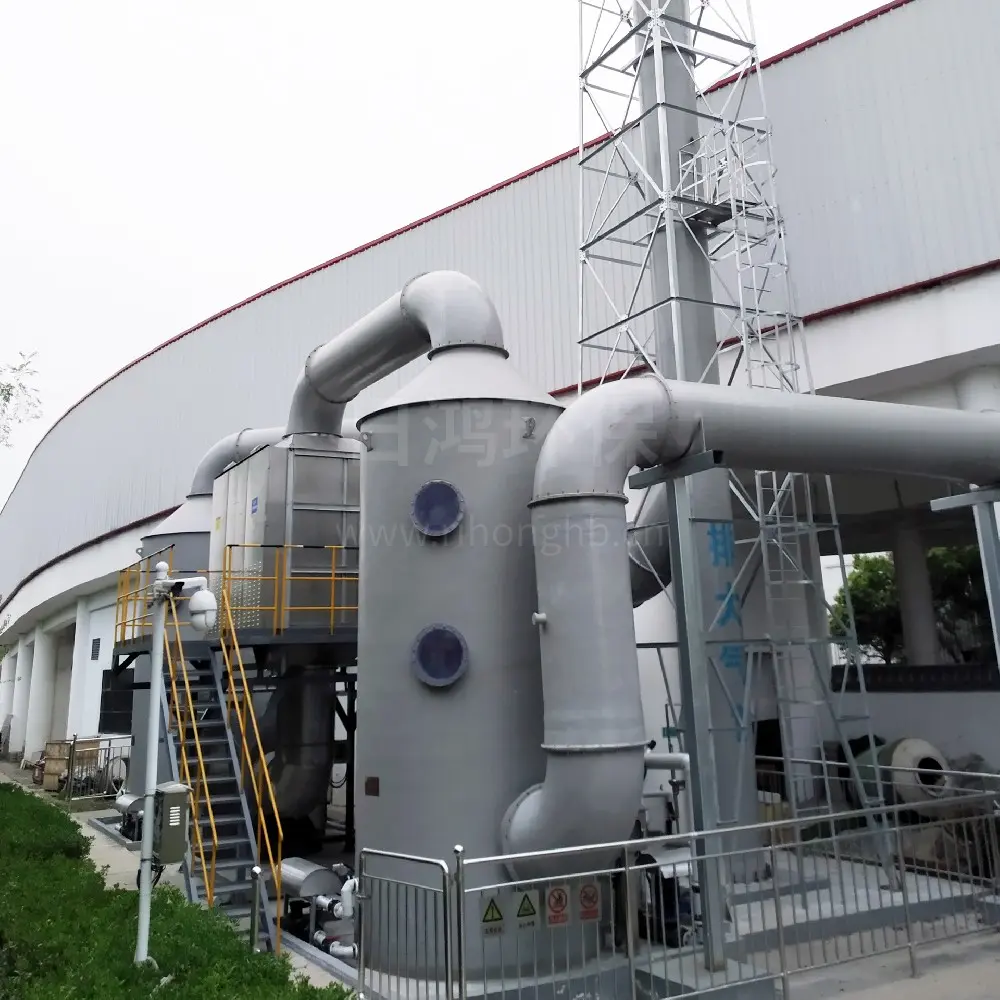
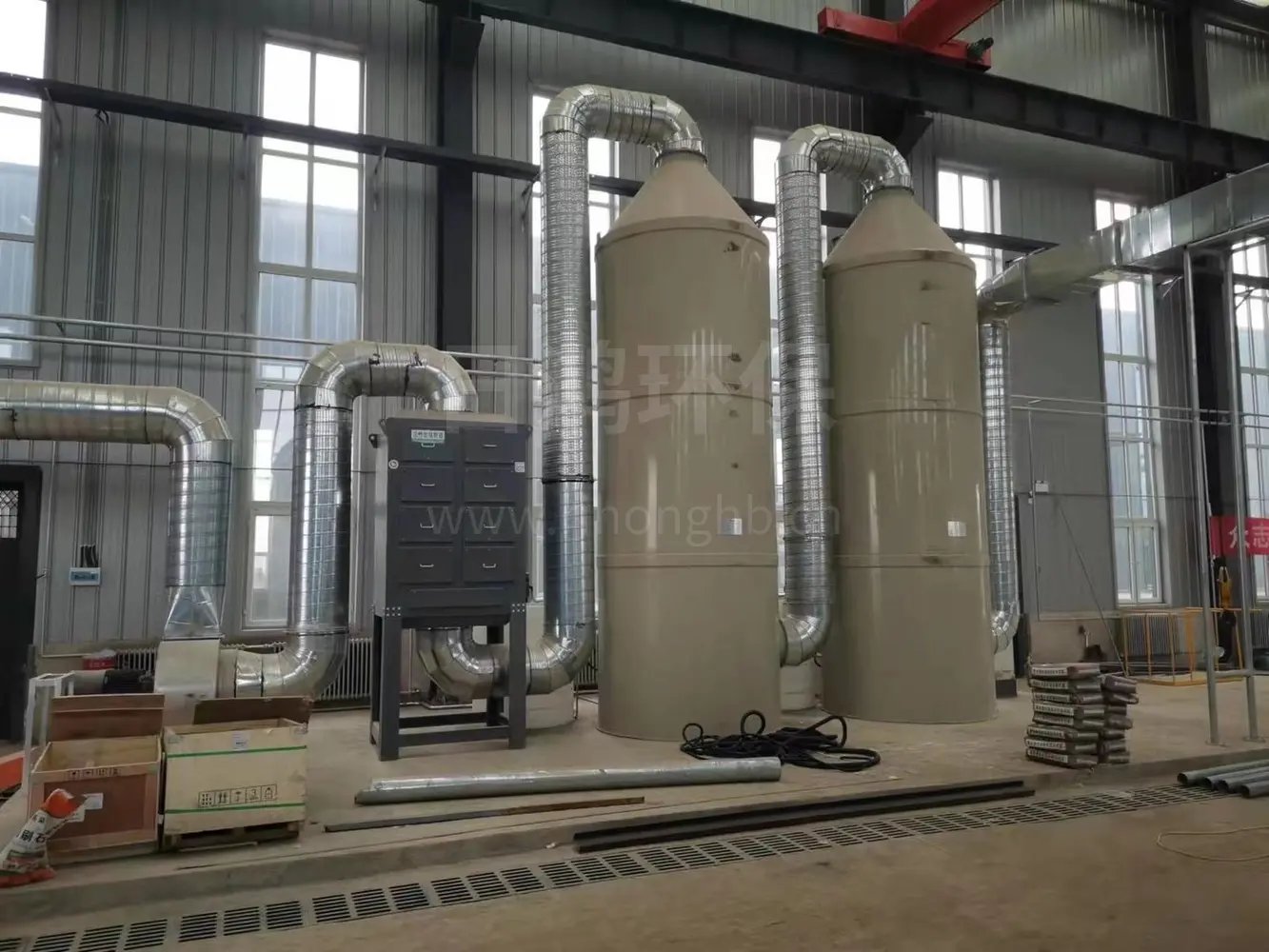
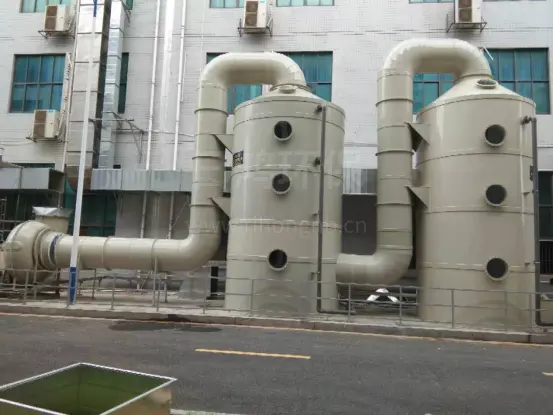
The spray tower (Spray / Scrubber Tower) is a mature wet waste gas purification equipment: contaminated waste gas enters from the lower part of the tower and contacts the absorption liquid sprayed from multiple layers of nozzles at the top in countercurrent flow. Pollutants are dissolved, neutralized, or captured through full mass transfer between gas and liquid phases, and then cleanly discharged after dehydration in the demisting section. Depending on working conditions, it can be designed as a hollow spray tower or a spray packed tower. The main body material can be PP (polypropylene), FRP (fiberglass reinforced plastic), carbon steel with anti-corrosion lining, or 304/316L stainless steel, offering acid and alkali resistance, long service life, and serving as the "general-purpose main equipment" for industrial waste gas treatment.
II. Working Principle (Brief)
Rihong Environmental's spray tower adopts a "countercurrent contact + multi-stage spraying" route, with the entire process completed continuously within the tower body, without complex units other than external chemical dosing:
Waste gas inlet: Acid-containing/dust-containing waste gas enters evenly from the bottom of the tower through collection ducts, with a gas distribution structure ensuring uniform cross-sectional flow velocity distribution.
Multi-stage spraying: The circulation pump atomizes and sprays the absorption liquid (neutralizing liquid/clean water) through 2–4 layers of nozzles, forming dense liquid films and droplets from top to bottom.
Gas-liquid contact absorption: Waste gas flows upward and fully contacts droplets in countercurrent flow. Acidic gases are neutralized by alkaline liquid into salts dissolved in water, and dust is wetted and captured.
Pollutant dissolution and neutralization: Captured pollutants enter the circulating liquid, and some soluble VOCs are simultaneously absorbed; the pH of the circulating liquid is automatically regulated by the dosing device.
Demisting and dehydration: The purified gas passes through the top demister to remove entrained droplets, avoiding "white smoke" and secondary water carryover.
Compliant emission: The dehydrated clean gas is discharged from the top of the tower; the circulating liquid returns to the water tank for dosing and circulation, and a small amount of waste liquid is collected and disposed of compliantly.
Process key points: "Countercurrent contact" between waste gas and absorption liquid is the key to efficient mass transfer; the demisting section determines the emission appearance and droplet entrainment amount.
III. Six Core Advantages
High purification efficiency Removal rate for acidic gases such as HCl and sulfuric acid mist can reach 90%–98%, and it is equally efficient for process dust (especially >5μm).
Wide application range One set of equipment can simultaneously treat acidic gases, alkaline gases, dust, and some soluble VOCs, achieving multiple effects in one tower.
Simple structure, low investment No complex internals (hollow type), low manufacturing and installation costs, more friendly initial investment and operating costs than activated carbon/combustion methods.
Integrated dust removal and cooling The spraying process simultaneously scrubs dust and cools high-temperature waste gas, suitable for synergistic treatment of boiler tail gas and drying tail gas.
Easy operation and maintenance Automatic dosing, automatic liquid level and pH control; daily routine only requires inspection of nozzles and circulation pumps, with low O&M threshold.
Corrosion-resistant material options Multiple materials such as PP / FRP / anti-corrosion lining / stainless steel can be selected as needed, adapting to different corrosion levels.
IV. Main Technical Parameters (Typical Range Reference)
Item | Typical Range / Description |
|---|---|
Treatment air volume | Hundreds to tens of thousands m³/h (multiple towers can be connected in parallel) |
Empty tower gas velocity | 0.5–2.0 m/s |
Liquid-gas ratio (L/G) | 1–3 L/m³ (adjusted according to pollutant concentration) |
Number of spray layers | 2–4 layers (multiple layers improve removal rate) |
Acidic gas removal rate | HCl / sulfuric acid mist, etc. 90%–98% (typical range reference) |
Dust removal rate | >5μm particles 80%–95% (typical range reference) |
System pressure drop | 500–1500 Pa (including demisting section) |
Main body material | PP / FRP / carbon steel with anti-corrosion lining / 304·316L stainless steel |
Circulation and dosing | Corrosion-resistant circulation pump + automatic pH / liquid level dosing control |
Operation control | PLC automatic, local/remote optional |
Note: The above are typical range references. Actual removal rates are strongly related to liquid-gas ratio, residence time, absorption liquid formulation, and pollutant type, and must be determined by design based on project gas volume and water quality conditions.
V. Typical Application Scenarios
Industry / Scenario | Main Treatment Targets |
|---|---|
Electroplating / PCB | Plating tank acid mist (HCl, H₂SO₄, HNO₃), cyanide waste gas pre-treatment |
Chemical / Pharmaceutical | Acidic tail gas, alkaline waste gas, soluble process waste gas |
Coating / Spraying | Paint mist water washing, overspray paint mist and solvent pre-stage scrubbing |
Boiler / Sintering flue gas | Flue gas desulfurization (SO₂), synergistic cooling and coarse dust removal |
Metal processing | Pickling line acid mist, grinding and polishing dust scrubbing |
Laboratory / Semiconductor | Fume hood acidic waste gas, process exhaust scrubbing |
Garbage transfer / Leachate station | Ammonia-containing acidic odor pre-stage wet scrubbing (followed by biological deodorization) |
VI. Applicable Boundaries and Selection Recommendations
Applicable boundaries: The spray tower excels at treating acidic/alkaline gases, dust, and some soluble pollutants; it has limited removal for poorly soluble, high-molecular-weight VOCs and typical odorous substances (such as H₂S, mercaptans). For working conditions dominated by odorous organic gases, it is recommended to prioritize our company's biological deodorization equipment (microbial degradation, no dosing, green). The spray tower generates circulating waste liquid containing pollutants, which must be equipped with dosing and waste liquid collection and disposal to avoid secondary pollution.
Selection recommendations: ① For small air volume and easily soluble pollutants, choose a hollow spray tower (low resistance, low cost); when higher removal rates are required or poorly soluble substances are treated, choose a spray packed tower (increased mass transfer area). ② For strong corrosiveness, prioritize PP / FRP; for high temperature or high cleanliness requirements, choose stainless steel. ③ Combined with biological deodorization, activated carbon adsorption, UV photolysis, etc., it can form a hierarchical treatment chain of "wet acid/dust removal + dry deodorization/VOC removal." ④ For northern projects, pay attention to winter antifreeze and insulation of the circulating liquid.
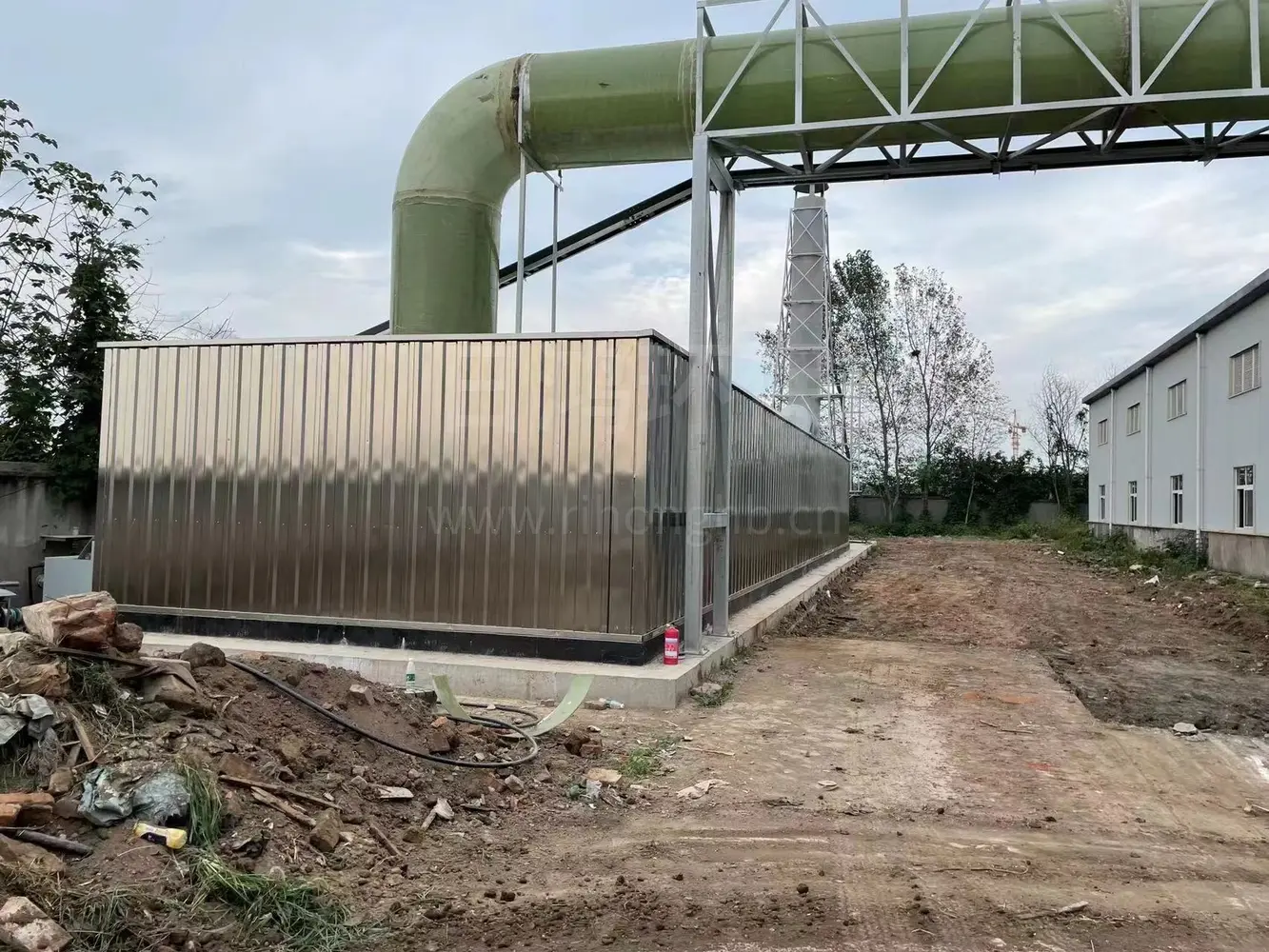
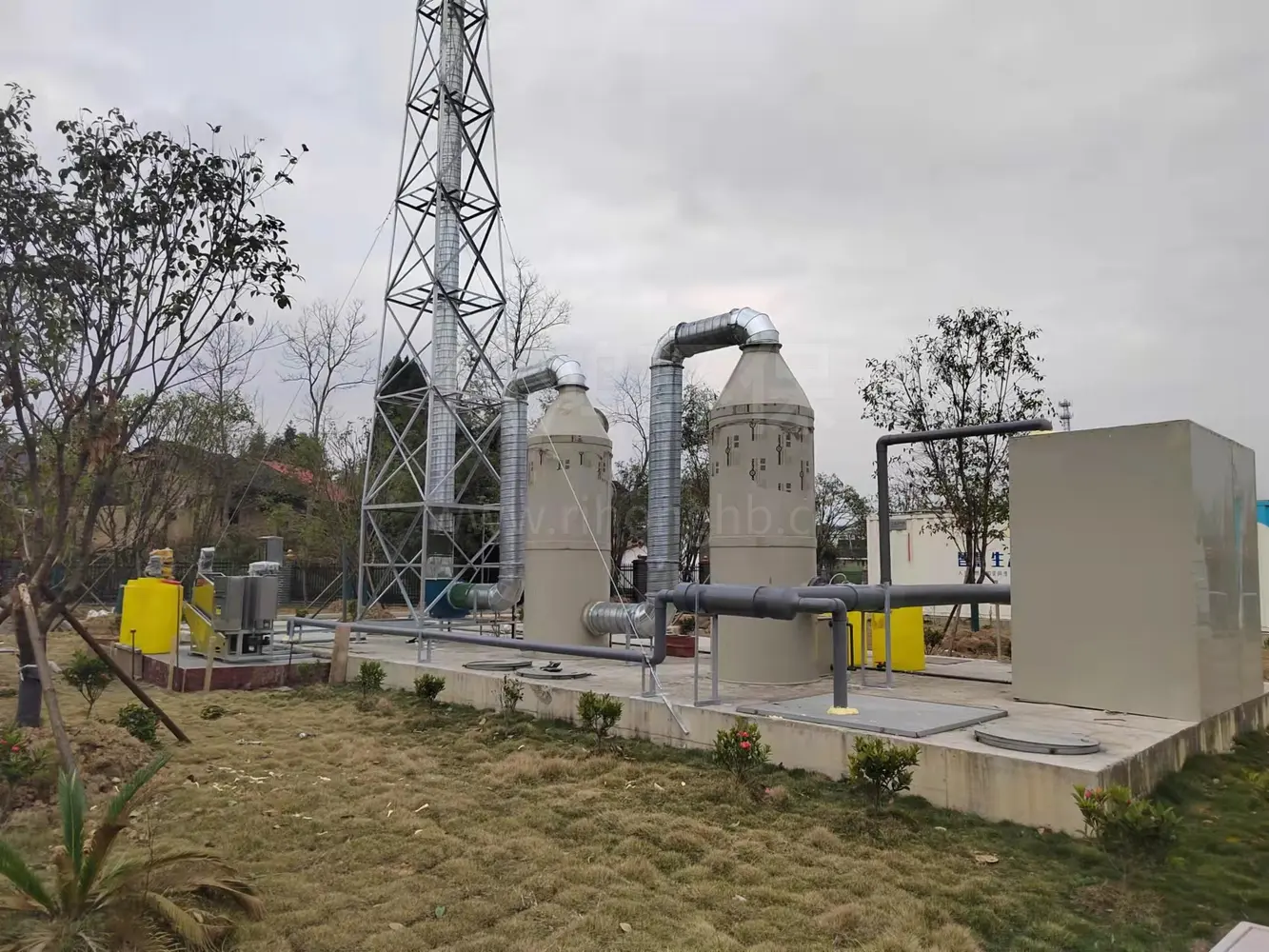
Product Images
FAQ
How much does this equipment cost?
The price varies by treatment capacity, water quality, materials and configuration, so a custom quote is provided based on your actual conditions. We offer free water testing and solution design, with a detailed quote within 1 working day after requirements are confirmed.
What treatment capacity is available? Can it be customized?
Capacity is fully customizable, ranging from tens to thousands of tons per day (e.g. 0.5–30 m³/h), with non-standard design support matched precisely to your inlet/outlet requirements.
How long does delivery take?
Standard equipment typically takes about 2–4 weeks to produce; custom projects depend on scale and process. The delivery date is confirmed at contract signing, with design, manufacturing and shipping progressing on schedule.
Is installation and commissioning included?
Yes. We provide installation, system commissioning, operator training and environmental acceptance assistance, as well as long-term managed operation services on request.
What about after-sales and warranty?
We provide a warranty period and a 24/7 technical hotline, with free repair for non-human faults during the warranty period, plus spare parts supply and regular inspection services.
Make waste gas treatment more worry-free and compliant
Rihong Environmental provides one-stop services for spray towers from working condition diagnosis, absorption liquid formulation, tower body design to installation and commissioning. It can also provide a "spray + biological deodorization" combined solution for complex acid-base, dust, and odorous waste gas. Welcome to contact us for a customized technical solution and quotation.
Contact Us Now →