Mechanical Rotary Bar Screen
At the inlet of wastewater treatment plants, pumping stations, and industrial wastewater facilities, floating debris, branches, plastic bags, fibers, and miscellaneous solids can easily entangle pumps, block pipelines, and wear out equipment. Rihong Environmental's Mechanical Rotary Bar Screen (rotary bar screen cleaner) uses continuously rotating rake teeth to automatically lift screenings, achieving an integrated process of "interception—cleaning—conveying." It protects downstream pumps and biological systems from the source, making it an indispensable screening device in the pretreatment stage.
I. Product Positioning
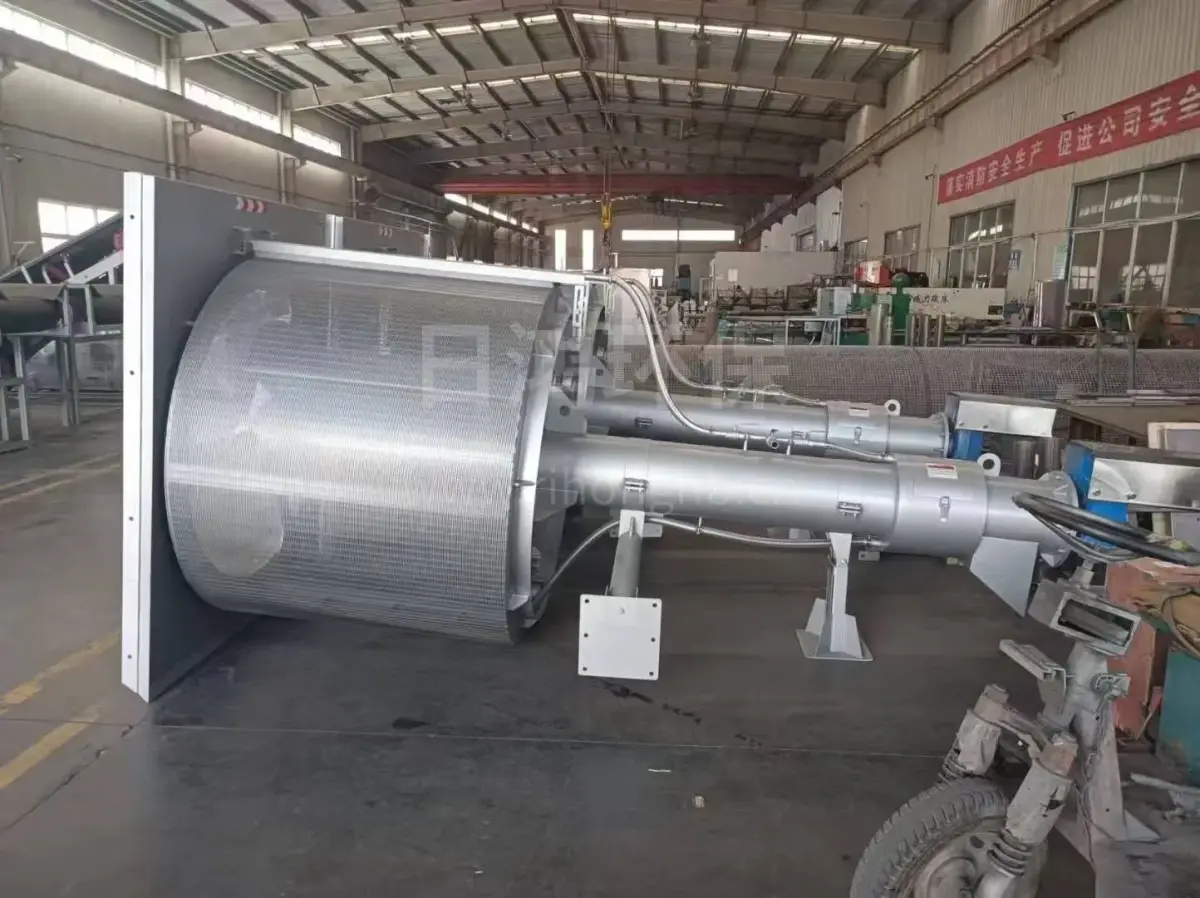
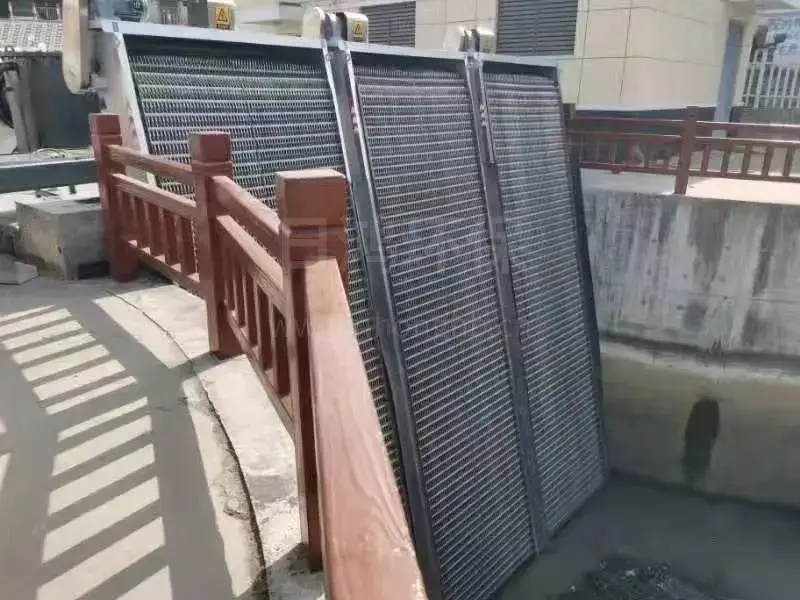
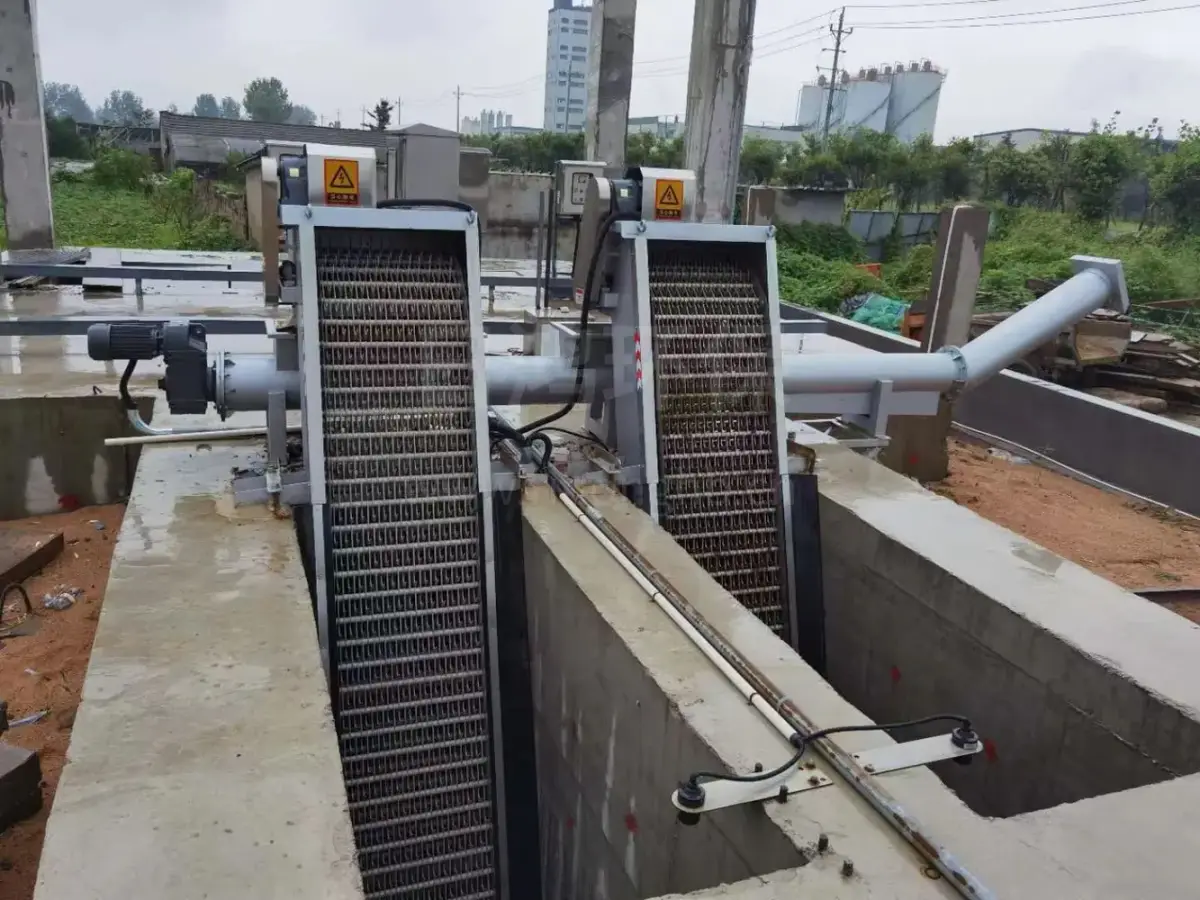
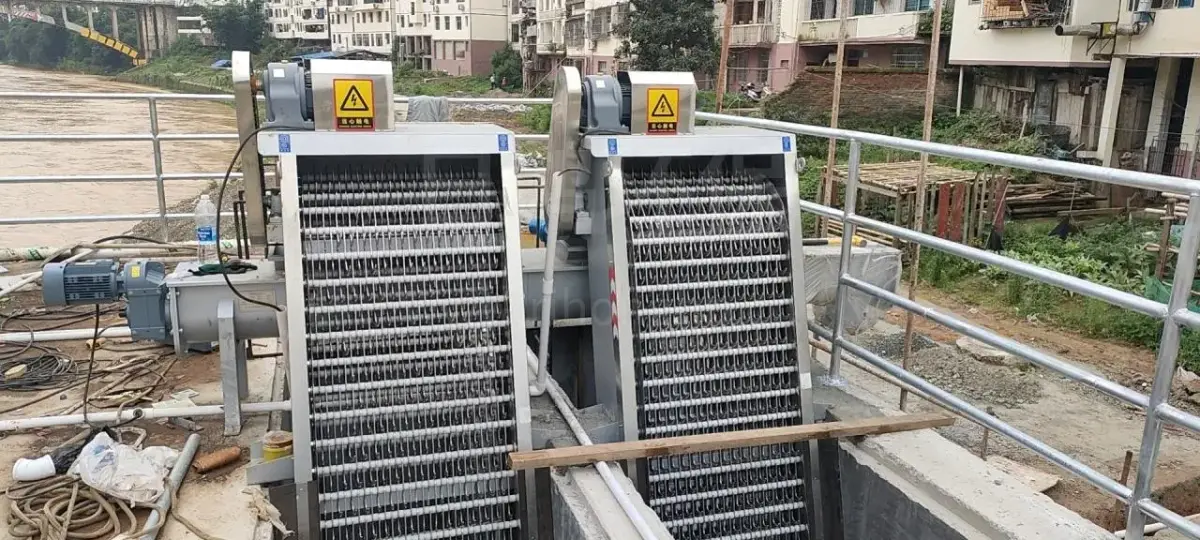
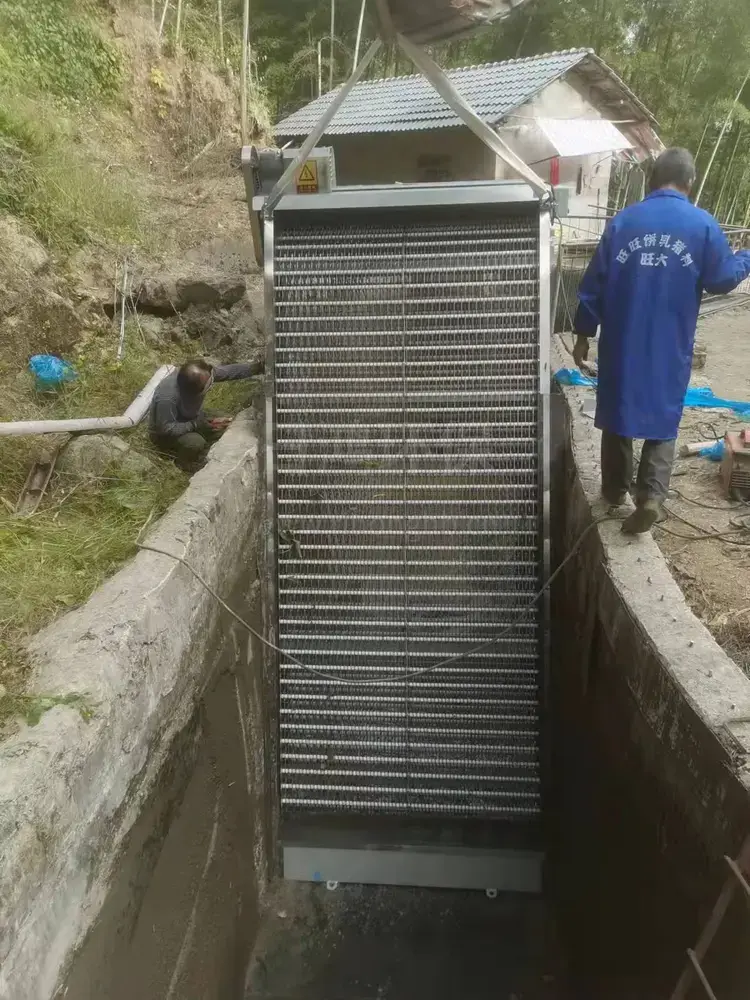
The mechanical rotary bar screen is a solid-liquid separation and debris removal device featuring continuous rotation and rake teeth cleaning. It consists of a frame, drive sprockets, rake tooth chain (or rake tooth assembly), guide rails, screen bars, and a screenings conveying device. Wastewater flows through the bar gaps, while floating and larger suspended solids are intercepted by the rake teeth and lifted along the rotating chain to the top discharge port, where they are scraped or gravity-discharged into a screenings bin (can be equipped with an integrated screw conveyor and compactor). The equipment can be installed outdoors, in channels, or at adjustable angles, adapting to different interception accuracies such as coarse and medium screens. It is commonly used at the head of the inlet for large flows and high screenings volumes.
II. Working Principle (Brief)
Influent passing through the screen: Raw water enters the screen from the channel and passes through vertical screen bars (bar spacing 1–50 mm optional), forming the first physical interception barrier. Water flows through while debris is retained on the upstream face.
Rake teeth rotating interception: The motor drives the sprockets through a reducer, causing the closed rake tooth chain (or rake tooth assembly) to rotate continuously along the guide rails, hooking floating debris, fibers, and miscellaneous solids from the screen surface one by one from bottom to top.
Lifting and cleaning: The rake teeth carry screenings upward with the rotation. At the top guide slot, the direction of movement changes, and debris is scraped or gravity-discharged into the screenings bin or conveyor.
Screenings conveying: The discharged screenings can be transported and dewatered for volume reduction via an integrated screw conveyor and compactor, reducing odor and secondary pollution, and facilitating off-site disposal.
Continuous operation: Automatic start/stop is controlled by water level difference or timer. The cycle of rake teeth rotation—interception—cleaning runs uninterrupted without manual raking, keeping the channel clear at all times.
Compliant continued flow: The clean wastewater after screening enters downstream pump rooms, grit chambers, or biological units. Screenings have been removed at the front end, effectively protecting pumps and downstream equipment.
Process summary: Raw water through screen → Rake teeth rotating interception → Lifting and cleaning → Screenings conveying and volume reduction → Continuous automatic operation → Clean continued flow. The entire process is mechanically automatic, with no chemicals added and no new pollutants introduced.
III. Core Advantages
① Continuous cleaning for large flows The closed-loop rotating rake tooth chain operates without interruption, suitable for high-flow and high-screenings inlet headworks, eliminating manual raking during downtime.
② Reliable interception without bypass The rake teeth move closely against the screen surface, handling both soft and hard debris such as floating solids, fibers, and plastic bags with high interception efficiency and minimal bypass.
③ Automated with minimal attendance Supports dual-mode automatic control via water level difference/timer, and can be linked with plant-wide PLC for remote start/stop and fault alarms.
④ Robust structure resistant to impact All-steel frame + stainless steel rake teeth resist water flow impact and debris jamming. Screen bars are not easily deformed and have a long service life.
⑤ Flexible bar spacing options Bar spacing of 1–50 mm in multiple configurations. Coarse screens intercept large items; medium screens provide fine interception. Selected according to water quality and downstream requirements.
⑥ Easy maintenance with complete accessories Modular design with easily replaceable key sprockets and rake teeth. Can be integrated with conveying and compaction, making screenings volume reduction and off-site transport more convenient.
IV. Main Technical Parameters (Typical Range Reference)
Item | Typical Range (depending on water quality and channel width) |
|---|---|
Bar spacing | 1–50 mm (coarse screen 10–50 mm / medium screen 1–10 mm commonly used) |
Channel width (equipment width) | 0.3–3.0 m (customizable to channel) |
Installation angle | 60°–90° (typically around 75°, channel-mounted or above ground) |
Rake tooth chain/rake linear speed | Approx. 2–5 m/min |
Drive power | 0.55–3.0 kW (increases with channel width and screenings volume) |
Flow velocity through screen | 0.4–1.0 m/s (design velocity before screen) |
Material | Frame: carbon steel with anti-corrosion coating / stainless steel 304·316L; rake teeth: 304/316L |
Control mode | Local pushbutton + water level difference/timer automatic control + PLC remote |
Auxiliary equipment | Screw conveyor, compactor (screenings volume reduction and off-site transport) |
Note: The above are conventional engineering reference ranges. Specific parameters are subject to project water quality, channel dimensions, and Rihong Environmental's technical selection.
V. Typical Application Scenarios
Application Scenario | Description |
|---|---|
Municipal wastewater treatment plant inlet headworks | Intercepts floating debris, fibers, and miscellaneous solids, protecting pumps, grit chambers, and biological systems |
Intake pumping stations / stormwater pumping stations | Screens river/lake water and stormwater inlets, preventing pump and pipeline blockage |
Industrial wastewater pretreatment | Front-end debris removal for wastewater containing fibers and solids from papermaking, printing and dyeing, food, chemical, and other industries |
Wastewater treatment plant upgrading and retrofitting | Adding or replacing manual screens at the headworks of old plants to improve automation level |
MBR / fine filtration pre-protection | Removes large debris before membrane systems and microstrainers, extending the life of membranes and filter cloth consumables |
Combined sewer overflow (CSO) | Temporary screening of overflow sewage to reduce non-point source pollution entering rivers |
Food, slaughterhouse, and livestock wastewater | Removes feathers, fragments, residues, and other large particulate debris, reducing downstream load |
VI. Applicable Boundaries and Selection Recommendations
Applicable premises: The mechanical rotary bar screen is a coarse/medium precision physical screening device, mainly targeting floating debris, fibers, and large particulate solids. It is ineffective for dissolved pollutants, colloids, and fine suspended solids, and must be combined with grit removal, biological treatment, filtration, and other units to form a complete process.
Distinction from similar equipment: ① Rotary drum screen — uses a rotating drum screen for fine interception (0.5–10 mm), compact structure, suitable for fine screening; the mechanical rotary bar screen uses rake teeth to hook debris, better suited for coarse/medium screening with large flows and high screenings volumes. ② Grit-water separator — specifically for dewatering inorganic grit discharged from grit chambers, differing from the screen's role of "intercepting floating debris." ③ Inclined screen / microstrainer — the inclined screen is a static gravity coarse screen, and the microstrainer is a 10–200 μm fine microfilter; neither uses the rake tooth hooking mechanism.
Selection key points: Determine equipment specifications based on channel width and flow rate; select bar spacing according to downstream equipment tolerance (≤20 mm recommended for pump protection); choose 316L material for highly corrosive environments; for high screenings volumes, an integrated conveying and compaction unit must be provided; for outdoor installation in northern regions, consider freeze protection and channel insulation.
Product Images
FAQ
How much does this equipment cost?
The price varies by treatment capacity, water quality, materials and configuration, so a custom quote is provided based on your actual conditions. We offer free water testing and solution design, with a detailed quote within 1 working day after requirements are confirmed.
What treatment capacity is available? Can it be customized?
Capacity is fully customizable, ranging from tens to thousands of tons per day (e.g. 0.5–30 m³/h), with non-standard design support matched precisely to your inlet/outlet requirements.
How long does delivery take?
Standard equipment typically takes about 2–4 weeks to produce; custom projects depend on scale and process. The delivery date is confirmed at contract signing, with design, manufacturing and shipping progressing on schedule.
Is installation and commissioning included?
Yes. We provide installation, system commissioning, operator training and environmental acceptance assistance, as well as long-term managed operation services on request.
What about after-sales and warranty?
We provide a warranty period and a 24/7 technical hotline, with free repair for non-human faults during the warranty period, plus spare parts supply and regular inspection services.
Selection Consultation · Rihong Environmental Customizes Screening Solutions for You
Providing channel survey, bar spacing and material selection, automatic control, and integrated conveying and compaction design. Whether for a new wastewater treatment plant or upgrading an old pumping station, we can customize to your needs.
Contact Us Now →