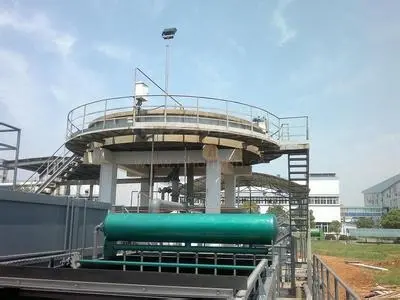
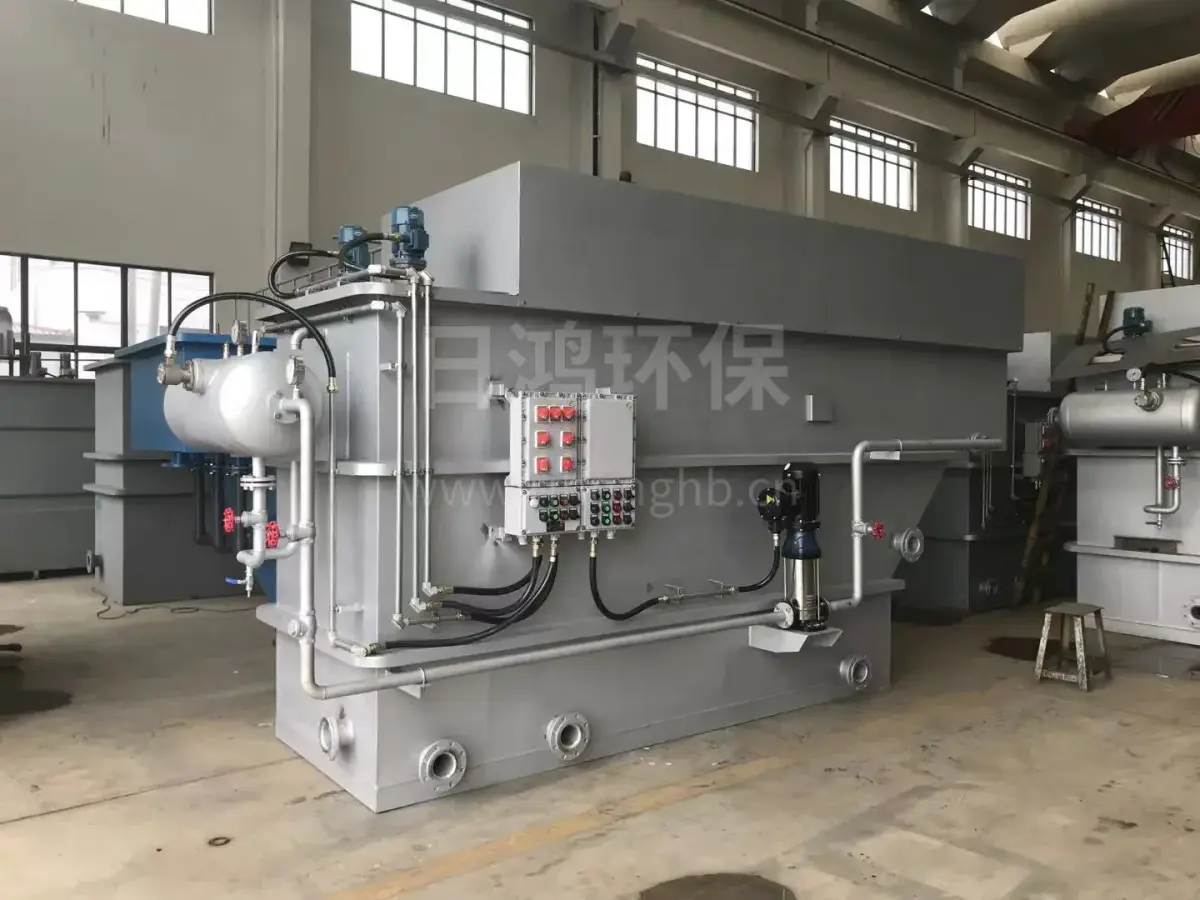
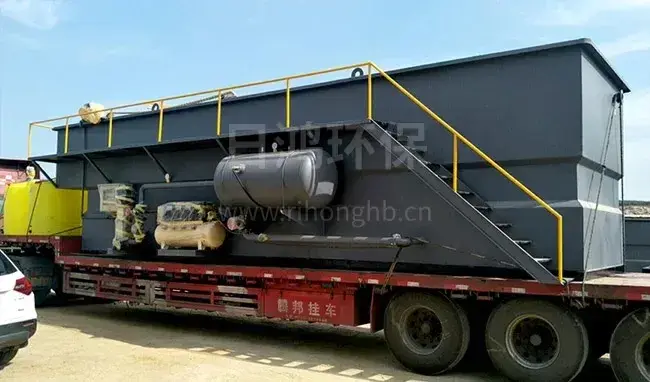
Horizontal Dissolved Air Flotation (DAF) Unit
In papermaking white water, printing and dyeing wastewater, food processing, oily wastewater, and some municipal tail water, large amounts of suspended solids, emulsified oil, and algae are lighter than water and difficult to settle. Traditional sedimentation processes "cannot settle them down or remove them cleanly." Rihong Environmental's horizontal dissolved air flotation (DAF) unit releases 20–40 μm microbubbles through pressurized dissolved air, allowing flocs, oil droplets, algae, and other lightweight pollutants to "ride the bubbles and float up," where they are continuously removed by a skimmer, achieving efficient solid-liquid separation and water quality purification.
I. Product Positioning
The horizontal dissolved air flotation (DAF) unit is a highly efficient solid-liquid separation device based on pressurized dissolved air, microbubble attachment, and flotation separation. After raw water is coagulated with chemicals to form microflocs, it mixes with high-pressure dissolved air water in the release device. The pressure drops sharply, precipitating a large number of fine microbubbles (20–40 μm). The bubbles attach to flocs, oil droplets, or algae, making their density less than water so they float rapidly to the surface. The surface scum is scraped off by a skimmer, and clear water is discharged from the lower collection outlet. The equipment adopts a horizontal tank body. Influent passes evenly through rectifying and distribution devices. The structure is mature and operation is stable. It can be fabricated from anti-corrosion carbon steel or all-stainless steel, and is widely used for the removal and recovery of lightweight pollutants that are difficult to settle.
II. Working Principle (Brief)
Coagulation reaction: PAC/PAM and other chemicals are dosed into the raw water to form loose microflocs in the flocculation zone that easily combine with microbubbles.
Dissolved air water preparation: Part of the clear water is pressurized to 0.3–0.5 MPa and fully contacted with air in the dissolved air tank to form supersaturated dissolved air water.
Mixing and release: The dissolved air water mixes with the influent through the release device. The pressure drops sharply, instantly precipitating uniform fine microbubbles of 20–40 μm.
Contact and flotation: Microbubbles attach to flocs, oil droplets, and algae to form "bubble-particle" complexes with a density less than water, rapidly floating to the surface.
Scum scraping and separation: Surface scum is continuously scraped into the scum trough by a chain-plate or traveling scraper. Bottom clear water is discharged through the collection system.
Dissolved air water recirculation: Part of the effluent is pressurized and recirculated for re-dissolution, cycling for air release. The entire system operates continuously and stably.
Process highlights: coagulation reaction → dissolved air water preparation → mixing and microbubble release → contact flotation → scum scraping and separation → dissolved air water recirculation. The whole process is centered on "physical flotation + chemical coagulation," without adding large amounts of oxidants or generating secondary sludge increment.
III. Core Advantages
① Efficient removal of lightweight pollutants High removal rate for finely dispersed oil, algae, lightweight SS, and colloidal flocs. It is an irreplaceable "flotation" solution for sedimentation processes.
② Fine and uniform microbubbles Dissolved air releases 20–40 μm bubbles with large specific surface area and strong adhesion, high bubble utilization, and chemical savings.
③ Uniform horizontal flow distribution Horizontal tank type + perforated/rectifying water distribution ensures stable flow without short-circuiting, achieving high separation efficiency in the flotation zone.
④ Continuous automatic scum scraping Chain-plate/traveling scraper continuously discharges scum and can be linked with PLC for automatic operation with minimal attendance.
⑤ Relatively small footprint Surface loading is higher than conventional sedimentation. Equipment-based integrated layout saves floor space and civil construction.
⑥ Stable and adjustable operation Dissolved air pressure, reflux ratio, and chemical dosage are adjustable, adapting to fluctuations in water quality and quantity with flexible start-stop.
IV. Main Technical Parameters (Typical Range Reference)
Item | Typical Range (depending on water quality and scale) |
|---|---|
Hydraulic loading (surface loading) | 5–10 m³/(m²·h) |
Dissolved air pressure | 0.3–0.5 MPa |
Dissolved air water reflux ratio | 20–30% |
Microbubble diameter | 20–40 μm |
DAF retention time | 10–30 min |
Flocculation reaction time | 5–15 min |
Material | Anti-corrosion carbon steel / Stainless steel 304·316L |
Scum scraping method | Chain-plate / Traveling scraper |
Control method | Local + PLC automatic, chemical dosing/reflux linkage |
Treatment scale | Single unit from tens to hundreds of m³/h (customized according to tank body) |
Note: The above are conventional engineering reference ranges. Specific selection shall be based on project water quality, influent/effluent requirements, and Rihong Environmental's technical selection.
V. Typical Application Scenarios
Application Scenario | Description |
|---|---|
Paper wastewater (white water recovery) | Recover fibers, reduce SS and COD, recycle white water |
Printing and dyeing / textile wastewater | Remove color, SS, PVA, and other lightweight pollutants |
Food / oil processing | Remove oil, protein, and suspended organic matter |
Electroplating / machining | Remove emulsified oil and heavy metal hydroxide flocs |
Municipal wastewater upgrading | Advanced removal of SS, algae, TP to ensure compliance discharge |
Petroleum / petrochemical oily wastewater | Oil-water separation, removal of floating oil and emulsified oil |
Aquaculture / slaughterhouse wastewater | Remove oil, organic matter, and suspended impurities |
VI. Applicable Boundaries and Selection Recommendations
Applicable premise: The horizontal dissolved air flotation unit excels at removing pollutants that are lighter than water and difficult to settle (lightweight SS, emulsified oil, algae, colloidal flocs). For heavy particles with density greater than water, sedimentation or grit removal processes are still more efficient. When necessary, combine DAF with sedimentation.
Distinction from similar DAF equipment: ① Electrocoagulation DAF unit — generates Fe/Al coagulants in situ electrochemically and forms microbubbles via cathodic hydrogen evolution, "replacing chemicals with electricity"; the horizontal dissolved air flotation unit, however, uses external chemical coagulation + pressurized dissolved air microbubble release. Both belong to DAF but have different mechanisms. Selection is based on "whether electricity replaces chemicals and whether an external dissolved air system is required." ② Division of labor with sedimentation equipment: DAF handles lightweight difficult-to-settle substances; sedimentation handles heavy easy-to-settle substances.
Selection points: Select surface loading, reflux ratio, and dissolved air pressure according to water quality; prioritize DAF for high-oil, high-algae wastewater; chemical dosing system and scraper must be configured simultaneously; for outdoor installation in northern regions, consider tank insulation and freeze protection for the dissolved air system; select anti-corrosion carbon steel or stainless steel according to the corrosive environment.
Product Images
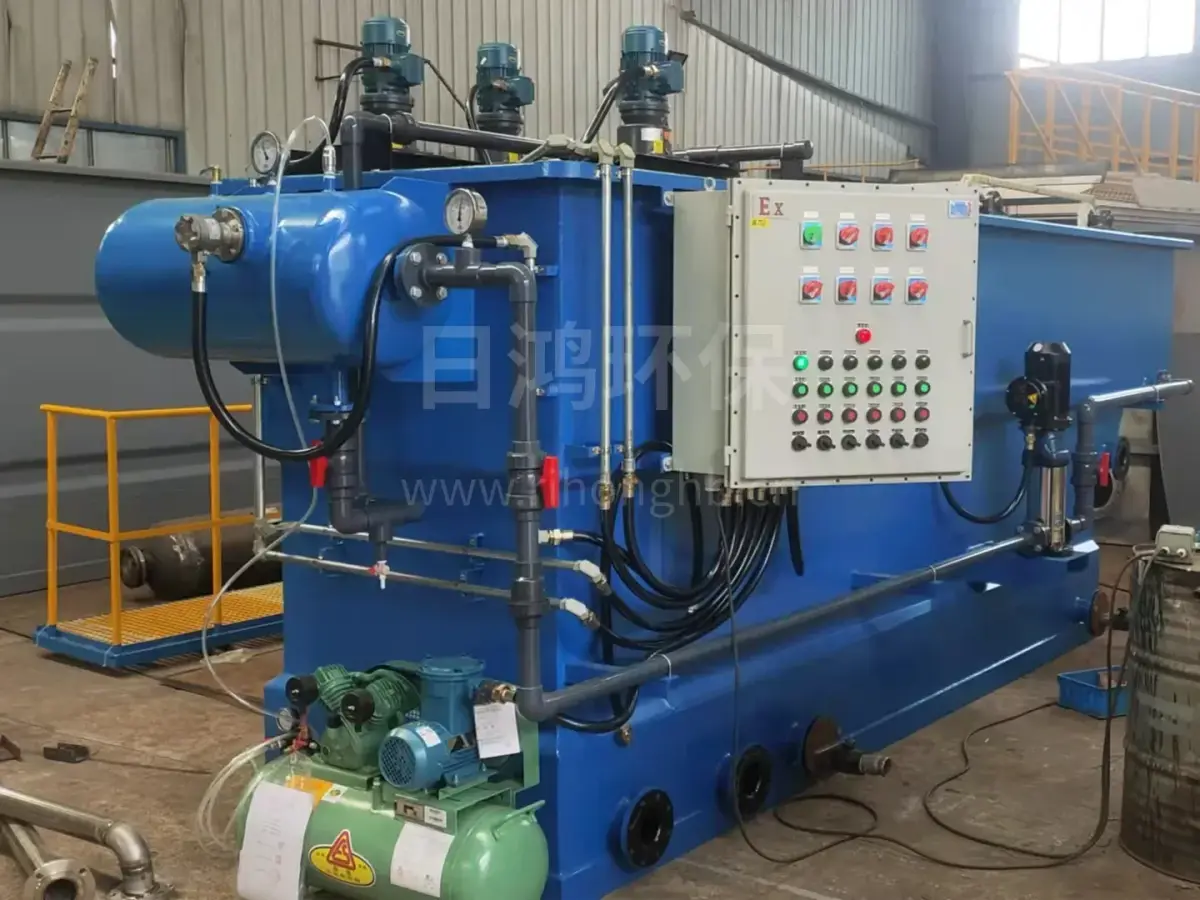
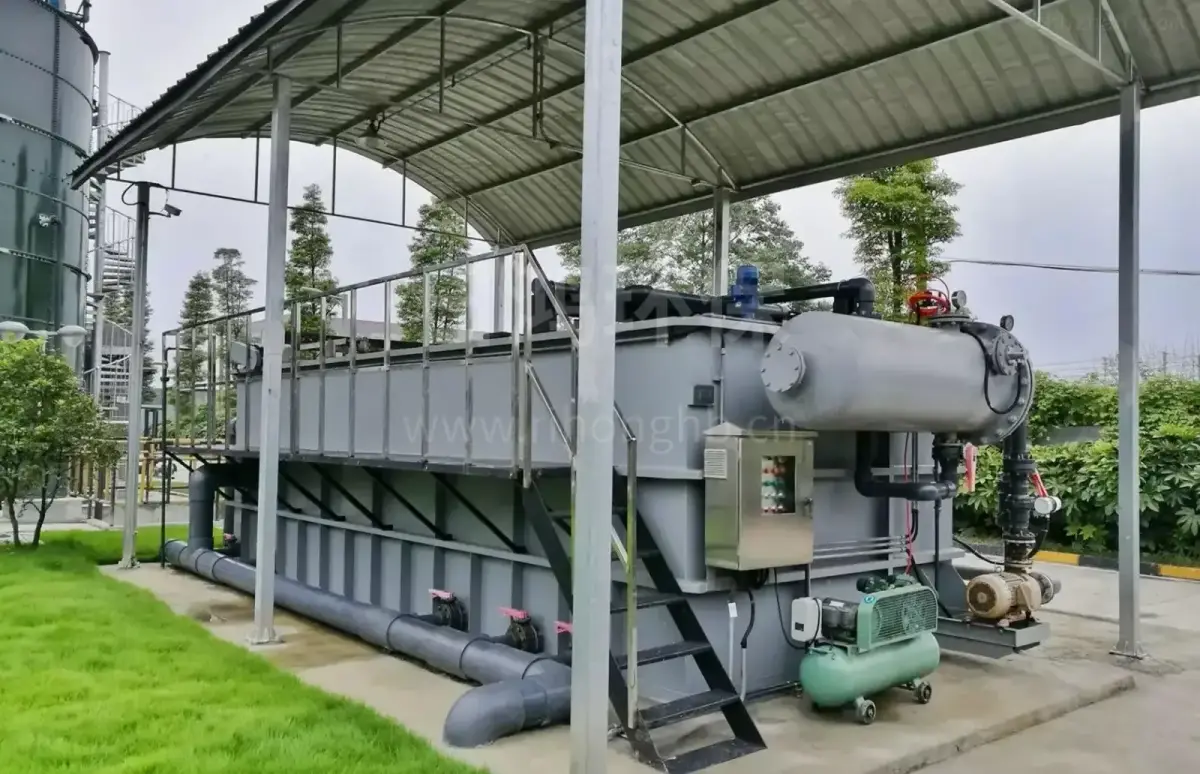
FAQ
How much does this equipment cost?
The price varies by treatment capacity, water quality, materials and configuration, so a custom quote is provided based on your actual conditions. We offer free water testing and solution design, with a detailed quote within 1 working day after requirements are confirmed.
What treatment capacity is available? Can it be customized?
Capacity is fully customizable, ranging from tens to thousands of tons per day (e.g. 0.5–30 m³/h), with non-standard design support matched precisely to your inlet/outlet requirements.
How long does delivery take?
Standard equipment typically takes about 2–4 weeks to produce; custom projects depend on scale and process. The delivery date is confirmed at contract signing, with design, manufacturing and shipping progressing on schedule.
Is installation and commissioning included?
Yes. We provide installation, system commissioning, operator training and environmental acceptance assistance, as well as long-term managed operation services on request.
What about after-sales and warranty?
We provide a warranty period and a 24/7 technical hotline, with free repair for non-human faults during the warranty period, plus spare parts supply and regular inspection services.
Selection Consultation · Rihong Environmental Customizes DAF Solutions for You
Providing water quality bench tests, dissolved air system and chemical dosing linkage design, tank material and scraper configuration selection. From papermaking white water recovery to municipal upgrading, all can be customized on demand.
Contact Us Now →