Belt Filter Press
Municipal wastewater treatment plants and industrial wastewater stations generate large volumes of dilute sludge with a moisture content of 95%–99% every day. Direct landfill disposal involves large volumes, high transportation costs, and limited disposal options. Rihong Environmental's belt filter press uses "chemical conditioning + multi-stage progressive pressing" to continuously press dilute sludge into sludge cakes with a moisture content of 70%–85%. It achieves significant volume reduction, enables continuous operation, and offers a high degree of automation. It is key equipment for volume reduction at the end of sludge treatment.
I. Product Positioning
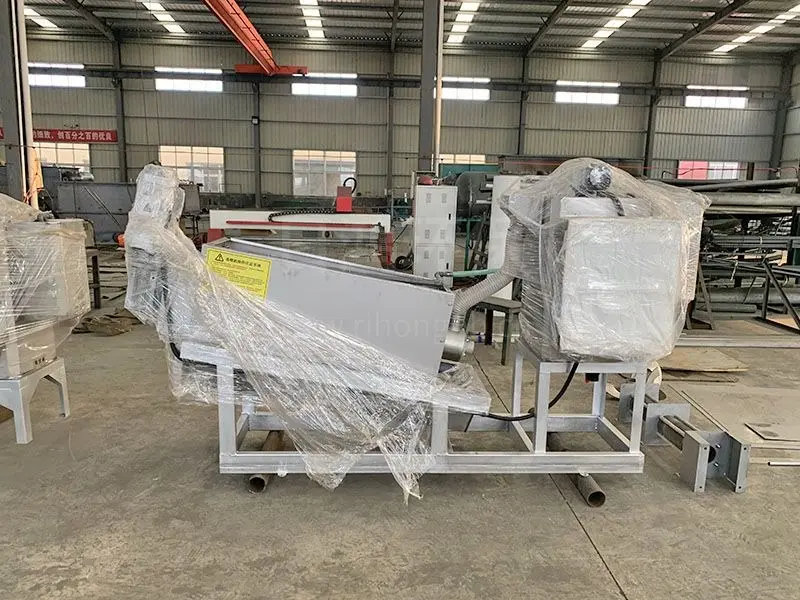
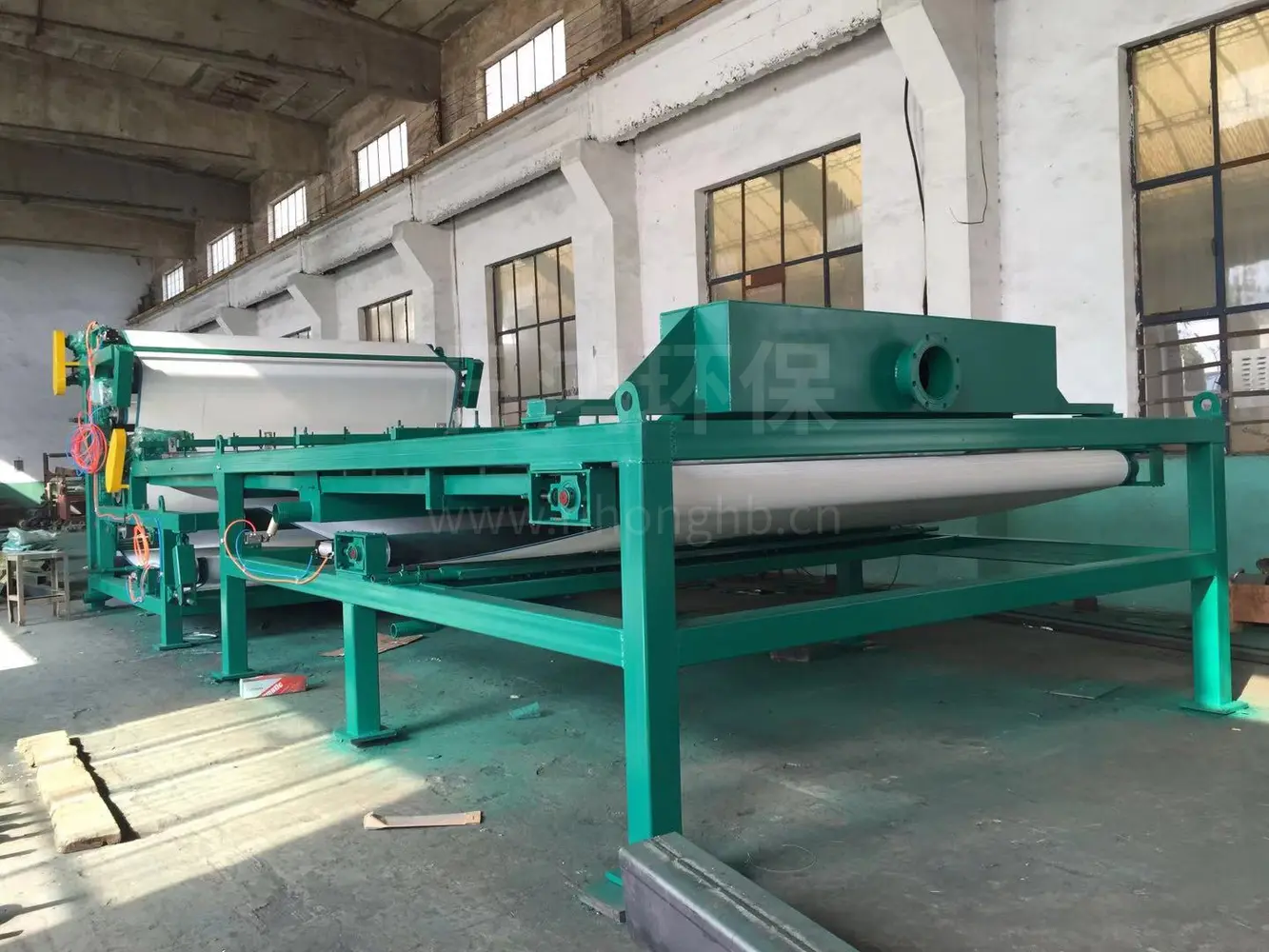
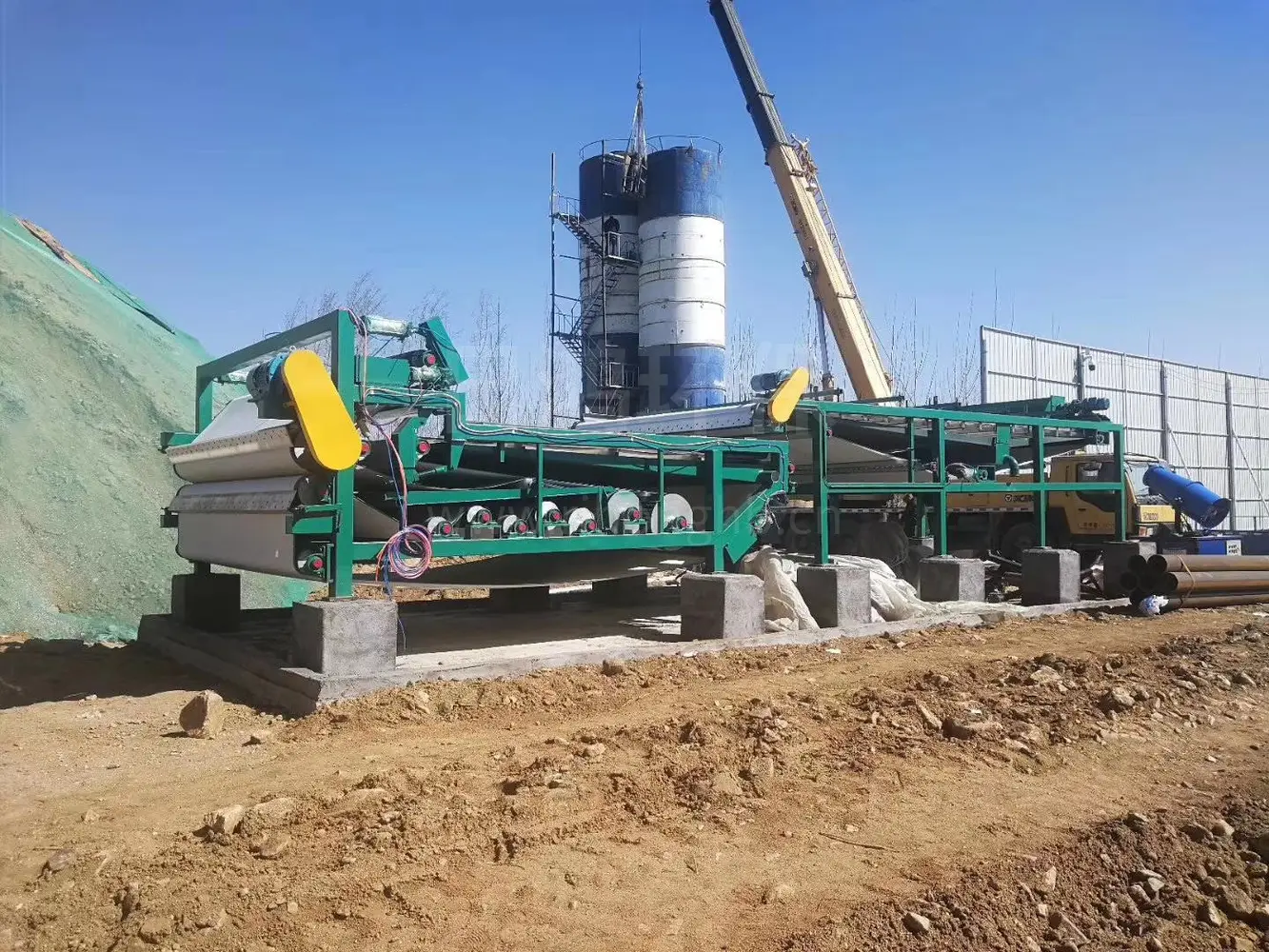
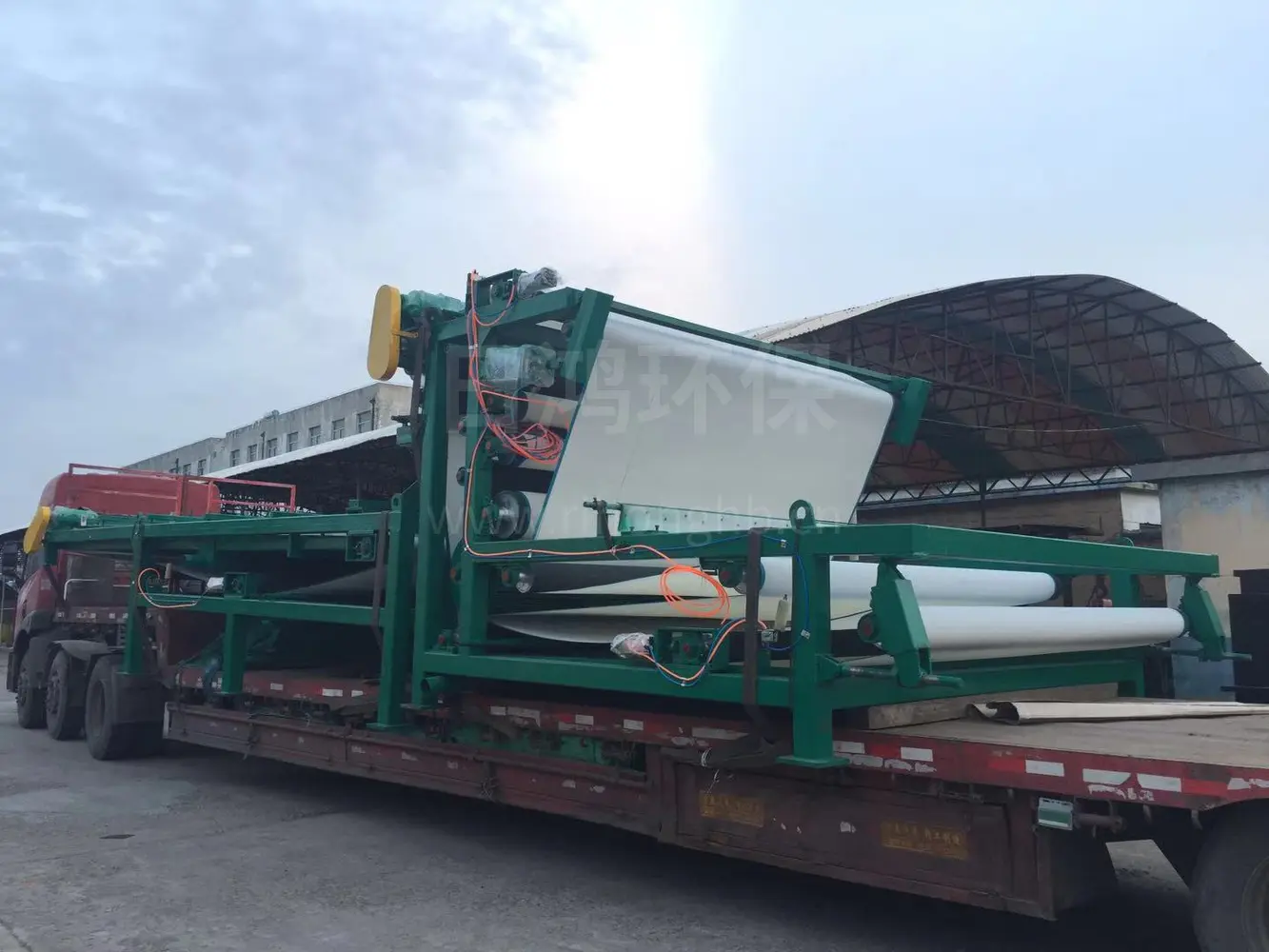
The Belt Filter Press, also known as an integrated belt thickening and filter press, is a continuously operating sludge dewatering device. The complete machine consists of chemical dosing and conditioning, gravity dewatering, wedge pre-pressing, low-pressure to high-pressure pressing, cake discharge, and filter belt washing units: upper and lower endless filter belts carry the sludge continuously, dewatering it step by step through gravity, squeezing, and shear forces. The thickening section and filter pressing section can be integrated into one unit (integrated machine), with an anti-corrosion steel frame, polyester monofilament filter belts, and PLC automatic control, and it can be put into operation with floor-level installation.
II. Working Principle (Brief)
Sludge conditioning: Sludge is evenly mixed with flocculants such as polyacrylamide (PAM) in pipes or mixing tanks. Flocs aggregate and free water is released, reducing dewatering resistance and facilitating subsequent progressive pressing.
Gravity dewatering: The conditioned sludge is evenly distributed on the upper filter belt and travels a long distance in the gravity dewatering zone. Free water drains through the belt, the solids content initially increases, and a sludge layer that can be gripped is formed.
Wedge pre-pressing: The upper and lower filter belts close into a wedge-shaped angle, slowly pre-pressing the sludge layer, further squeezing out water and preventing sludge loss, preparing it for entry into the pressing zone.
Low-pressure pressing: The sludge layer enters the low-pressure roller zone. The filter belts wrap around multiple pressing rollers, and through belt tension and curvature changes, the sludge layer is pressed at low pressure to remove more interstitial water.
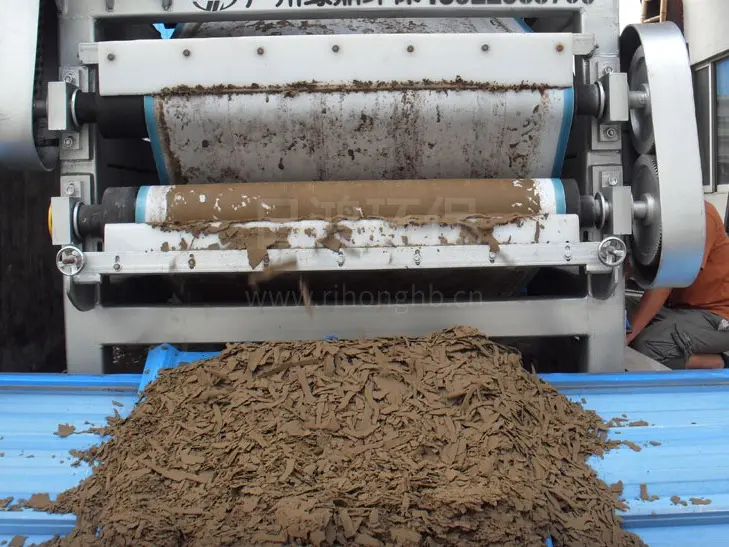
High-pressure shearing: Entering the "S"-shaped high-pressure roller zone (with densely arranged small-diameter rollers), the sludge layer is subjected to repeated shearing and high pressure, and bound water is forcefully squeezed out, forming a dense dry sludge cake.
Cake discharge and washing: The dry sludge cake automatically separates and discharges at the discharge end. The upper and lower filter belts are regenerated by high-pressure water washing and reused, enabling uninterrupted operation.
Process flow: dilute sludge → chemical conditioning → gravity dewatering → wedge pre-pressing → low-pressure pressing → high-pressure shearing → dry cake discharge
The core mechanism is "conditioning to reduce resistance + gravity pre-dewatering + progressive pressure": the continuous rotation of the filter belts allows feeding, dewatering, and cake discharge to proceed simultaneously without intermittent starts and stops; chemical conditioning and mechanical pressing work together, which is the key to efficient and stable belt dewatering.
III. Core Advantages
① High continuous operation efficiency The upper and lower filter belts rotate continuously in endless loops, with feeding, dewatering, and cake discharge uninterrupted, making it suitable for continuous treatment of large-volume sludge.
② Stable cake moisture content Through the synergy of multi-stage pressing and chemical conditioning, the sludge cake moisture content can generally be pressed to 70%–85%, with obvious volume reduction and convenient subsequent disposal.
③ Integrated design with small footprint The thickening section and filter pressing section can be combined, with a compact structure and floor-level installation, requiring no large workshop or complex civil works.
④ High degree of automation PLC control provides automatic dosing, filter belt tensioning, deviation correction, and high-pressure washing, enabling unattended or minimally attended operation.
⑤ Controllable operating costs Low power consumption per unit of dry sludge; the main consumables are filter belts and flocculants, making it easy to manage and account for.
⑥ Wide adaptability and easy maintenance It can handle municipal and various industrial sludges; filter belts are easy to replace, the roller system is simple, and routine maintenance is minimal.
IV. Main Technical Parameters (Reference Range)
Item | Parameter Range / Description | Remarks |
|---|---|---|
Filter belt width | 0.5–3.0 m | Selected according to treatment capacity |
Treatment capacity | Dry sludge 5–80 kgDS/(m·h), or based on wet sludge volume | Depends on sludge properties and chemical effectiveness |
Inlet sludge moisture content | 95%–99% (conditioned dilute sludge) | Suitable for high-moisture dilute sludge |
Outlet cake moisture content | 70%–85% | Typical municipal 75%–80%, depending on sludge and chemicals |
Flocculation conditioning | Cationic PAM, etc. | Must be equipped with dosing equipment; dosage determined by bench test |
Wash water pressure / power | Washing 0.4–0.6 MPa; main drive 1.1–5.5 kW (depending on belt width) | Also includes dosing pump and wash pump |
Material | Anti-corrosion steel frame / 304 contact parts; polyester monofilament filter belts | Corrosion-resistant design for contact parts |
* The above are typical reference ranges. Actual treatment capacity, cake moisture content, and chemical consumption are subject to sludge bench tests and on-site commissioning.
V. Typical Application Scenarios
Scenario / Industry | Adaptability Description / Main Removal Targets |
|---|---|
Municipal wastewater plant sludge | Continuous dewatering of excess sludge and primary sludge; cake is convenient for off-site landfill/incineration/composting |
Printing and dyeing / textile sludge | Dewatering of high-organic colored sludge after conditioning, with significant volume reduction |
Paper / pulp sludge | Dewatering of fibrous sludge, part of which can be reused |
Food / brewing sludge | High-moisture organic sludge, continuous cake discharge, odor easily controlled |
Electroplating / chemical sludge | Dewatering and volume reduction of metal-containing or refractory sludge, facilitating compliant hazardous waste disposal |
Tailings / sand washing sludge | Solid-liquid separation of mineral processing and sand washing tailwater; clear water can be reused |
Livestock / slaughterhouse sludge | Dewatering of manure and organic sludge, integrated with downstream disposal chain |
VI. Applicable Boundaries and Selection Recommendations
The belt filter press is suitable for continuous dewatering of organic or inorganic dilute sludge with high moisture content and large output; for sludge with extremely high sand content and strong abrasiveness, attention must be paid to wear on filter belts and roller surfaces, and pre-desanding may be necessary. The equipment must be equipped with flocculation conditioning (PAM). The type and dosage of chemicals greatly affect dewatering performance, and it is recommended to determine them through bench tests first.
Compared with centrifugal dewatering machines (closed high-speed, smaller footprint, higher investment) and plate-and-frame filter presses (intermittent high-pressure, drier cake, slightly lower automation), this equipment is distinguished by continuous operation, stability, and cost-effectiveness. During selection, comprehensively weigh the required cake moisture content, site conditions, and investment. It differs in function from the aforementioned sludge scraper and suction machines (sludge discharge in tanks) and sand-water separators (grit dewatering)—the belt filter press is located at the end of sludge treatment and is the core volume reduction equipment for "dilute sludge → sludge cake." For projects in northern regions, attention must be paid to freeze protection for dosing and washing pipelines; filter belts must be regularly cleaned and replaced, and deviation must be corrected promptly.
Product Images
FAQ
How much does this equipment cost?
The price varies by treatment capacity, water quality, materials and configuration, so a custom quote is provided based on your actual conditions. We offer free water testing and solution design, with a detailed quote within 1 working day after requirements are confirmed.
What treatment capacity is available? Can it be customized?
Capacity is fully customizable, ranging from tens to thousands of tons per day (e.g. 0.5–30 m³/h), with non-standard design support matched precisely to your inlet/outlet requirements.
How long does delivery take?
Standard equipment typically takes about 2–4 weeks to produce; custom projects depend on scale and process. The delivery date is confirmed at contract signing, with design, manufacturing and shipping progressing on schedule.
Is installation and commissioning included?
Yes. We provide installation, system commissioning, operator training and environmental acceptance assistance, as well as long-term managed operation services on request.
What about after-sales and warranty?
We provide a warranty period and a 24/7 technical hotline, with free repair for non-human faults during the warranty period, plus spare parts supply and regular inspection services.
Make sludge "slimming" easier
Rihong Environmental can provide belt filter press process selection, flocculation bench tests, and complete layout solutions. You are welcome to call or leave a message to obtain a customized configuration.
Contact Us Now →