Multi-Disk Screw Press Sludge Dewatering Machine
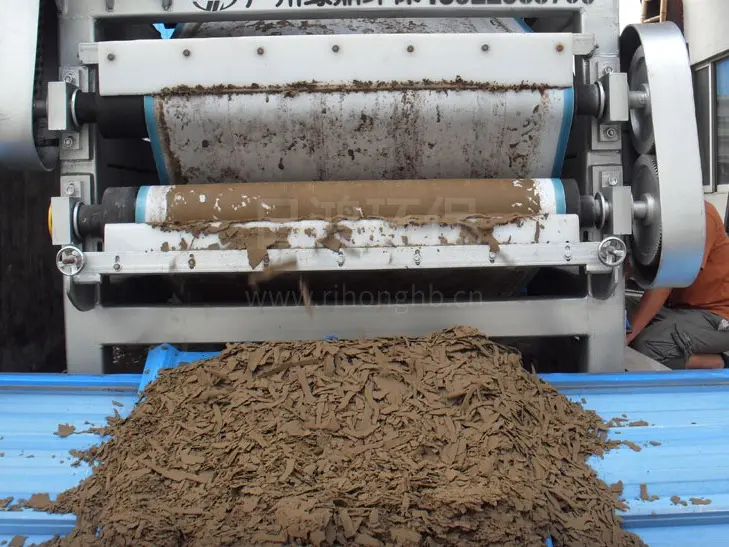
Faced with the disposal dilemma of municipal and industrial sludge—"high moisture content, large volume, oily and sticky, and limited space"—traditional belt filter presses often suffer from filter cloth clogging, frequent replacement and washing, and noise nuisance. The Rihong Multi-Disk Screw Press Sludge Dewatering Machine, with its ingenious combination of a screw shaft and fixed/moving rings (disks), achieves "no filter cloth, not easily clogged, low-speed operation." It is especially adept at dewatering oily sludge and continuous dewatering at small to medium scales, making sludge volume reduction more worry-free.
I. Product Positioning
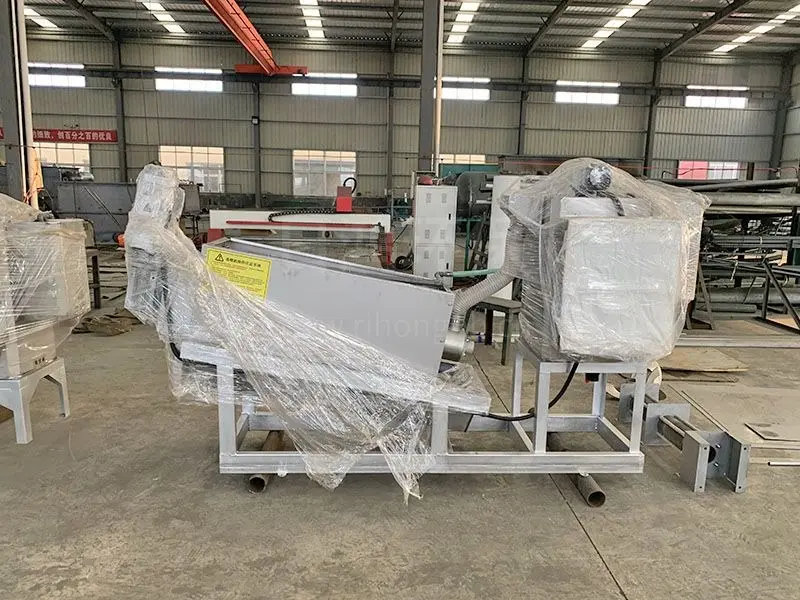
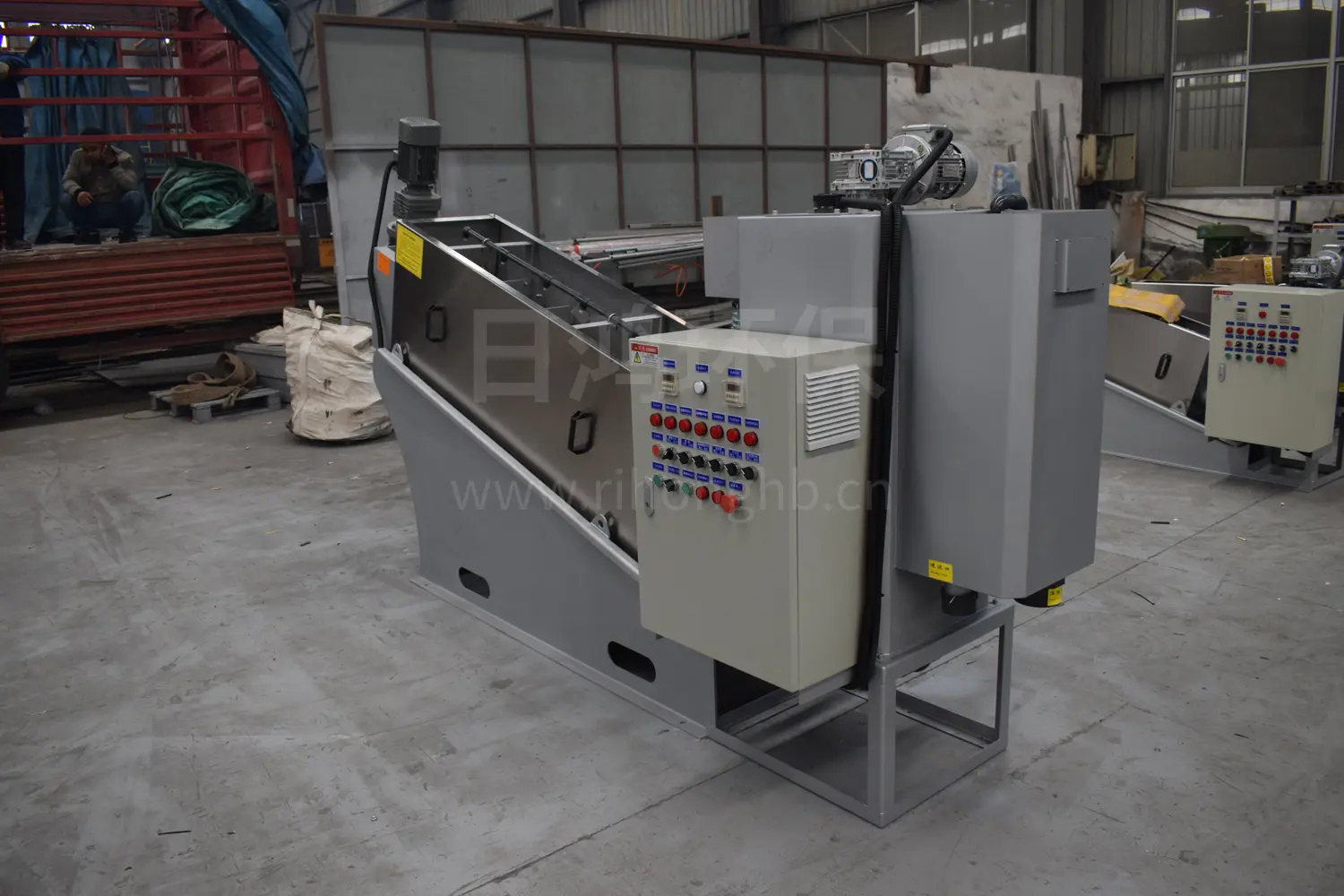
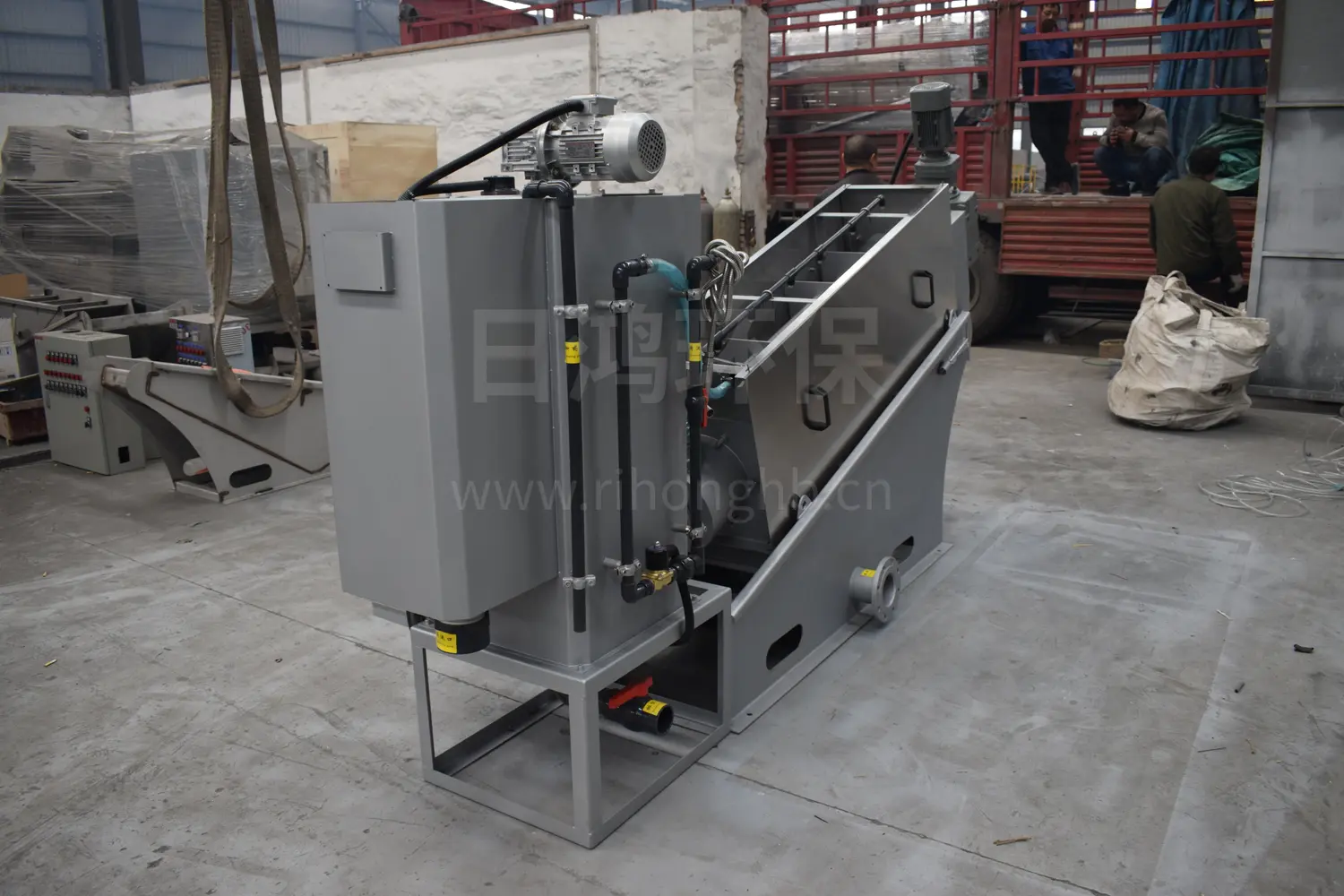
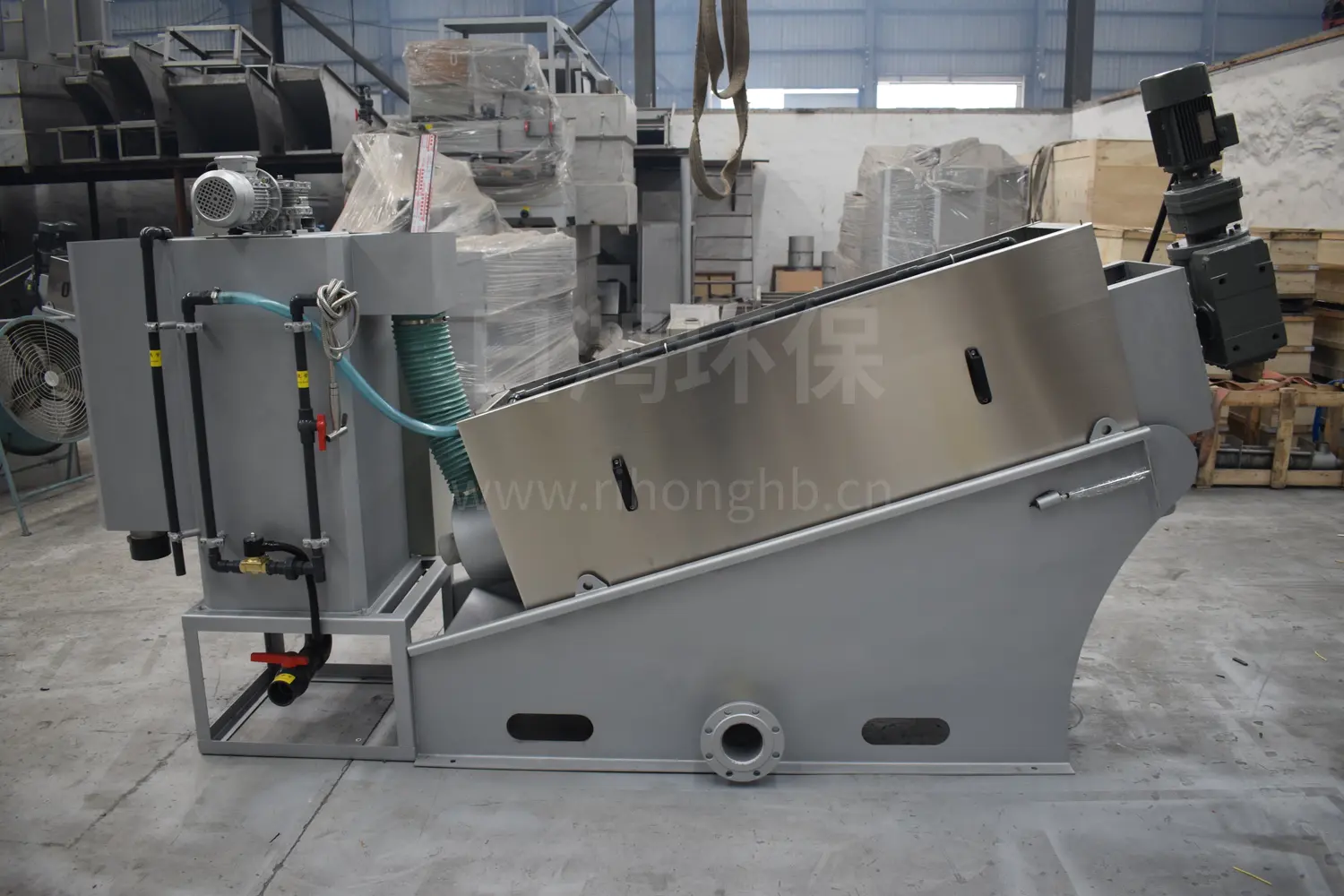
The Multi-Disk Screw Press is a compact, continuously operating sludge dewatering equipment. Its core is a low-speed rotating conical screw shaft, surrounded by a filter body formed by layers of fixed rings and moving rings. Sludge completes preliminary water filtration in the thickening zone, then enters the dewatering zone where it is gradually squeezed into cake as the screw pitch narrows and the back pressure plate adjusts pressure. The entire machine is made of stainless steel and anti-corrosion materials. It can be floor-mounted, operate independently as a single unit, or be configured with multiple parallel shafts or integrated into a skid-mounted mobile dewatering unit.
II. Working Principle (Brief)
Sludge Conditioning: Thickened sludge is thoroughly mixed with cationic PAM in a flocculation tank to form easily dewaterable flocs.
Gravity Thickening: Sludge enters the thickening zone of the disk filter body. Free water is filtered out by gravity through the gaps between moving rings, and the solids content initially increases.
Screw Conveying: The screw shaft rotates at low speed, steadily conveying the thickened sludge axially. The moving rings move with the shaft, constantly scraping the gaps to prevent clogging.
Back Pressure Squeezing and Dewatering: Upon entering the dewatering zone, the screw pitch gradually narrows and the volume contracts. Combined with the end back pressure plate adjusting outlet resistance, the sludge is progressively squeezed and dewatered.
Cake Discharge: The dewatered cake is continuously extruded at the shaft end, with significantly reduced moisture content, facilitating subsequent transportation and disposal.
Automatic Cleaning: During shutdown or intermittent operation, a spray system washes the filter body. The movement of the moving rings further self-cleans, maintaining long-term non-clogging.
Process flow: Sludge conditioning → Gravity thickening (disk filtration) → Screw conveying → Back pressure squeezing and dewatering → Cake discharge → Automatic cleaning
The key to its non-clogging and non-blinding lies in the gap filtration structure of "moving rings + fixed rings": as the screw shaft rotates, the moving rings reciprocate and shift, constantly scraping sludge between the rings. This fundamentally eliminates the problem of filter cloth being blinded by sludge and oil in belt-type equipment, making it especially suitable for oily and highly viscous sludge.
III. Core Advantages
① Not Easily Clogged The moving rings self-clean as they move with the shaft. No filter cloth, no reliance on frequent replacement and washing. Stable dewatering even for oily and sticky sludge.
② Low Noise and Low Energy Consumption The screw shaft rotates at only a few revolutions per minute. Main drive power is mostly 0.2–3 kW. Quiet operation, low electricity cost, suitable for NIMBY-sensitive scenarios.
③ Minimal Footprint Integrated body and vertically integrated filter body. A single unit occupies only a few square meters. Can be installed indoors or mounted on a vehicle for mobility.
④ Oil-Friendly Strong tolerance to oily sludge from catering, machining, petrochemical and other industries. No efficiency loss from filter belt blinding by oil stains.
⑤ Fully Automatic and Continuous Continuous operation from sludge inlet to cake discharge. With PLC, unattended operation is possible. Flushing water consumption is far lower than belt-type equipment.
⑥ Easy Maintenance No filter cloth wear, no high-pressure tensioning system. Few wear parts, long service life, low O&M costs and downtime risk.
IV. Main Technical Parameters (Reference Range)
Item | Parameter Range / Description |
|---|---|
Single unit capacity (dry sludge) | Approx. 5 – 600 kgDS/h (depending on model and number of shafts; multiple parallel shafts can scale up) |
Screw shaft / disk structure | Single shaft to multiple parallel shafts; fixed rings + moving rings stacked filter body, 304 / 316L stainless steel |
Inlet sludge moisture content | 95% – 99.5% (suitable for both thickened sludge or low-concentration direct feed) |
Cake moisture content | 75% – 85% (depending on sludge properties and chemicals; generally higher than plate-and-frame, close to belt type) |
Screw shaft speed | Approx. 2 – 5 r/min (low-speed operation, low noise) |
Flocculant | Cationic PAM conditioning; dosage determined by sludge testing |
Main drive motor power | Approx. 0.2 – 3 kW (overall energy consumption significantly lower than belt / centrifuge) |
Flushing water | Small amount of clean water for intermittent / continuous flushing; water consumption far less than belt-type equipment |
Layout form | Floor-mounted, skid-mounted, vehicle-mounted mobile; single or multiple parallel shafts |
* The above are typical reference ranges. Actual capacity and cake moisture content vary with sludge properties, chemical dosage, and operating conditions. On-site commissioning shall prevail.
V. Typical Application Scenarios
Scenario / Industry | Adaptability / Main Value |
|---|---|
Municipal wastewater treatment plants | Continuous dewatering and volume reduction of excess sludge; low noise, small footprint, suitable for flexible in-plant layout |
Catering / Food / Slaughterhouse | Strong tolerance to oily, high-organic sludge; no blinding, no clogging |
Machining / Petrochemical | Dewatering of oily and viscous sludge; replaces equipment prone to filter belt blinding |
Small sewage stations / Integrated equipment | Supports integrated wastewater treatment units; on-site dewatering eliminates long-distance transport |
Breeding / Livestock and poultry manure | Dewatering of biogas slurry and manure; skid-mounted mobile operation possible |
Paper / Printing and dyeing / Chemical | Dewatering of various industrial sludges; simple O&M, low downtime risk |
Emergency / Mobile dewatering | Vehicle-mounted multi-disk screw press for temporary emergency response, point-source disposal, and flood-season sludge emergencies |
VI. Applicable Boundaries and Selection Recommendations
The Multi-Disk Screw Press excels at continuous, low-energy dewatering of small to medium-scale, oily, and viscous sludge, but it is not a "universal dewatering machine." Compared with belt filter presses in the same sludge dewatering category: belt presses rely on upper and lower filter belts for multi-stage squeezing, offering high single-unit capacity and similar cake moisture content, but filter cloth is prone to clogging, frequent replacement and washing, and sensitivity to oily sludge. The multi-disk screw press, relying on screw and disks, resists clogging and blinding, operates quietly, saves space, and is oil-friendly. It is more suitable for small to medium scales and NIMBY scenarios. Its single-unit large-flow capacity is generally inferior to large belt presses or centrifuges.
Selection and O&M tips: Before entering the machine, sludge should be gravity-thickened or conditioned, with stable dosing of cationic PAM. For sludge with extremely high sand content, pre-desanding should be installed to avoid ring wear. When pursuing lower cake moisture content (e.g., around 60%), plate-and-frame filter presses should be compared. For outdoor installation in northern regions, freeze protection and insulation for flushing water are required. For long-term shutdown, the automatic cleaning program should be executed to keep the filter body clean.
Product Images
FAQ
How much does this equipment cost?
The price varies by treatment capacity, water quality, materials and configuration, so a custom quote is provided based on your actual conditions. We offer free water testing and solution design, with a detailed quote within 1 working day after requirements are confirmed.
What treatment capacity is available? Can it be customized?
Capacity is fully customizable, ranging from tens to thousands of tons per day (e.g. 0.5–30 m³/h), with non-standard design support matched precisely to your inlet/outlet requirements.
How long does delivery take?
Standard equipment typically takes about 2–4 weeks to produce; custom projects depend on scale and process. The delivery date is confirmed at contract signing, with design, manufacturing and shipping progressing on schedule.
Is installation and commissioning included?
Yes. We provide installation, system commissioning, operator training and environmental acceptance assistance, as well as long-term managed operation services on request.
What about after-sales and warranty?
We provide a warranty period and a 24/7 technical hotline, with free repair for non-human faults during the warranty period, plus spare parts supply and regular inspection services.
Sludge Volume Reduction Starts with "No Clogging"
Rihong Environmental can provide process comparison, model selection, and on-site commissioning solutions for Multi-Disk Screw Press Sludge Dewatering Machines. Welcome to call or leave a message to obtain dewatering configuration recommendations suitable for your project.
Contact Us Now →