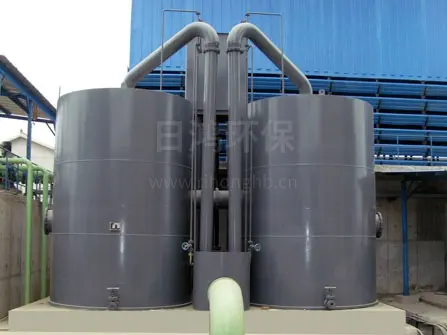
Valveless Filter
Traditional rapid filters have many valves, complex operation, and rely on manual timing for backwashing, resulting in heavy O&M burden and prone to misoperation. The valveless filter uses the "siphon principle" to replace all valves, achieving a fully automatic filtration-backwash cycle without the need for dedicated personnel. It is an economical choice for rural water supply, industrial circulating water side-stream filtration, and advanced filtration for reclaimed water reuse.
I. Product Positioning
The valveless filter is a gravity-type, valve-free, automatic backwashing rapid filtration device. Raw water passes downward through the filter media layer by gravity head, completing filtration. As the filter layer retains pollutants and head loss increases, the device relies on the siphon effect to automatically initiate backwashing. After backwashing, it automatically resumes filtration, with no valves or manual intervention throughout the process. The device can be constructed of anti-corrosion steel or cast-in-place/precast reinforced concrete, often integrally formed with a siphon inlet distribution box and an elevated backwash water tank. It is widely used for final filtration in water supply plants, side-stream filtration of industrial circulating water, boiler make-up water pretreatment, and advanced purification for reclaimed water reuse.
II. Working Principle (Brief)
Inlet distribution: Raw water after coagulation-sedimentation (or micro-flocculation) enters the top inlet distribution box and uniformly overflows into the upper filtration chamber of the filter.
Gravity filtration: Driven by the water level difference, water flows downward through the filter media layer (quartz sand or coal-sand dual media), suspended solids are intercepted, and clean water collects at the bottom.
Clean water collection: The filtered clean water passes through the bottom distribution chamber and connecting pipe into the elevated backwash water tank, then is supplied outward through the outlet pipe.
Head rise: As filtration proceeds, the filter layer retains more pollutants and resistance increases, causing the water level in the siphon riser pipe to rise continuously.
Automatic backwash: When the head loss reaches the set value (about 1.5–2.0 m), a siphon forms in the siphon pipe. Water from the backwash tank flows backward through the filter layer, washing up pollutants which are discharged through the siphon downcomer into the drain. Backwashing starts automatically.
Resume filtration: After backwashing lasts for several minutes, the water level in the backwash tank drops to the breaker pipe opening. Air enters to break the siphon, backwashing stops, and the device returns to normal filtration.
Process schematic: Raw water (pre-sedimentation) → Inlet distribution box → Gravity filtration through filter layer → Clean water collection/outlet ⇄ (resistance reaches limit) Siphon automatic backwash → Resume filtration
The core lies in "filtration by water level difference, backwash by siphon"—filtration and backwashing share one hydraulic circuit, with no valves throughout. The start and stop of backwashing are completely determined automatically by head loss, resulting in stable operation, extremely simple operation, and virtually maintenance-free.
III. Core Advantages
① Valve-free and maintenance-free Siphons replace all valves and actuators, with no vulnerable valve components, few failure points, and essentially no routine maintenance.
② Automatic backwashing The filtration-backwash cycle is automatically triggered by head loss, requiring no manual timing or electrical start/stop, eliminating misoperation.
③ Low cost and energy consumption Simple structure, no powered valves or complex automation; operation relies only on pump lifting, with extremely low power consumption and economical initial investment.
④ Stable and reliable operation Hydraulically driven, no electrical interlocking, strong anti-interference, suitable for rural and remote sites with no or few personnel.
⑤ Series-based and easy to arrange Single-unit filtration areas are available in series such as 9/16/25/36/50/100 m², and multiple units can be paralleled for capacity expansion, either above ground or shallowly buried.
⑥ Wide adaptability Can be used for final filtration in water supply plants, side-stream filtration of industrial circulating water, advanced filtration for reclaimed water reuse, and rainwater reuse purification.
IV. Main Technical Parameters (Reference Range)
Item | Parameter Range / Description | Remarks |
|---|---|---|
Filtration rate | 8–12 m/h | Typical value for gravity type |
Single-unit filtration area | 9 / 16 / 25 / 36 / 50 / 100 m² etc. | Multiple units in parallel for expansion |
Working cycle | 12–24 h | Varies with influent turbidity and filtration rate |
Backwash intensity | 14–16 L/(m²·s) | Ensures sufficient expansion of filter layer |
Backwash duration | 4–6 min | Automatically determined and stopped |
Backwash trigger head loss | About 1.5–2.0 m | Automatic siphon backwash when reached |
Influent turbidity | ≤20 NTU (short-term ≤50 NTU) | Requires pre-coagulation sedimentation |
Effluent turbidity | ≤3 NTU (generally ≤1 NTU) | Stable filtered water quality |
Filter media | Quartz sand single layer 0.5–1.2 mm / coal-sand dual media | Layer thickness about 700–800 mm |
Main body material | Anti-corrosion steel / reinforced concrete | Selected according to scale and site conditions |
* The above are typical reference ranges. Actual filtration rate, media gradation, and working cycle are subject to design calculation and on-site commissioning.
V. Typical Application Scenarios
Scenario / Industry | Adaptability / Main Removal Targets |
|---|---|
Rural / community water supply plants | Final filtration after coagulation-sedimentation of surface water, ensuring stable turbidity compliance of finished water. |
Industrial circulating cooling water | Side-stream filtration of circulating water, removing suspended solids and biological slime, mitigating scaling and blockage of heat exchange equipment. |
Boiler make-up water pretreatment | As security filtration before softening/desalination, reducing the load on subsequent membranes and ion exchange. |
Advanced filtration for reclaimed water reuse | Advanced purification of secondary effluent, further removing SS, improving the appearance and stability of reused water. |
Rainwater harvesting and reuse | Purification after initial rainwater diversion, used for greening, washing, and other miscellaneous uses. |
Landscape water / swimming pool circulation | Side-stream filtration of water circulation, controlling turbidity and algal suspended solids, keeping water clear. |
Small integrated water purification equipment | Integrated as the filtration unit in "sedimentation + filtration + disinfection" water treatment processes. |
VI. Applicable Boundaries and Selection Recommendations
The valveless filter is suitable for continuous filtration of low-turbidity, stable water sources. Influent turbidity should be controlled at ≤20 NTU (short-term ≤50 NTU). Therefore, pre-coagulation sedimentation or micro-flocculation is essential. It is not suitable for direct treatment of high-turbidity raw water or oily, high-algae water. The device is gravity-type, requiring a certain influent water level before filtration. Sludge may accumulate at the bottom of the backwash tank and should be periodically discharged. When selecting, determine the single-unit area and number of units based on treatment flow and influent turbidity. Multiple units in parallel facilitate maintenance and expansion. In cold regions, insulation or indoor installation is recommended to prevent freezing cracks and poor backwashing in winter.
FAQ
How much does this equipment cost?
The price varies by treatment capacity, water quality, materials and configuration, so a custom quote is provided based on your actual conditions. We offer free water testing and solution design, with a detailed quote within 1 working day after requirements are confirmed.
What treatment capacity is available? Can it be customized?
Capacity is fully customizable, ranging from tens to thousands of tons per day (e.g. 0.5–30 m³/h), with non-standard design support matched precisely to your inlet/outlet requirements.
How long does delivery take?
Standard equipment typically takes about 2–4 weeks to produce; custom projects depend on scale and process. The delivery date is confirmed at contract signing, with design, manufacturing and shipping progressing on schedule.
Is installation and commissioning included?
Yes. We provide installation, system commissioning, operator training and environmental acceptance assistance, as well as long-term managed operation services on request.
What about after-sales and warranty?
We provide a warranty period and a 24/7 technical hotline, with free repair for non-human faults during the warranty period, plus spare parts supply and regular inspection services.
Make filtration simpler—valveless for peace of mind
We provide selection and complete solutions for rural water plants, circulating water side-stream filtration, reclaimed water reuse, and other scenarios. Welcome to call or leave a message for technical documents.
Contact Us Now →Related Products
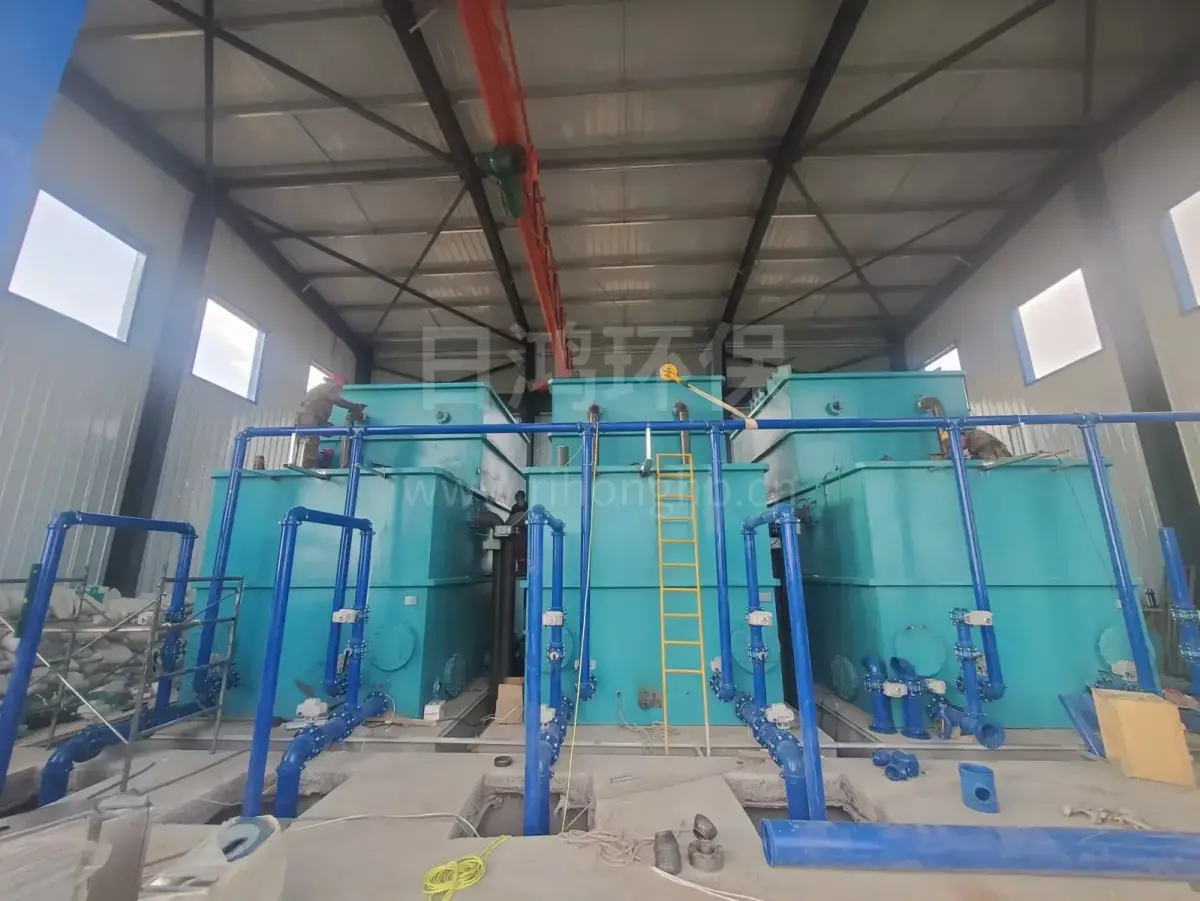
Integrated Water Purifier
In rural areas, towns, military camps, factories and mines, surface water sources are scattered, and building traditional water treatment plants often faces challenges such as large investment, extensive land occupation, and long construction periods. Wushi Environmental Protection introduces the Integrated Water Purifier, which integrates coagulation, flocculation, sedimentation, filtration, and disinfection of a conventional water plant into a single ground-mounted unit. The effluent consistently meets the Standards for Drinking Water Quality (GB 5749), enabling scattered point sources to access safe and stable tap water.
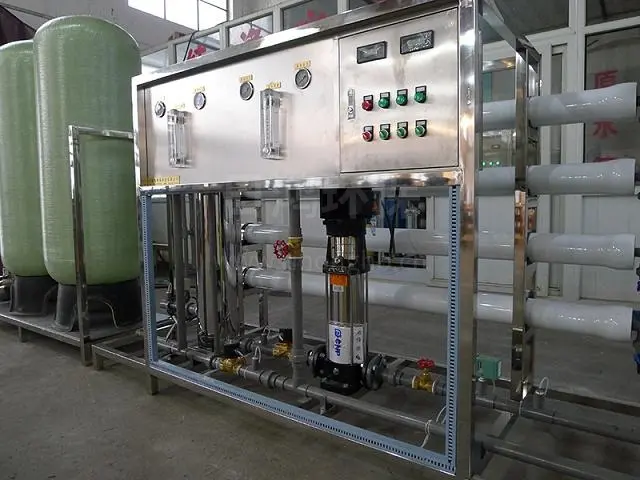
RO Reverse Osmosis System for the Food Industry
Beverage, brewing, dairy, canning and other food production processes have extremely high requirements for the quality, stability and food safety of process water, while municipal water or groundwater often contains salinity, hardness, residual chlorine and microorganisms. Wushi Environmental has launched RO reverse osmosis equipment for the food industry, integrating pretreatment, high-pressure pumps, membrane separation and automatic control into a single skid-mounted unit. It performs physical desalination at ambient temperature without the need for large amounts of chemicals, stably producing high-purity process water to help food enterprises meet water quality standards, improve quality and reduce costs.
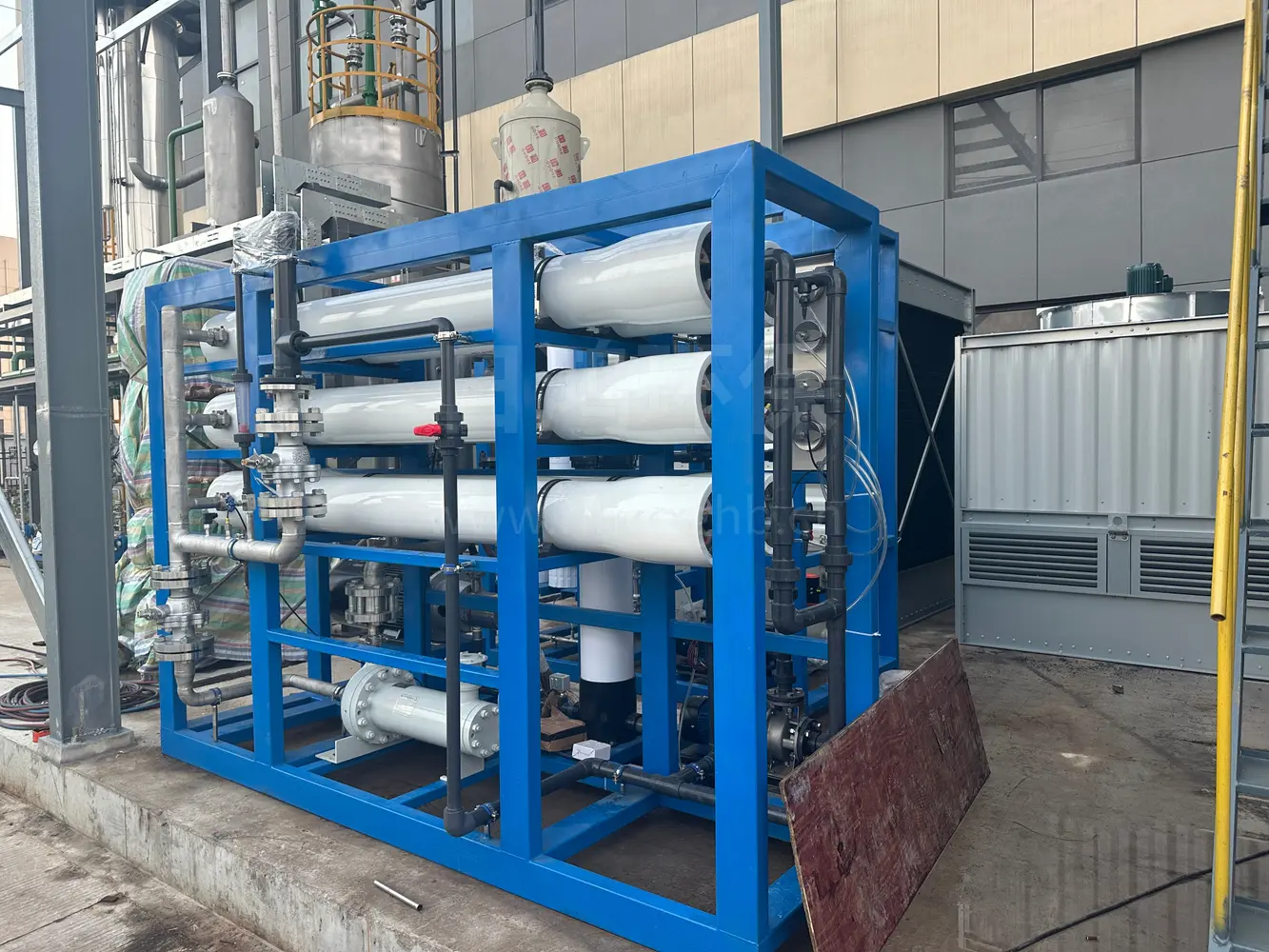
Reclaimed Water Reuse RO Reverse Osmosis System
As industrial water intake costs rise and discharge standards tighten, "less fresh water intake, less wastewater discharge" has become a rigid demand. Direct discharge of municipal reclaimed water or a company's own secondary treated effluent is both wasteful and consumes quota. Wushi Environmental launches the industrial reclaimed water reuse RO reverse osmosis system, with Ultrafiltration (UF) + Reverse Osmosis (RO) dual-membrane process as the core, stably converting reclaimed water into circulating cooling make-up water, process water, and even boiler feedwater, with recovery up to 70% – 85%. The concentrate can enter evaporation crystallization to approach zero liquid discharge, helping enterprises save water, reduce emissions, and lower costs.
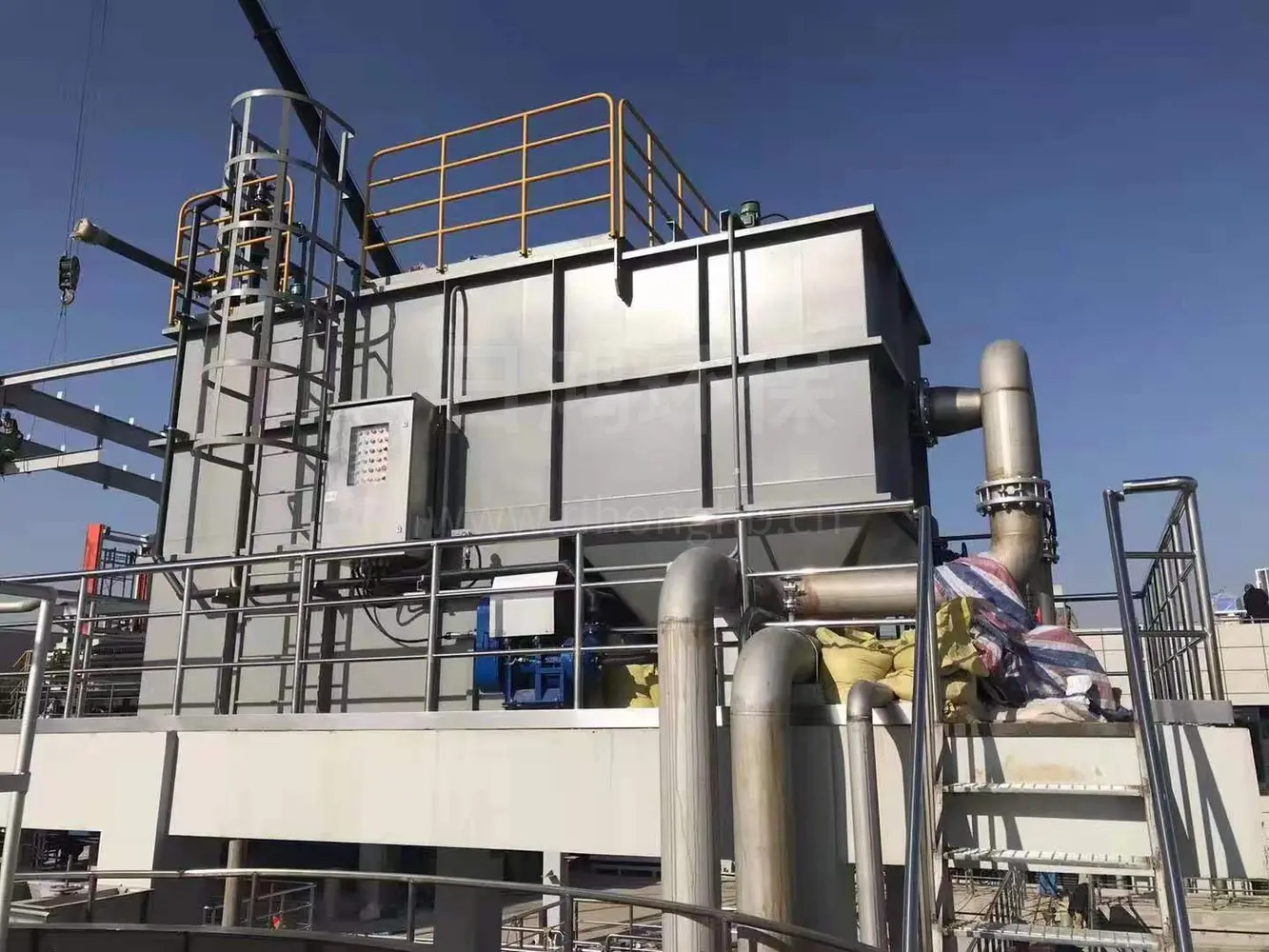
Microsand and Carbon Sedimentation Tank
Faced with the challenge of "dissolved taste and odor, color, micropollutants, and refractory COD" in drinking water and reuse water that cannot be removed by conventional coagulation and sedimentation, and with limited plant footprint, the Microsand and Carbon Sedimentation Tank couples microsand-loaded high-rate sedimentation with powdered activated carbon (PAC) adsorption in a single unit. It efficiently removes turbidity while adsorbing dissolved pollutants, with microsand recycled for reuse, requiring only 1/5–1/10 of the footprint of traditional processes.